

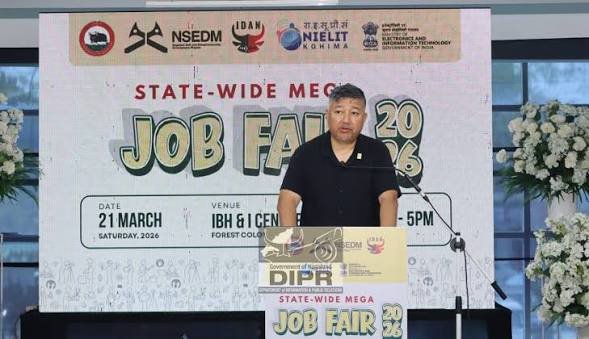
The Youth Skill Summit in Dimapur brought young job seekers and employers together at a regional job fair focused on opportunities in the hospitality and information technology sectors. The event aimed to connect youth with potential employers while highlighting growing employment opportunities in two sectors that require diverse technical and service-oriented skills.
The job fair provided a platform for participants to learn about available positions, interact with recruiters, and explore career pathways. Moreover, such events can help reduce gaps between job seekers and employers by creating direct opportunities for communication and recruitment.
The regional focus also highlights Dimapur’s role as an important commercial and employment centre in Nagaland. However, the available information does not specify the number of participating companies, vacancies, or candidates who secured placements during the event.
Ginger Processing Plant: Ri Bhoi Farmers Inaugurate Co-Operatively Run Mechanized Facility
Youth Skill Summit Connects Job Seekers With Employers
The Youth Skill Summit brought together young people seeking employment and organizations looking for workers in hospitality and IT-related roles.
Job fairs can provide an efficient way for candidates to meet recruiters without going through multiple independent application processes. Furthermore, direct interaction allows employers to assess candidates while applicants can learn more about job requirements and workplace expectations.
The Dimapur event therefore created a direct platform for employment discussions.
However, the available information does not identify the companies that participated or the specific positions offered.
Therefore, the overall scale of recruitment remains unclear.
Youth Skill Summit Highlights Hospitality Opportunities
The Youth Skill Summit placed significant attention on the hospitality sector.
Hotels, restaurants, travel businesses, and related services require workers across areas such as customer service, food operations, housekeeping, administration, and management. Additionally, the growth of tourism and business travel can create demand for trained workers across different hospitality roles.
A regional job fair can help connect young candidates with employers operating in this sector.
However, the available information does not provide the number of hospitality vacancies offered at the event.
Consequently, the employment opportunities available through the hospitality segment cannot be quantified.
Youth Skill Summit Promotes IT Sector Employment
The Youth Skill Summit also focused on employment opportunities within the information technology sector.
IT-related employment can cover areas such as software development, technical support, digital services, data operations, and other technology-focused roles. Moreover, digital transformation across businesses continues to create demand for workers with relevant technical and professional skills.
The job fair provided participants with an opportunity to explore these career pathways.
However, the available information does not specify which IT companies participated or what technical qualifications employers required.
Therefore, candidates would need to consult participating employers for detailed job descriptions and eligibility requirements.
Youth Skill Summit Supports Regional Employment
The Youth Skill Summit took a regional approach by bringing employment opportunities to young people in and around Dimapur.
Regional job fairs can reduce barriers for candidates who may otherwise need to travel to larger employment centres. Furthermore, local recruitment events can help employers reach talent from nearby communities.
Such initiatives can therefore support broader participation in the formal employment market.
However, the available information does not provide details about the districts or states from which participants attended.
Consequently, the regional reach of the event remains unclear.
Youth Skill Summit Addresses Skill-Job Matching
The Youth Skill Summit also highlights the importance of matching workers’ abilities with employer requirements.
Employers often seek candidates with specific technical, communication, or service-related skills. Additionally, job fairs can help candidates understand where their existing qualifications match market demand and where further training may improve their prospects.
This interaction can make recruitment more targeted.
However, the available information does not specify whether the event included formal skill assessments, counselling sessions, or training demonstrations.
Therefore, its role beyond direct recruitment remains unclear.
Youth Skill Summit Creates Direct Recruitment Opportunities
The Youth Skill Summit gave participants an opportunity to communicate directly with recruiters.
Face-to-face recruitment can allow candidates to discuss qualifications, experience, career interests, and job expectations. Moreover, employers can use these interactions to identify suitable applicants for subsequent interviews or selection processes.
Such direct engagement can make employment events useful for both sides.
However, the available information does not confirm how many candidates progressed to interviews or received job offers.
Consequently, the final placement outcome remains unavailable.
Youth Skill Summit Could Strengthen Career Awareness
The Youth Skill Summit can also contribute to career awareness among young people.
Participants can learn about emerging employment requirements and the types of skills employers value. Furthermore, exposure to different industries can help students and job seekers make more informed decisions about training and career development.
Hospitality and IT offer different career pathways, allowing participants to compare opportunities according to their interests and qualifications.
However, the available information does not indicate whether career counselling formed part of the programme.
Therefore, the event’s broader career-guidance impact cannot be assessed.
Youth Skill Summit Highlights Need for Continued Skill Development
The Youth Skill Summit reinforces the importance of continued skill development for young job seekers.
Employers may increasingly seek candidates who combine technical knowledge with communication, problem-solving, and workplace skills. Additionally, workers in rapidly changing sectors may need to update their abilities as technologies and service standards evolve.
Job fairs can reveal these requirements directly to candidates.
However, the available information does not specify any follow-up training programme connected with the event.
Consequently, participants may need to pursue additional training independently based on employer feedback.
Conclusion
The Youth Skill Summit in Dimapur brought young job seekers and employers together through a regional job fair focused on hospitality and IT sector placements. The event created opportunities for direct recruitment discussions while highlighting employment pathways in two sectors with diverse skill requirements.
Moreover, such job fairs can improve connections between employers and candidates, support career awareness, and help identify skill gaps. However, the available information does not specify the number of employers, vacancies, participants, interviews, or confirmed placements.
Overall, the Youth Skill Summit represents an important employment-focused initiative for young people in the region. Continued recruitment events, career guidance, and targeted skill development could further strengthen connections between youth and emerging employment opportunities.
FAQs
1. What was the Youth Skill Summit?
The Youth Skill Summit was a regional job fair held in Dimapur that focused on employment opportunities in hospitality and information technology.
2. Which sectors did the job fair focus on?
The event primarily focused on the hospitality and IT sectors.
3. How can job fairs help young people?
Job fairs allow candidates to meet employers directly, learn about vacancies, understand job requirements, and explore different career pathways.
4. Did participants receive confirmed job placements?
The available information does not provide the number of confirmed placements resulting from the event.
5. Why are skill-focused job fairs important?
They can help connect employers with suitable candidates while allowing job seekers to understand current employment and skill requirements.