

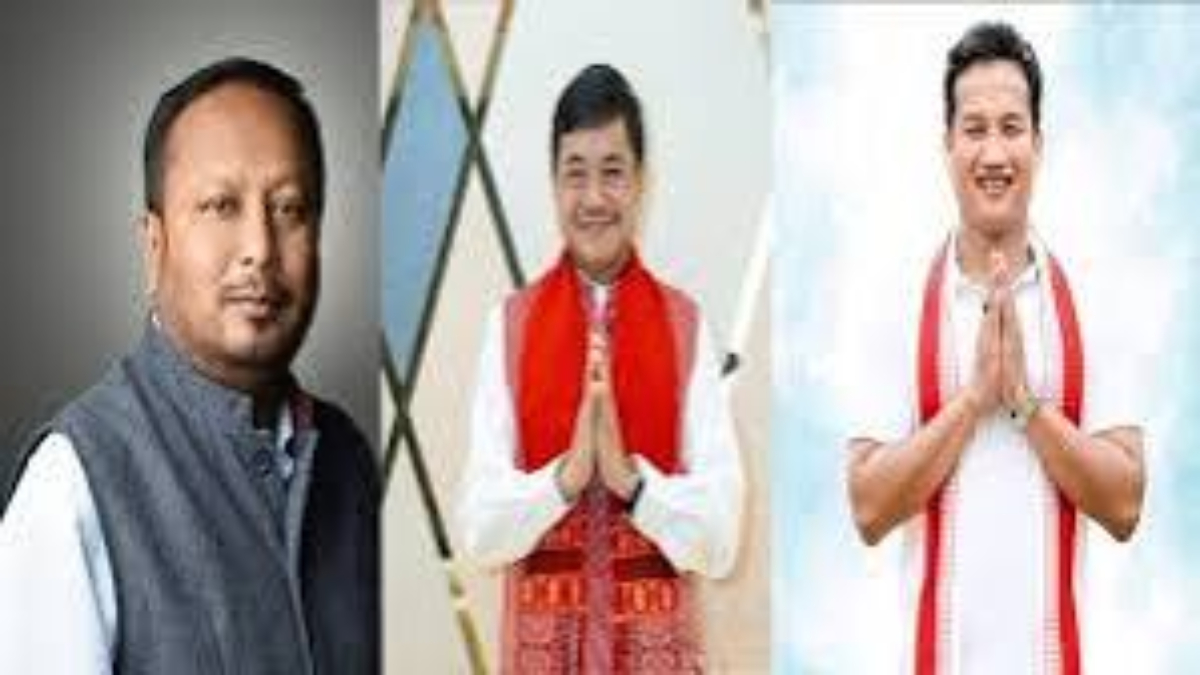
Assam wildlife board appointments have triggered discussion after the state government reconstituted the State Board for Wildlife and listed three prominent political figures — Padma Hazarika, Tuliram Ronghang and Debolal Gorlosa — among its “eminent conservationists, ecologists and environmentalists.” The move has attracted attention because all three are elected political leaders or heads of autonomous councils rather than widely recognised professional environmentalists.
The Assam government issued the reconstitution notification on August 13, 2026, under Section 6 of the Wildlife (Protection) Act, 1972. Chief Minister Himanta Biswa Sarma has been appointed chairperson, while Environment, Forest and Climate Change Minister Jayanta Malla Baruah will serve as vice-chairperson.
Assam wildlife board gets a new composition
The reconstituted Assam wildlife board includes a broad mix of politicians, conservationists, academics, government officials and representatives of non-governmental organisations.
Three MLAs — Rishiraj Hazarika of Ranganadi, Victor Kumar Das of Goreswar and Milon Das of Hailakandi — have been included as members. Representatives of Aaranyak, WWF-India and the Wildlife Trust of India have also been included, giving the board links with established wildlife and conservation organisations.
The notification also names 10 people under the category of eminent conservationists, ecologists and environmentalists. They include Padma Hazarika, Tuliram Ronghang and Debolal Gorlosa, along with recognised figures such as retired Gauhati University professor Parimal C. Bhattacharjee, Assam University professor Parthankar Choudhury, retired IAS officer A.U. Choudhury, elephant conservationist Kaushik Barua, Nature’s Beckon director Soumyadeep Datta and conservationist Purnima Devi Barman.
Why the three political names stand out
Padma Hazarika is a BJP MLA from Naduar. The Assam Legislative Assembly records him as a BJP legislator, while the 2026 election results show that he retained the Naduar seat with 111,125 votes.
Hazarika does have a record of participating in environmental initiatives. In June 2026, he inaugurated a plantation drive at Kachari Gaon in Sootea, where around 300 saplings were planted. He also spoke about the need for environmental conservation and protection.
Tuliram Ronghang, meanwhile, is the Chief Executive Member of the Karbi Anglong Autonomous Council and won the Rongkhang Assembly seat in the 2026 election. His recent public work has included discussions on forest rights, while a 2025 eco-tourism outreach programme in West Karbi Anglong also combined political activities with environmental messaging.
Debolal Gorlosa is the Chief Executive Member of the Dima Hasao Autonomous Council. Dima Hasao has also seen environmental initiatives under his administration. In October 2025, Gorlosa convened a meeting involving schools, markets, transport workers and local businesses to push for a plastic-free and more sustainable district.
A board mixing politics and conservation
The inclusion of the three leaders does not necessarily mean the government considers them equivalent to career conservation scientists. Their inclusion can also reflect the practical importance of political and autonomous-council leadership in managing landscapes where communities, forests, wildlife and development projects overlap.
That distinction matters for the Assam wildlife board, whose role involves advising on wildlife conservation and related policy. Assam contains some of India’s most important wildlife habitats, including Kaziranga, Manas, Orang, Nameri and other protected areas.
The board’s composition therefore brings together people with different forms of expertise. Scientists and conservationists provide technical knowledge, while elected representatives can bring local administrative and community perspectives.
Environmental record under scrutiny
The attention around the three appointments also highlights the difference between being involved in environmental initiatives and being a professional environmentalist.
Hazarika’s plantation activities, Ronghang’s work in Karbi Anglong and Gorlosa’s sustainability initiatives provide examples of their engagement with environmental issues. However, their primary public roles remain political and administrative. Official election records identify Hazarika and Ronghang as politicians, while Gorlosa heads an autonomous council.
The board’s other members, including Purnima Devi Barman and representatives of major conservation organisations, bring more established conservation credentials to the panel.
The unusual categorisation of the three political leaders is therefore likely to remain a talking point, particularly among environmental groups and observers tracking wildlife governance in Assam.
For the state, the more important test will be what the reconstituted board actually delivers. Assam faces pressure from habitat loss, human-wildlife conflict, plastic pollution and competing demands for infrastructure and economic development. A board combining political authority with scientific and community expertise could play an important role if it operates effectively and transparently.
The new Assam wildlife board ultimately places political leaders and conservation specialists around the same table. Whether the unusual mix becomes a strength or attracts continued criticism will depend less on official labels and more on the board’s decisions, conservation outcomes and ability to protect Assam’s wildlife while addressing the concerns of communities living alongside forests and protected areas.
Asmita Dey’s Gold: Judoka Creates History With Commonwealth Games Victory