

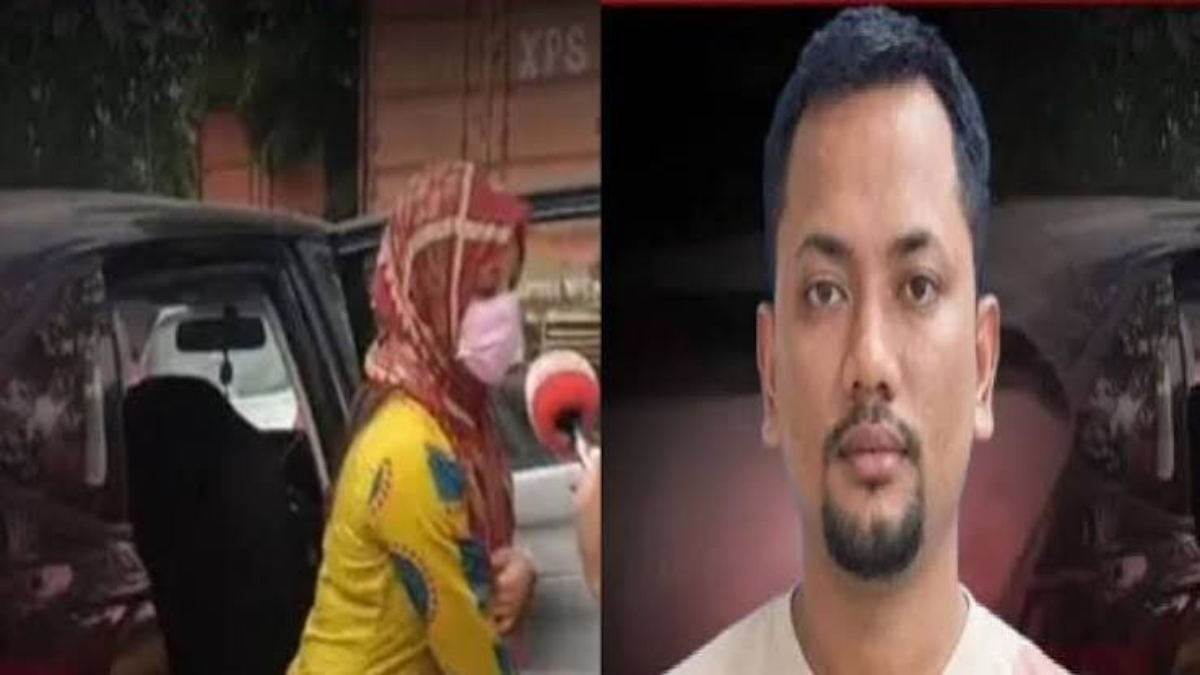
The Ghanakanta Gogoi post-mortem examination is set to be conducted at Assam Medical College and Hospital (AMCH) in Dibrugarh following the death of the prime accused in the Guwahati hotel shooting case. Gogoi was killed in a police firing incident in Sivasagar district in the early hours of November 4, triggering fresh developments in the investigation into the shooting that claimed five lives at Hotel Bilas Inn.
The decision to conduct the post-mortem at AMCH comes as authorities complete the necessary procedures following his death. The examination is expected to establish important medical details surrounding his death, including the nature and extent of his bullet injuries.
AMCH to conduct post-mortem examination
The post-mortem examination is an important step following the fatal police firing incident. Gogoi’s body is expected to undergo a detailed medical examination at AMCH, where doctors will document the injuries and determine the medical findings associated with his death.
The examination is particularly significant given the circumstances in which the 34-year-old died. Police have maintained that the firing was carried out in response to an alleged attempt by Gogoi to seize an officer’s service weapon during transportation.
The post-mortem findings could provide further clarity on the bullet injuries sustained by Gogoi. The formalities surrounding the examination and the subsequent handover of his body to family members are also part of the procedures following the incident.
How Ghanakanta Gogoi died in Sivasagar
According to Sivasagar Senior Superintendent of Police (SSP) Papori Chetia, the incident occurred at approximately 3.10 am on November 4 in the Gaurisagar area of Sivasagar district.
Gogoi was being transported from Guwahati to Sivasagar in connection with a separate case registered against him. During the journey, the police team reportedly stopped after he requested permission to step out of the vehicle.
The SSP alleged that Gogoi attempted to snatch the service weapon of the investigating officer, triggering a physical struggle. During the confrontation, three rounds were reportedly fired from the investigating officer’s weapon.
Police subsequently claimed that another officer, the personal security officer accompanying the team, opened fire to prevent further assault and protect his colleagues.
Gogoi sustained a bullet injury and was rushed to a nearby hospital. However, doctors declared him brought dead. The injured investigating officer, identified as Sub-Inspector Debashish Sharma, was taken for medical treatment. His condition was reported to be stable.
The police account of the encounter has attracted attention because of the serious nature of the allegations and the circumstances surrounding the death of the accused.
Separate case linked to alleged bank fraud
The transfer to Sivasagar was connected to a separate case involving alleged financial fraud. According to police, Gogoi was wanted in a 2024 case registered following a complaint by a manager of Punjab National Bank.
Investigators were examining allegations that he had obtained a loan to purchase an excavator using forged documents. The bank reportedly scrutinised the documents before filing a complaint with the police.
Gogoi’s arrest in the separate case came shortly after a Guwahati court sent him to 14 days of judicial custody on November 3, following the completion of his seven-day police remand in the hotel shooting investigation.
He had initially been arrested shortly after the October 26 shooting and was subsequently questioned by a Special Investigation Team (SIT).
Five people killed in Hotel Bilas Inn shooting
The Ghanakanta Gogoi post-mortem comes against the backdrop of one of Guwahati’s most shocking recent shooting incidents.
The firing took place on October 26 at Hotel Bilas Inn in the Bora Service area of Guwahati. The incident reportedly followed a dispute between the hotel’s owners and Gogoi, who had taken the property on lease.
According to preliminary police findings, disagreements had developed over the management of the hotel and certain facilities following its renovation. The two parties reportedly entered into a five-year lease agreement on September 10, 2025, at a monthly rent of approximately Rs 1.8 lakh.
A meeting was reportedly arranged to resolve the differences. However, an argument allegedly escalated into a physical confrontation before shots were fired.
Five people lost their lives in the incident. They were identified as hotel co-owner Helena Bharali, her brother Bhudev Bharali, her son Debarshi Kashyap, daughter-in-law Rinika Kashyap and family staffer Narayan Das.
Another person, identified as Satyendra Pathak, sustained injuries and was taken to Gauhati Medical College and Hospital for treatment.
Police arrested Gogoi shortly after the incident and recovered a licensed .32-bore pistol allegedly used in the shooting. The investigation subsequently involved forensic examinations, witness questioning and reconstruction of the crime scene.
Crime scene reconstruction completed before his death
On November 2, investigators took Gogoi back to Hotel Bilas Inn to reconstruct the sequence of events.
The exercise was conducted under heavy security, with police using dummy bodies and a dummy firearm to establish the positions of the victims and understand how the shooting unfolded.
The SIT also examined different locations inside the hotel and the adjoining approach lane. Investigators sought to compare Gogoi’s account with the physical and forensic evidence collected from the premises.
The reconstruction lasted nearly two hours. Police also reportedly collected additional materials during the exercise, although details of the recovered items were not immediately disclosed.
Gogoi’s death on November 4 has now added another major development to the investigation.
Questions surrounding the police encounter
The circumstances of the encounter are expected to remain an important subject of scrutiny. While police have described the shooting as a response to an alleged attempt to seize an officer’s weapon, the incident raises questions that will require examination through the appropriate investigative procedures.
The Ghanakanta Gogoi post-mortem at AMCH is therefore an important part of establishing the medical facts surrounding his death. The findings may help document the injuries and provide an official medical account of the fatal shooting.
With five people having lost their lives in the original Guwahati hotel incident, the case has drawn considerable public attention. The post-mortem examination and further scrutiny of the encounter will be significant in determining the circumstances surrounding the accused’s death. Meanwhile, the authorities face the responsibility of ensuring that the investigation into both incidents follows due legal procedures.
Industry-Oriented Courses: Nagaland Pushes Major Education Reforms to Tackle Unemployment