

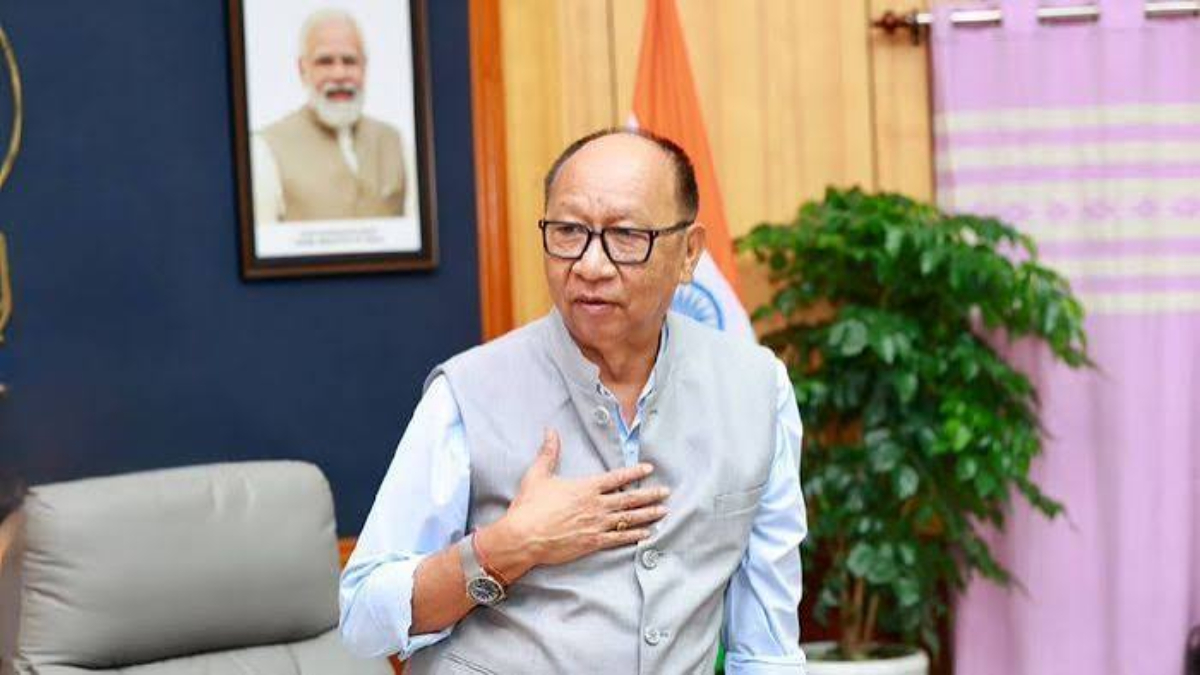
Drug-Free Manipur has received renewed support from Chief Minister Yumnam Khemchand Singh following Operation Trident, a major multi-state crackdown targeting an alleged international narcotics trafficking network. The operation, conducted on October 23, 2026, across Manipur, Assam and Mizoram, resulted in 18 arrests and exposed suspected hawala transactions worth Rs 100 crore. The Chief Minister reaffirmed his government’s determination to protect young people from drugs and strengthen efforts to dismantle trafficking networks.
Manipur CM Reaffirms Commitment After Operation Trident
Chief Minister Yumnam Khemchand Singh welcomed the action taken by central agencies and police forces, congratulating Union Home Minister Amit Shah and the teams involved in the crackdown.
In a social media post sharing Shah’s statement, Singh reiterated Manipur’s commitment to the broader mission of building a drug-free India and a drug-free state. He emphasised the importance of safeguarding young people and ensuring a healthier future for the next generation.
The Chief Minister’s statement comes as authorities continue to address drug trafficking and substance abuse in the state. The latest operation highlights the importance of coordinated enforcement, intelligence sharing and action against the financial networks supporting the illegal narcotics trade.
The state government’s Drug-Free Manipur objective remains closely linked to efforts to prevent the circulation of illegal substances, strengthen policing and reduce the wider social consequences of drug abuse.
Operation Trident Targets 38 Locations Across Three States
The Narcotics Control Bureau (NCB) spearheaded Operation Trident in coordination with Mizoram Police, the Enforcement Directorate and other enforcement agencies. On October 23, 2026, 38 multi-agency teams conducted simultaneous searches at 38 identified locations across Assam, Mizoram and Manipur.
According to the Union Home Ministry’s announcement, the coordinated operation targeted an alleged transnational narcotics cartel and sought to disrupt both its operational infrastructure and financial channels.
The searches covered several locations and important transit corridors, including Aizawl, Champhai and Zokhawthar in Mizoram, Churachandpur in Manipur, and the Cachar corridor in Assam.
Investigators focused on suspected links between drug trafficking, financial facilitators and cross-border transportation routes. The operation followed intelligence gathering and investigations into the alleged network’s activities.
Authorities said the network moved narcotics across India, Myanmar and Bangladesh through what officials described as the Death Triangle Corridor.
Major Arrests and Financial Seizures
The reported results of Operation Trident underline the scale of the alleged network and the authorities’ focus on disrupting its financial operations.
According to figures announced by Union Home Minister Amit Shah on October 25, the crackdown resulted in the following actions:
- 18 people arrested in connection with the alleged network.
- 1,424 bank accounts frozen as part of the financial investigation.
- Rs 100 crore in suspected hawala transactions uncovered.
- Properties worth Rs 17.82 crore attached by the authorities.
- 500 detonators seized during the operation.
- Rs 12 lakh in cash recovered by enforcement teams.
The findings indicate that investigators are examining more than the physical movement of narcotics. By tracing suspected financial transactions and targeting assets, agencies aim to weaken the infrastructure that enables organised trafficking.
The arrests and seizures represent the reported results of the crackdown, while further investigation will be necessary to establish individual responsibility and the full extent of the alleged network.
Why the Crackdown Matters for Manipur
Manipur’s location along the India-Myanmar border makes cross-border narcotics trafficking an important security and public health concern. Routes connecting the region with neighbouring countries can be exploited by organised networks seeking to transport illegal substances into other parts of India.
The impact of drug trafficking extends beyond law enforcement. Substance abuse can affect families, education, employment and community wellbeing, making prevention and rehabilitation essential parts of the wider response.
The latest crackdown strengthens the government’s stated Drug-Free Manipur mission by targeting suspected trafficking operations and the money believed to support them. However, lasting progress will depend on sustained investigations, effective prosecution and cooperation between state and central agencies.
Public awareness, accessible treatment services and rehabilitation programmes will also remain important in addressing substance abuse and helping affected individuals return to their communities.
Centre Sets Deadline to Eliminate Drug Networks
Union Home Minister Amit Shah said Operation Trident reflected the government’s determination to eliminate drug networks by December 31, 2029. The operation aligns with the Vision Document on Narcotics Control for 2026–2029, which emphasises intelligence-led investigations and financial disruption alongside traditional enforcement measures.
The approach seeks to identify the people, logistics and financial channels that sustain trafficking organisations rather than concentrating exclusively on individual drug seizures.
For Manipur, cooperation among the police, central agencies and other stakeholders will be crucial to maintaining pressure on suspected trafficking networks. Better intelligence sharing and coordinated investigations could help authorities identify additional links and prevent criminal groups from rebuilding their operations.
The Chief Minister’s renewed pledge following Operation Trident signals continued political support for the anti-drug campaign. As investigations proceed, the focus will remain on disrupting illegal supply chains, protecting vulnerable communities and strengthening preventive measures.
Achieving Drug-Free Manipur will require consistent action beyond a single operation. The latest crackdown marks a significant enforcement development, but sustained policing, community participation, awareness campaigns and rehabilitation support will be essential to building a safer and healthier future for the state’s people.
Northeast India’s Musical Talent Wins Global Spotlight at Major Cultural Festival