

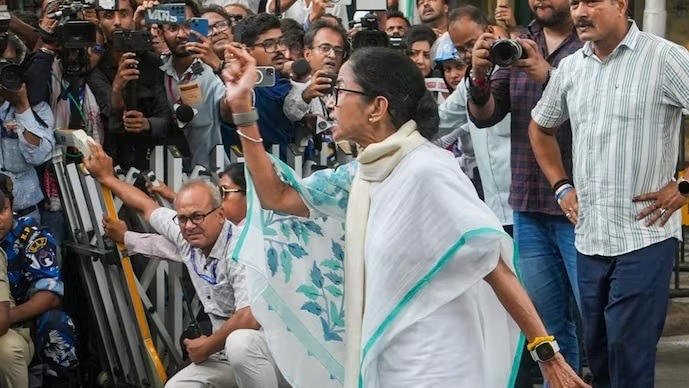
West Bengal Chief Minister Mamata Banerjee has raised concerns over alleged Electronic Voting Machine (EVM) swaps, sparking a fresh debate on the integrity of India’s electoral process. Her statement has drawn attention from political parties, experts, and the public alike.
The EVM swap allegations have become a major talking point ahead of election results. While such claims often emerge during intense political contests, they also raise important questions about election security and transparency.
Moreover, the issue highlights the need to understand how the EVM system functions. Therefore, examining the safeguards in place can help assess whether such swaps are even possible.
Read More: Historic Victory for Assam Temporary Tea Workers on May Day
How EVMs Work in India
Electronic Voting Machines form the backbone of India’s electoral system. The Election Commission of India introduced them to ensure efficient and accurate vote counting.
An EVM consists of two main units: the control unit and the ballot unit. Polling officials manage the control unit, while voters use the ballot unit to cast their votes.
In addition, the system includes Voter Verifiable Paper Audit Trail (VVPAT) devices. These devices allow voters to verify their choices through a printed slip.
EVMs operate as standalone machines. They do not connect to the internet or external networks. As a result, they remain insulated from remote interference.
Security Measures and Safeguards
The Election Commission has implemented multiple layers of security to protect EVMs. These measures begin even before polling starts and continue until counting concludes.
First, authorities seal EVMs after preparation and testing. They store them in secure strong rooms under constant surveillance.
Second, representatives from political parties can monitor these processes. Their presence ensures transparency and accountability.
Third, officials transport EVMs under strict security arrangements. They track movement carefully to prevent unauthorized access.
Moreover, CCTV cameras and security personnel guard storage facilities. These precautions reduce the risk of tampering or replacement.
Can EVM Swaps Actually Happen?
Experts generally consider EVM swaps highly unlikely due to the robust safeguards in place. The layered security system makes unauthorized access extremely difficult.
For a swap to occur, multiple security protocols would have to fail simultaneously. This includes breaches in storage, transport, and monitoring systems.
Furthermore, political party representatives observe many stages of the process. Their involvement adds an additional layer of oversight.
The use of VVPAT also provides a verification mechanism. It allows cross-checking of electronic results with paper records.
Therefore, while allegations may arise, evidence of large-scale EVM swaps remains limited. Authorities emphasize that the system is designed to prevent such scenarios.
Political Reactions and Debate
Mamata Banerjee’s statement has triggered reactions from various political parties. Some leaders have supported her concerns, while others have dismissed them as unfounded.
Opposition parties often raise questions about EVMs to highlight issues of transparency. On the other hand, ruling parties and election authorities defend the system’s reliability.
This debate reflects broader political dynamics. Allegations and counter-allegations are common during election periods.
Moreover, such discussions influence public perception. They can either strengthen confidence or create doubts about the electoral process.
Role of Election Commission
The Election Commission of India plays a central role in addressing such concerns. It ensures that elections are conducted fairly and transparently.
The Commission has repeatedly stated that EVMs are secure and tamper-proof. It has also invited experts and stakeholders to examine the system.
In addition, the Commission conducts mock polls before actual voting. These tests verify that machines function correctly.
Furthermore, randomization processes determine the allocation of EVMs. This reduces the possibility of manipulation.
By implementing these measures, the Commission aims to maintain trust in the electoral system.
Importance of Public Confidence
Public confidence is essential for the success of any democratic system. Elections must not only be fair but also appear fair to citizens.
Allegations like EVM swap claims can affect this perception. Therefore, addressing concerns promptly becomes important.
Transparency and communication play key roles in building trust. Authorities must explain processes clearly and provide evidence of safeguards.
Moreover, political leaders have a responsibility to ensure that their statements do not undermine confidence without valid grounds.
At the same time, raising questions can also lead to improvements. Constructive debate helps strengthen systems over time.
Lessons From Past Elections
India has conducted numerous elections using EVMs. Over the years, the system has demonstrated efficiency and reliability.
While allegations have surfaced occasionally, investigations have not found evidence of widespread tampering.
The introduction of VVPAT further strengthened the system. It provides an additional layer of verification and reassurance.
These developments show that the electoral process continues to evolve. Authorities adapt to challenges and improve safeguards.
Way Forward
Going forward, maintaining transparency will remain crucial. The Election Commission may continue to enhance security measures and communication strategies.
In addition, public awareness campaigns can educate voters about how EVMs work. Understanding the system can reduce misconceptions.
Political parties should also engage constructively with the Commission. Collaboration can help address concerns effectively.
Moreover, technological advancements can further improve the system. Continuous innovation ensures that elections remain secure and efficient.
Conclusion
Mamata Banerjee’s EVM swap allegations have reignited debate on election security in India. While such claims raise important questions, the existing safeguards make large-scale swaps highly unlikely.
The Election Commission’s robust system, combined with oversight and verification mechanisms, ensures the integrity of the process.
As elections continue to evolve, maintaining public trust will remain essential. Transparent communication and continuous improvement can help strengthen confidence in India’s democratic system.
Read More: Amit Shah Inaugurates Holy Buddha Relics Exposition in Leh