

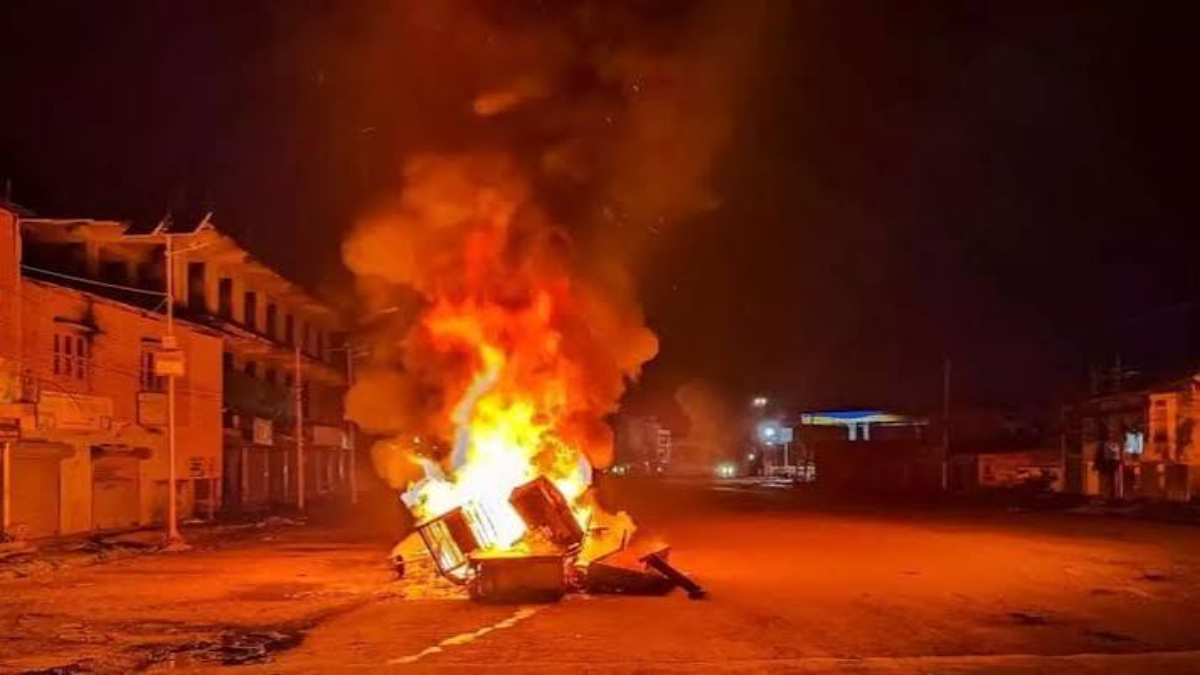
Manipur violence cases have received a fresh push from the Supreme Court, which on Monday, August 10, asked the governments of Manipur and Assam and other concerned authorities to consider setting up two separate exclusive courts to handle cases arising from the 2023 ethnic violence. The proposed arrangement would have one court deal with cases investigated by the Central Bureau of Investigation (CBI) and another with cases handled by the National Investigation Agency (NIA).
SC seeks dedicated courts for Manipur violence cases
A bench headed by Chief Justice of India Surya Kant, along with Justices Joymalya Bagchi and V Mohana, reviewed the status of investigations and proceedings linked to the violence that began in Manipur on May 3, 2023.
The court said authorities should consider establishing two exclusive courts, one for CBI cases and another for NIA cases arising from the violence. The Registrar General of the concerned High Court has also been asked to submit a status report on the proposed arrangement before the next hearing.
The move is aimed at ensuring that sensitive cases receive dedicated judicial attention and are not delayed because judges are simultaneously handling unrelated matters. The Supreme Court had earlier issued broader directions for exclusive courts dealing with NIA and UAPA cases, stressing the need for faster trials.
CBI investigation covers 31 cases
Additional Solicitor General Aishwarya Bhati informed the Supreme Court that the CBI has investigated 31 cases connected with the violence. Final reports have been filed in 27 cases, comprising 22 chargesheets and five closure reports, while four cases remain under investigation.
Of the 22 cases in which chargesheets have been filed, courts have taken cognisance of 20. Cognisance is still pending in two cases. One of the cases is triable by a magistrate, while the remaining matters involve Sessions trials.
The court was also informed that all CBI cases connected with the Manipur violence have been transferred to Gauhati.
The figures underline the scale of the legal proceedings arising from the conflict and the need for a focused judicial mechanism. Dedicated courts could allow judges to devote more time to evidence, witness examination and other procedural steps in the cases.
NIA has chargesheeted 15 cases
The NIA has been entrusted with 30 cases linked to the violence. According to the information presented before the Supreme Court, chargesheets have been filed in 15 of these cases, while investigations continue in the remaining 15.
The 15 chargesheeted cases are considered ready for trial, although further investigation is continuing in some matters. Charges have already been framed in seven cases.
The distribution of the NIA cases also highlights why coordination between different courts and authorities is important. Two chargesheeted cases are before a Delhi court, five are before courts in Gauhati and eight are before courts in Manipur.
The proposed exclusive courts could therefore provide a more streamlined mechanism for handling Manipur violence cases, particularly those involving central agencies and multiple accused or witnesses.
Victims seek access to case information
During the hearing, senior advocate Vrinda Grover raised concerns about victims and their families not having adequate access to status reports and chargesheets despite earlier directions.
The Supreme Court responded by directing authorities to compile details of cases where chargesheets have been filed. This information is to include relevant case numbers and the status of proceedings so that victims, their families and legal representatives can access the material.
Access to case information is particularly important in Manipur violence cases, where proceedings involve victims and witnesses who have faced prolonged uncertainty since the violence erupted.
The court also stressed that investigations by the CBI and NIA should continue without interruption. It directed the Manipur government, central agencies and security forces to maintain proper coordination and provide necessary support.
Wider push for faster special-court trials
The latest directions come against the backdrop of the Supreme Court’s broader efforts to reduce delays in trials involving central investigative agencies. In May 2026, the court directed that exclusive NIA courts should generally be established at the rate of one court for every 10 to 15 pending trials. It also said trials before such courts should proceed on a day-to-day basis as far as practicable.
That framework is relevant to the handling of Manipur violence cases, where investigations by two central agencies have produced a substantial number of chargesheets.
The court’s latest intervention also reflects its continuing monitoring of the criminal justice process arising from the 2023 violence. Earlier, the Supreme Court had facilitated the transfer of proceedings linked to some cases to Assam, with the Gauhati High Court designating courts for their handling.
Focus shifts towards completing trials
The ethnic violence in Manipur has claimed more than 200 lives and displaced thousands of people since May 2023. The prolonged legal process has remained a major concern for victims, families and authorities.
With chargesheets filed in a significant number of cases, the focus is increasingly shifting from investigation to ensuring effective and timely trials. The proposed exclusive courts could help separate these proceedings from the regular workload of special judges.
For Manipur violence cases, the Supreme Court’s latest directions could mark an important step towards a more organised trial process, greater access to case information and closer coordination between state authorities and central investigative agencies. The next status report from the High Court is expected to provide greater clarity on whether the proposed two-court mechanism will be implemented.
Guwahati Independence Day Lights Up Iconic Landmarks in Grand Celebration