

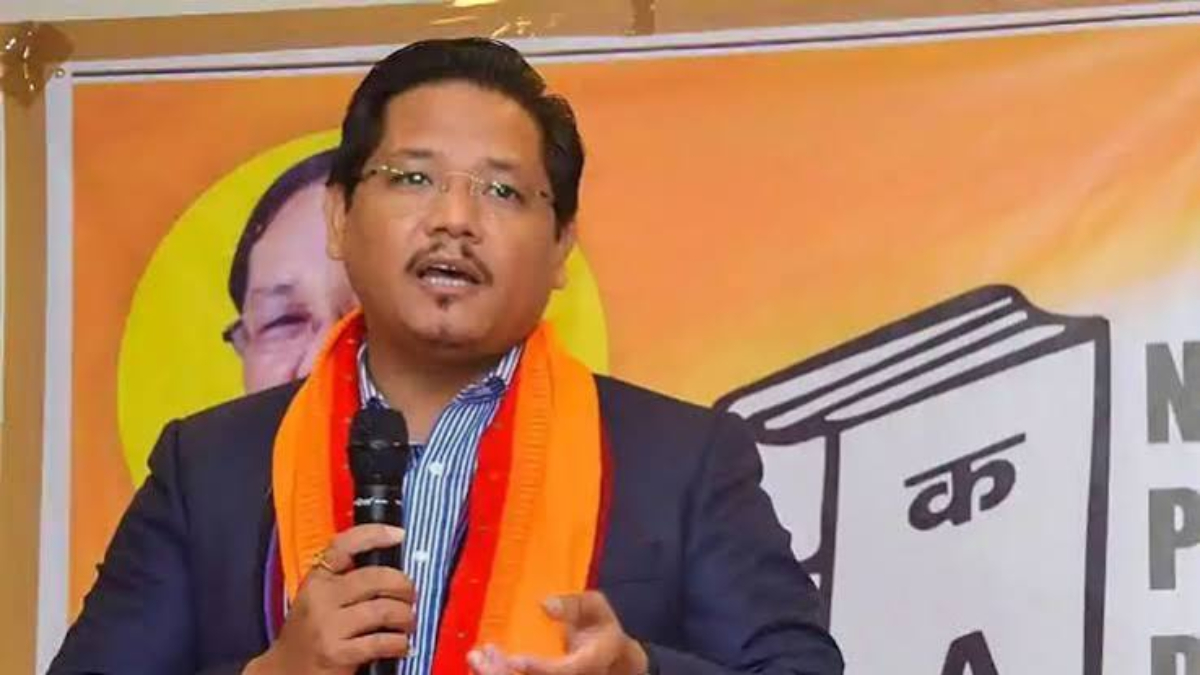
Three UDP MLAs join NPP has emerged as a major political development in Meghalaya, with the ruling National People’s Party (NPP) poised to strengthen its position in the state Assembly. On October 19, 2026, three legislators from the United Democratic Party (UDP) moved towards merging with the NPP, potentially increasing its strength from 33 to 36 in the 60-member Meghalaya Legislative Assembly.
The development follows the recent recognition of the merger of eight UDP legislators with the Bharatiya Janata Party (BJP). However, the latest move is still subject to the Assembly Speaker’s decision on the merger process.
Three UDP MLAs Move Towards NPP Merger
The three UDP legislators involved in the latest political development are Paul Lyngdoh, Nujorki Sungoh and Renikton Lyngdoh Tongkhar.
According to reports, Paul Lyngdoh and Renikton Lyngdoh Tongkhar met Meghalaya Assembly Speaker Thomas A. Sangma on October 19 and submitted their merger documents. Nujorki Sungoh could not attend the meeting due to medical reasons.
The Speaker said he would seek legal opinion before taking a decision on the proposed merger. He also indicated that Sungoh’s intention would need to be established, either through his physical presence or consent communicated online.
Therefore, although Three UDP MLAs join NPP has become the central political talking point in Meghalaya, the formal approval process remains important before the change can be treated as complete.
The proposed merger would strengthen Chief Minister Conrad K. Sangma’s party and significantly reduce the UDP’s representation in the Assembly.
Eight UDP MLAs Previously Merged With BJP
The latest development follows another major shift involving the UDP. Eight of its legislators joined the BJP at the party’s headquarters in New Delhi on September 23, 2026.
The legislators subsequently submitted a letter informing the Meghalaya Legislative Assembly about their decision on September 25.
On October 16, Assembly Speaker Thomas A. Sangma formally recognised their merger with the BJP under Paragraph 4 of the Tenth Schedule to the Constitution of India.
The eight legislators were Lahkmen Rymbui, Pius Marwein, Kyrmen Shylla, Mayralborn Syiem, Matthew Beyondstar Kurbah, Ollan Singh Suin, Balajied Kupar Synrem and Synshar Kupar Roy Lyngdoh Thabah.
Following the recognition, the UDP’s strength fell from 12 legislators to four, while the BJP’s tally increased from two to 10.
With the latest proposed realignment, the regional party faces the prospect of losing nearly all its representation in the Assembly.
NPP Strength Could Rise to 36 MLAs
If the proposed merger involving the three legislators receives the necessary approval, the NPP’s strength would rise from 33 to 36 in the 60-member Meghalaya Assembly.
The increase would further consolidate the party’s position as the largest constituent of the ruling Meghalaya Democratic Alliance (MDA), headed by Chief Minister Conrad K. Sangma.
The BJP and UDP are also constituents of the MDA government, making the latest political developments significant for the coalition’s internal balance.
The possibility that Three UDP MLAs join NPP has also drawn attention to the changing relationship between regional parties and the NPP ahead of the next Assembly election, expected in early 2028.
Although the NPP already holds a strong position in the legislature, the proposed merger could provide it with additional political leverage within the Assembly.
UDP Faces Uncertain Political Future
The UDP’s political position has weakened considerably following the departure of eight legislators to the BJP. If the remaining three legislators successfully merge with the NPP, party president Metbah Lyngdoh would be left as the UDP’s sole MLA.
Metbah Lyngdoh is also a minister in the Conrad Sangma-led government, adding another dimension to the situation.
The possible reduction from 12 MLAs to one would represent a major setback for the regional party. It could also raise questions about the UDP’s ability to maintain its independent political identity and influence state-level decisions.
For Meghalaya’s regional political landscape, the developments underline the challenges faced by smaller parties in retaining their legislators amid shifting political alliances.
Meghalaya Politics Ahead of the 2028 Assembly Election
The latest political realignment comes with the next Meghalaya Assembly election expected in early 2028. The changes could influence how parties organise themselves, negotiate political arrangements and prepare for the upcoming electoral contest.
For the NPP, the proposed addition of three legislators could strengthen its legislative position under Conrad K. Sangma. For the UDP, the immediate challenge will be to retain its remaining political presence and determine its future strategy.
However, the outcome of the proposed merger will depend on the Assembly Speaker’s decision and the completion of the required procedures.
As Meghalaya’s political equations continue to change, the proposed movement of Paul Lyngdoh, Nujorki Sungoh and Renikton Lyngdoh Tongkhar towards the NPP marks another significant development. If formally approved, the merger would raise the NPP’s strength to 36 and leave Metbah Lyngdoh as the UDP’s only MLA, reshaping the balance of regional politics ahead of the next Assembly election.
Meghalaya’s Reble Gets Major Spotlight at Weverse Con Festival India 2027