

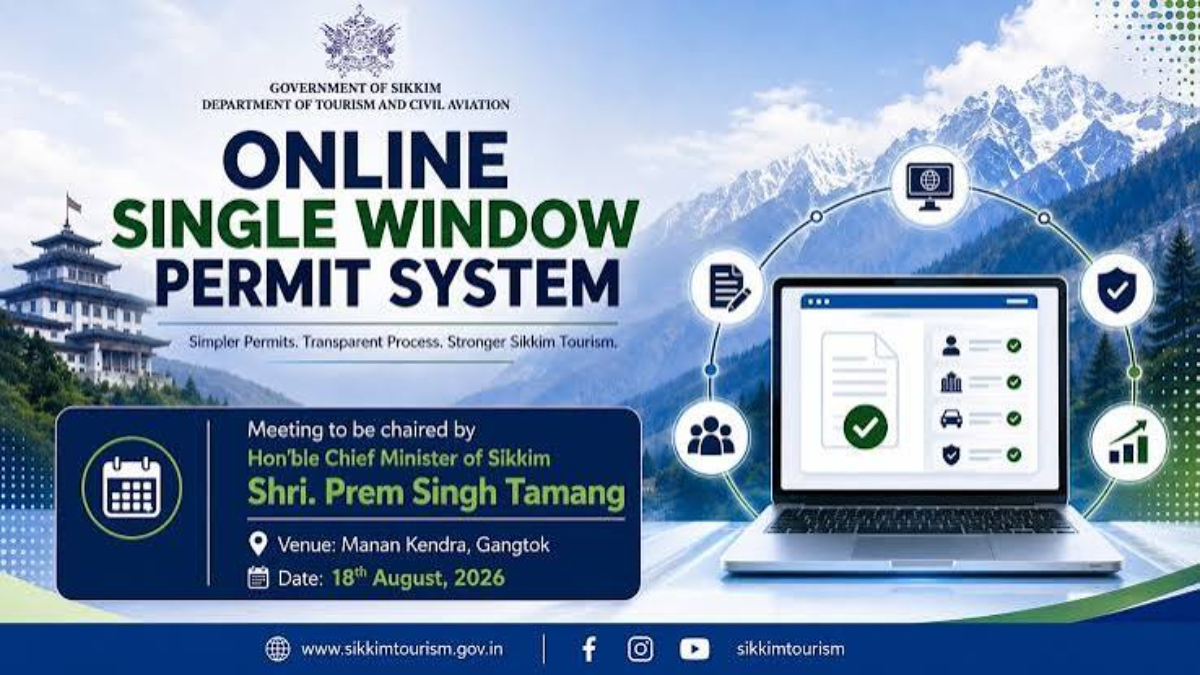
Sikkim online permit system is set for a possible technology-driven upgrade, with the state proposing a geo-fenced mechanism for managing entry into restricted and protected areas. The proposed approach is aimed at strengthening permit monitoring, improving visitor regulation and making it easier for authorities to identify movement beyond approved zones.
Sikkim already operates a digital permit framework for restricted and protected areas. The state government launched its Online Permit System for Restricted Area Permit (RAP) and Protected Area Permit (PAP) in August 2022. The system was designed to reduce paperwork and provide digitally generated permits with QR codes for verification at designated check posts.
Geo-fencing could strengthen permit checks
Under the proposed model, geographical boundaries could be digitally linked to permits. This would allow authorities to verify whether a visitor or vehicle remains within the area and route permitted under the issued document.
Such a system could provide an additional layer of monitoring in sensitive border and ecological zones. Sikkim shares international boundaries with Tibet-China, Nepal and Bhutan, while several areas also have strategic, environmental and wildlife significance. The state government already classifies several border areas, wildlife sanctuaries and sensitive ecological zones as protected areas requiring permits.
The proposal would build on Sikkim’s existing digital infrastructure rather than replacing the permit regime altogether. It could connect permit information with location-based verification to make enforcement more responsive.
Sikkim online permit system already covers key tourist zones
The existing Sikkim online permit system has significantly changed how applications for restricted and protected destinations are processed. According to the state government, PAPs are required for several border areas, including the Tsomgo Lake-Nathula axis, Zuluk-Kupup route, Dzongu and parts of North Sikkim such as Lachen, Gurudongmar, Lachung and Yumesamdong.
The Tourism Department currently provides PAP information and application procedures for domestic and foreign tourists. Most protected-area permits are routed through registered travel agencies, while different government offices handle permits for specific destinations.
The existing digital arrangement also includes QR-coded permits. When the online system was launched in 2022, the government said permits would be checked at Toong Check Post for North Sikkim and at the 3rd Mile Check Post for East Sikkim.
Why the proposed system matters
A geo-fenced permit mechanism could help authorities move from document-based verification towards more active monitoring. A digital permit could contain information about the approved destination, duration, route and other conditions. Location-based technology could then help identify potential deviations.
This could be particularly useful in areas where movement needs to be controlled for security, environmental or administrative reasons. Sikkim Police already has a mandate to restrict unauthorised entry, regulate the movement of permit holders and prevent illegal border crossings.
The technology could also support faster intervention if a visitor enters a prohibited area or moves outside an authorised route. However, the exact technical design, implementation timeline and rules for handling location data would need to be established before such a system becomes operational.
A digital approach to visitor management
Sikkim has increasingly used technology to modernise government services. The state has already introduced online services for RAP and PAP applications, while the Tourism Department provides digital information on eligibility, documents and destinations.
The permit system remains particularly important because the entire state is subject to special regulatory arrangements for foreign visitors. Sikkim Police states that foreigners require permits to enter or stay in the state under the applicable Restricted Area and Protected Area regimes.
Foreign visitors also face additional conditions depending on their nationality and destination. For example, some nationalities require prior clearance from the Ministry of Home Affairs before applying for a RAP.
Balancing tourism with security and conservation
The proposed geo-fencing system comes as Sikkim continues to balance tourism growth with the need to protect sensitive areas. Popular destinations such as Tsomgo Lake and North Sikkim’s high-altitude valleys attract visitors but are located in areas where movement is subject to special restrictions.
A technology-based permit system could make these controls more efficient without necessarily adding more paperwork for tourists. At the same time, clear guidelines would be important to ensure that genuine travellers, local residents and authorised operators are not unnecessarily inconvenienced.
Data protection will also be an important consideration if the proposed system involves real-time or periodic location monitoring. Authorities would need to establish clear rules on what information is collected, how long it is retained and who can access it.
Next step for Sikkim’s permit framework
Sikkim’s existing digital permit infrastructure provides a foundation for introducing more advanced location-based monitoring. The proposed geo-fenced approach could strengthen enforcement while improving the state’s ability to manage visitors in strategically and ecologically sensitive areas.
If implemented with clear safeguards, the upgraded Sikkim online permit system could offer a more transparent and technology-driven way to manage access to restricted and protected destinations. It would also mark another step in Sikkim’s effort to combine tourism convenience with border security, environmental protection and responsible visitor management.
Tripura Village Council Polls May See Key BJP-Tipra Motha Alliance