

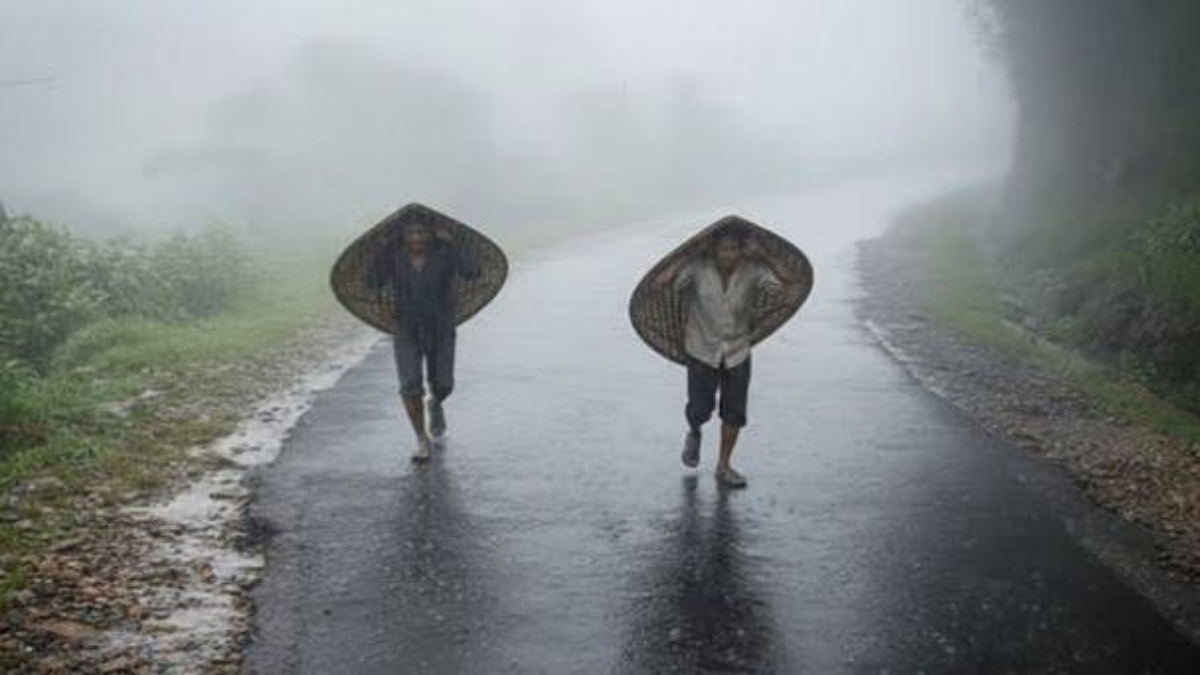
Meghalaya rainfall deficit worsened sharply in August, with the state receiving 38 per cent less rain than normal, according to data from the India Meteorological Department (IMD). The shortfall was particularly notable in East Khasi Hills, home to the globally renowned rain-rich locations of Sohra and Mawsynram, which recorded a 42 per cent rainfall deficit during the month.
The figures highlight an unusually dry monsoon phase for Meghalaya, a state widely associated with some of the heaviest rainfall on Earth. The latest data also show that the August shortfall followed a 9 per cent deficit in July, while June rainfall was near normal.
Meghalaya rainfall deficit reaches 38% in August
Meghalaya received 359.7 mm of rainfall in August against its normal rainfall of 581.6 mm, resulting in a 38 per cent shortfall, the IMD said. The decline was spread across much of the state, with eight of its 11 districts recording deficient rainfall.
East Khasi Hills, where Sohra and Mawsynram are located, recorded a 42 per cent deficit. The figures are significant because both places are internationally recognised for their exceptionally high rainfall, particularly during the southwest monsoon.
The August numbers therefore underline the extent of the dry spell across a region where heavy monsoon rain is normally a defining feature.
Sohra and Mawsynram see an unusual dry spell
Sohra, formerly known as Cherrapunji, and Mawsynram are among the wettest places on Earth. Their location along the southern Khasi Hills makes them particularly exposed to moisture-laden monsoon winds, which can produce intense rainfall.
However, the latest IMD figures show that the wider East Khasi Hills district experienced a substantial rainfall shortfall in August. The available data provide the district-level deficit rather than separate August deficit percentages for each of the two towns.
The development comes after an already dry July. East Khasi Hills recorded nearly 50 per cent less rainfall than normal in July, with the district receiving 1,403 mm against a normal of around 2,796 mm for the month.
Rainfall shortfall affects most Meghalaya districts
The August rainfall pattern was uneven across Meghalaya. West Jaintia Hills recorded the state’s highest deficit at 75 per cent, followed by West Garo Hills at 72 per cent. West Khasi Hills recorded a 60 per cent shortfall, while North Garo Hills was 58 per cent below normal.
East Garo Hills and Ri Bhoi each recorded a 22 per cent deficit, while East Jaintia Hills recorded a 24 per cent shortfall. South Garo Hills remained relatively close to normal, with a 9 per cent deficit.
South West Khasi Hills was the major exception. The district recorded a large excess of 155 per cent, the highest rainfall departure among Meghalaya’s districts in August. Rainfall data for South West Garo Hills were not available in the IMD report.
Dry August follows a weak July
The latest Meghalaya rainfall deficit marks a continuation of below-normal rainfall after July’s 9 per cent statewide shortfall. June, in contrast, recorded rainfall close to the normal level.
The July situation was particularly notable because all districts except South West Khasi Hills experienced deficient or largely deficient rainfall. Five districts received between 50 per cent and nearly 80 per cent less rain than normal, while South West Khasi Hills recorded an 83 per cent surplus.
The continuing variation in rainfall has implications beyond weather statistics. Meghalaya depends heavily on monsoon precipitation for agriculture, streams, springs, groundwater recharge and other water resources. A prolonged dry spell can affect soil moisture and water availability, particularly if below-normal rainfall persists.
At the same time, rainfall in Meghalaya can vary considerably over short distances because of the state’s mountainous terrain. A deficit in one district does not necessarily mean identical conditions everywhere, as demonstrated by the large surplus recorded in South West Khasi Hills during August.
Meghalaya’s unusual monsoon pattern draws attention
The August figures add to an unusual monsoon season for Meghalaya. Earlier in July, the state had been reported to have a substantial rainfall deficit during the peak monsoon period, with concerns that persistent dryness could affect agriculture and water resources.
The latest IMD data show that the rainfall situation did not improve uniformly in August. Instead, the statewide deficit widened considerably, even as some parts of the country experienced episodes of heavy monsoon rain.
For Meghalaya, the coming rainfall pattern will remain important as communities depend on seasonal precipitation to sustain water sources and agricultural activity. The experience of August also demonstrates that even areas known for extreme rainfall can face significant short-term dry spells.
The Meghalaya rainfall deficit recorded in August is therefore a striking departure from the state’s usual monsoon image. With 359.7 mm recorded against a normal 581.6 mm, the latest figures point to a markedly drier month, including a 42 per cent deficit in East Khasi Hills.
Rima Das Not A Hero earns major Busan film festival selection