

The Nagaland government has taken action against 12 hospitals for alleged violations of norms under the Ayushman Bharat Pradhan Mantri Jan Arogya Yojana (AB-PMJAY) and the Chief Minister’s Health Insurance Scheme (CMHIS).
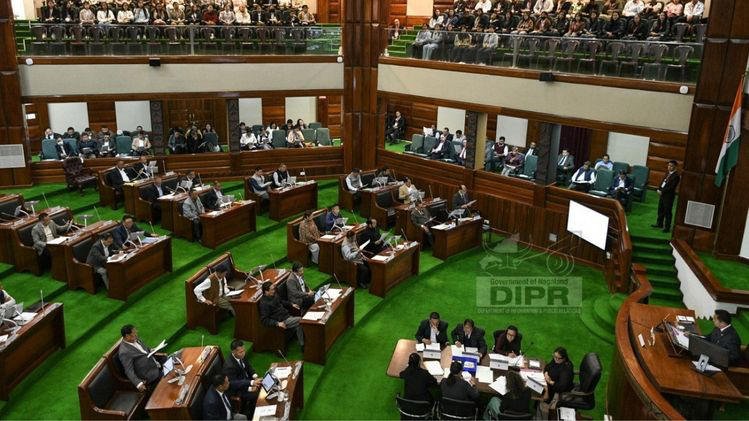
Nagaland Health and Family Welfare Minister P Paiwang Konyak informed the state Assembly that six hospitals faced action for alleged violations under AB-PMJAY, while another six hospitals were proceeded against for alleged irregularities under CMHIS. The action includes the issuance of show-cause notices, directions to reimburse affected beneficiaries and subsequent de-empanelment from the schemes.
The development has brought renewed attention to the implementation of government-backed health insurance schemes in Nagaland and the safeguards available to beneficiaries facing unauthorised charges at empanelled hospitals.
Six Hospitals Each Face Action Under Two Health Schemes
Responding to questions in the Nagaland Assembly, Minister Konyak said that action had been taken against a total of 12 hospitals for violations related to the two health insurance schemes.
Six hospitals associated with the Ayushman Bharat Pradhan Mantri Jan Arogya Yojana faced action, while six others were found to have violated norms under the Chief Minister’s Health Insurance Scheme.
According to the minister, the hospitals included facilities located both within Nagaland and outside the state. The institutions were served show-cause notices and were subsequently directed to reimburse beneficiaries where irregularities had been established. They were also de-empanelled for violating scheme norms.
The action underlines the government’s effort to ensure that hospitals participating in publicly funded health insurance programmes comply with the rules and conditions governing the schemes.
Minister Clarifies Rules on Additional Charges
The issue of hospitals charging beneficiaries beyond prescribed package rates was also raised in the Assembly.
Konyak clarified that empanelled hospitals cannot arbitrarily impose additional charges on beneficiaries for services covered under approved packages. Additional payments can be charged only for services that fall outside the approved package and where the patient has given consent.
The clarification is significant for beneficiaries who rely on cashless treatment under AB-PMJAY and CMHIS.
Government-backed health insurance schemes are intended to protect eligible families from the financial burden of major medical treatment. Unauthorised charges at empanelled hospitals can undermine the cashless nature of these schemes and place additional pressure on patients and their families.
The minister’s statement reaffirmed that hospitals must follow prescribed package rates and cannot demand extra payments for services that are already covered under the relevant scheme.
Beneficiaries Can File Complaints Over Unauthorised Charges
The Nagaland government has also highlighted the grievance redressal mechanism available to beneficiaries.
According to Konyak, beneficiaries who believe that they have been subjected to unauthorised charges can lodge complaints with the Nagaland Health Protection Scheme grievance redressal cell.
Complaints are examined and investigated by the concerned authorities. If irregularities are established, affected beneficiaries may be eligible for reimbursement, while hospitals found to have violated scheme guidelines can face penalties and other action.
The official CMHIS platform also provides grievance-related contact mechanisms for beneficiaries and maintains information on the scheme’s empanelled hospital network and claims-related services.
The grievance mechanism is intended to provide an avenue for patients and families to raise concerns without being left to resolve disputes directly with healthcare providers.
64 Hospitals Currently Empanelled Under AB-PMJAY
Minister Konyak informed the Assembly that 64 hospitals are currently empanelled under AB-PMJAY in Nagaland.
Empanelled hospitals form the core service network through which eligible beneficiaries can access cashless treatment under the scheme.
The removal of hospitals from the empanelled network can therefore have significant consequences for healthcare providers, as it prevents them from offering treatment under the scheme unless they are subsequently eligible for empanelment again under applicable rules.
The Nagaland government has previously emphasised the importance of compliance by empanelled healthcare providers with the guidelines and terms agreed to during their empanelment. The latest action against 12 hospitals demonstrates that violations can lead to formal penalties and de-empanelment.
PM-JAY Provides Coverage of Up to Rs 5 Lakh
The Ayushman Bharat Pradhan Mantri Jan Arogya Yojana provides eligible beneficiaries with health coverage of up to Rs 5 lakh.
According to the minister’s statement, Nagaland has extended coverage to around 2.88 lakh households, exceeding the approximately 2.59 lakh households covered under the Centre’s allocation based on the 2011 Census.
The scheme provides cashless coverage for secondary and tertiary hospitalisation and covers around 1,970 treatment procedures across 25 medical specialities.
The coverage includes hospitalisation as well as certain specified day-care procedures, including dialysis, chemotherapy, radiation therapy and minor surgeries.
The National Health Authority also provides for unspecified surgical packages in certain circumstances where eligible procedures are not specifically listed, subject to prescribed criteria and approval under applicable guidelines.
OPD Services Generally Not Covered Under PM-JAY
The minister also clarified the scope of services covered under the PM-JAY framework.
Outpatient department, or OPD, treatment is generally not covered under the scheme. However, certain specified day-care procedures can be included, such as dialysis, chemotherapy and some minor surgeries.
Certain other treatments and procedures are excluded under the scheme’s policy.
These include cosmetic and aesthetic procedures, dental treatments falling within excluded categories and fertility-related treatments such as IVF and surrogacy.
Understanding these exclusions is important for beneficiaries, as confusion regarding covered and non-covered services can sometimes lead to disputes over hospital charges.
The minister’s clarification sought to distinguish between legitimate payments for services outside an approved package and unauthorised charges for treatment that should be covered under the scheme.
Aadhaar Coverage Important for Ayushman Card Generation
Konyak also informed the Assembly that eligible beneficiaries can generate Ayushman cards at hospitals using Aadhaar.
He stressed the need to improve Aadhaar coverage among eligible beneficiaries to ensure that more people can access the benefits available under the health insurance programme.
Ayushman cards play an important role in enabling beneficiaries to access cashless treatment at empanelled healthcare facilities.
Improving Aadhaar saturation and beneficiary enrolment could therefore help ensure that eligible families are not excluded from benefits because of documentation or identification gaps.
The state’s CMHIS and AB-PMJAY framework is designed to provide health insurance coverage across different categories of eligible residents, including beneficiaries who qualify under the national programme and those covered under the state scheme.
Action Reinforces Accountability Among Hospitals
The action against the 12 hospitals sends a strong message regarding accountability among healthcare providers participating in government health insurance schemes.
Empanelment under PM-JAY and CMHIS allows hospitals to serve beneficiaries under publicly supported cashless healthcare arrangements. In return, hospitals are required to comply with the terms, package rates and guidelines established by the implementing authorities.
Show-cause notices, reimbursement orders and de-empanelment are among the measures available when violations are established.
The government’s approach is aimed at ensuring that beneficiaries receive the treatment and financial protection promised under the schemes without facing unjustified financial demands.
Nagaland Strengthens Oversight of PM-JAY and CMHIS
The action against 12 hospitals marks a significant step in strengthening oversight of government-backed healthcare services in Nagaland.
The Nagaland PM-JAY and CMHIS violations issue has highlighted the importance of monitoring empanelled hospitals and ensuring that beneficiaries understand their rights under the schemes.
With six hospitals facing action under AB-PMJAY and six under CMHIS, the government has demonstrated that violations of scheme norms can result in serious consequences, including reimbursement orders and de-empanelment.
As Nagaland continues to expand access to cashless healthcare, effective grievance redressal and strict compliance by hospitals will remain essential to protecting beneficiaries. The latest Assembly disclosures are expected to reinforce scrutiny of healthcare providers and encourage greater adherence to the rules governing PM-JAY and CMHIS services across the state.