

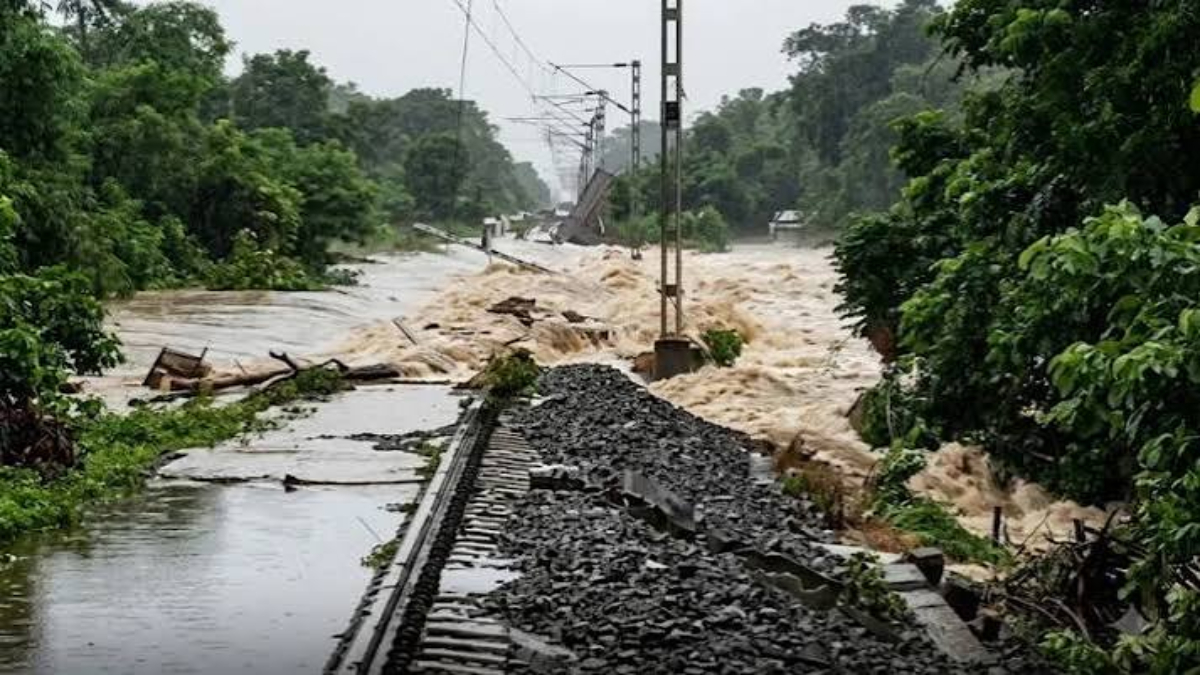
Simaluguri rail section restored marks a significant step towards restoring normal railway connectivity in Assam after severe flood damage disrupted train operations in the region. The Northeast Frontier Railway (NFR) has successfully restored the flood-hit railway section near Simaluguri in Assam’s Sivasagar district. However, due to ongoing safety concerns linked to waterlogging and track conditions, NFR has decided to operate diesel locomotives instead of electric trains until the route is declared completely safe.
The restoration of this vital railway section is expected to improve passenger and freight movement across Assam and other northeastern states, even as railway authorities continue monitoring the flood-affected infrastructure.
Floods caused extensive damage to railway infrastructure
Heavy monsoon rains and widespread flooding severely affected railway operations across several districts in Assam over the past few weeks. The Simaluguri railway section suffered significant damage after floodwaters submerged tracks, weakened embankments, and affected signalling equipment.
Railway engineers and technical teams worked continuously to repair damaged tracks, strengthen vulnerable sections, and inspect bridges before allowing train movement. The restoration followed multiple rounds of safety inspections to ensure that the route could support rail traffic without compromising passenger safety.
The successful restoration comes as floodwaters gradually recede across many affected regions, allowing repair work to progress rapidly.
Simaluguri rail section restored with safety-first approach
While announcing that the Simaluguri rail section restored successfully, Northeast Frontier Railway clarified that only diesel locomotives will operate on the route for the time being.
According to railway officials, diesel operations have been chosen as a precautionary measure because overhead electrical equipment and associated infrastructure require additional inspections following prolonged exposure to heavy rainfall and flooding.
Running diesel locomotives allows train services to resume without placing unnecessary stress on electrical systems until engineers complete detailed safety assessments.
Officials emphasised that passenger safety remains the highest priority, and electric train operations will resume only after all technical clearances are obtained.
NFR prioritises operational safety
The Northeast Frontier Railway has maintained that restoration work does not end with reopening the line. Continuous monitoring of track stability, embankments, overhead equipment, and signalling systems will continue over the coming days.
Railway teams are conducting regular patrols to detect any fresh erosion, soil movement, or water seepage that could affect train operations. Speed restrictions may also remain in force on certain stretches until engineers are fully satisfied with the stability of the railway infrastructure.
NFR has adopted similar precautionary measures during previous monsoon seasons whenever floodwaters affected critical railway sections.
Diesel operations to ensure uninterrupted services
The decision to deploy diesel locomotives enables NFR to minimise disruption while maintaining connectivity across the northeastern region.
Passenger trains, freight services, and essential goods movement are expected to benefit from the reopening of the route. Freight trains carrying fuel, food supplies, construction materials, and other essential commodities play a crucial role in supporting flood-hit areas.
By choosing diesel traction, railway authorities can continue services without waiting for complete restoration of electric infrastructure, reducing delays for both passengers and cargo movement.
Impact on rail connectivity across Northeast India
The reopening of the Simaluguri section is particularly important because it serves as a strategic link connecting several parts of Upper Assam and the wider Northeast.
Flood-related disruptions had forced train cancellations, diversions, and delays over recent weeks, affecting thousands of passengers and commercial supply chains.
With the railway section back in operation, travellers are expected to experience gradual normalisation of services, although some trains may continue operating under temporary speed restrictions until all engineering assessments are completed.
Railway officials have advised passengers to check updated train schedules before travelling, as operational adjustments may continue depending on weather conditions.
Restoration reflects coordinated emergency response
The successful restoration highlights the coordinated efforts of railway engineers, maintenance staff, disaster response teams, and field workers who worked around the clock despite difficult weather conditions.
Special machinery, engineering equipment, and inspection vehicles were deployed to repair damaged tracks and restore safe operations within a short period. Technical experts also carried out detailed inspections of bridges, embankments, and signalling installations before reopening the route.
The restoration demonstrates NFR’s preparedness in responding to natural disasters while ensuring minimal disruption to railway services.
Weather monitoring remains crucial
Although the Simaluguri rail section restored has reopened for train movement, authorities continue to monitor weather forecasts closely.
The India Meteorological Department has warned that parts of Assam could still receive heavy rainfall in the coming days, requiring railway officials to remain vigilant. Any fresh flooding or excessive rainfall may lead to temporary operational changes if safety conditions demand immediate action.
NFR has assured passengers that all necessary precautions will remain in place to ensure secure and reliable railway operations throughout the monsoon season.
The reopening of the railway line offers welcome relief to commuters, businesses, and communities that rely heavily on rail connectivity. While diesel operations may be temporary, the restoration marks a major milestone in Assam’s ongoing recovery from this year’s devastating floods. As repair and monitoring work continues, railway authorities remain focused on balancing operational efficiency with the highest standards of passenger safety.
Critical Doyang Reservoir Water Release Triggers Flood Alert in Assam Downstream Areas