

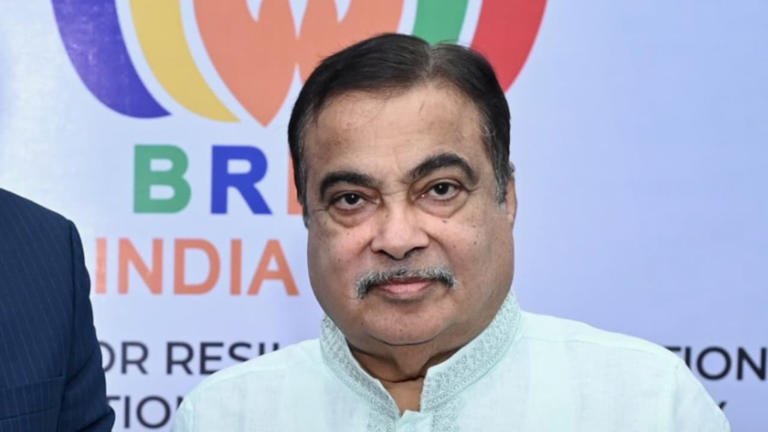
A political campaign against the use of E20-blended petrol has gathered momentum with the E20 Janta Party launching a nationwide “100% Pure Petrol” campaign and demanding the resignation of Union Road Transport and Highways Minister Nitin Gadkari. The development comes shortly after similar criticism of the government’s ethanol-blended fuel policy by the Citizens Justice Party (CJP), adding a new dimension to the ongoing debate over fuel standards and consumer choice.
Leaders of the E20 Janta Party alleged that motorists should have the option to purchase conventional petrol without ethanol blending, arguing that consumers deserve greater transparency and freedom in choosing the fuel best suited to their vehicles.
‘100% Pure Petrol’ campaign unveiled
Announcing the campaign, representatives of the E20 Janta Party said they would conduct awareness drives across different parts of the country to highlight what they describe as the impact of mandatory ethanol blending on vehicles and consumers.
The campaign seeks the availability of “100% pure petrol” at fuel stations alongside E20 fuel, allowing motorists to decide which fuel they prefer. Party leaders claimed that certain categories of vehicles, particularly older models, may not always be optimally compatible with higher ethanol blends and called for wider public discussion on the issue.
Supporters of the campaign said they would engage with motorists, transport associations, and vehicle owners to gather public opinion on fuel choices.
Demand for Gadkari’s resignation
Alongside the campaign, the E20 Janta Party demanded the resignation of Union Minister Nitin Gadkari, holding him politically accountable for promoting ethanol-blended fuel policies.
Party leaders alleged that the government’s fuel strategy has raised concerns among sections of vehicle owners and argued that policymakers should address consumer apprehensions before expanding the use of blended fuels.
The demand adds to the political debate surrounding ethanol blending, although the government has consistently defended the policy as an important step toward reducing dependence on imported crude oil and promoting cleaner fuels.
Campaign follows criticism by CJP
The launch of the “100% Pure Petrol” initiative comes soon after the Citizens Justice Party (CJP) raised objections to the government’s E20 fuel policy. The emergence of another campaign indicates that the issue is increasingly becoming part of broader political discussions.
While both groups have questioned aspects of the ethanol blending programme, the government maintains that the policy has been introduced after extensive consultations with stakeholders, including automobile manufacturers and fuel companies.
Officials have stated that the transition toward higher ethanol blending is being implemented in phases to allow manufacturers and consumers sufficient time to adapt.
Government’s ethanol blending policy
The Centre has been actively promoting ethanol blending under its broader energy security and environmental objectives. Ethanol, produced primarily from agricultural feedstocks such as sugarcane and grains, is blended with petrol to reduce fossil fuel consumption and lower greenhouse gas emissions.
The government has also highlighted the economic benefits of ethanol blending, including increased income opportunities for farmers, reduced crude oil imports, and support for India’s clean energy transition.
Officials have maintained that compatible vehicles are capable of operating efficiently on E20 fuel and that automobile manufacturers have been preparing vehicles accordingly.
Debate over vehicle compatibility
The issue of vehicle compatibility remains central to the ongoing discussion. Critics argue that owners of older vehicles should have continued access to conventional petrol if they believe it is better suited to their engines.
On the other hand, automobile manufacturers and policymakers have indicated that newer vehicles are increasingly being designed to accommodate higher ethanol blends as part of evolving fuel standards.
Industry experts have also noted that consumers should refer to manufacturer recommendations regarding the appropriate fuel for their specific vehicle models.
Fuel policy remains under public discussion
The latest campaign has renewed public debate over balancing environmental goals with consumer preferences. Supporters of ethanol blending argue that the policy contributes to cleaner energy, energy independence, and rural economic growth.
Critics, however, have called for greater consumer awareness, clearer labelling at fuel stations, and wider public consultation as the transition progresses.
The discussion reflects broader questions surrounding India’s long-term energy strategy, vehicle technology, and environmental commitments.
Political debate likely to continue
The demand for Nitin Gadkari’s resignation and the launch of the “100% Pure Petrol” campaign are expected to keep the issue in the political spotlight. Whether the campaign gains wider public support remains to be seen, but it has already contributed to renewed conversations about fuel choices and ethanol blending.
The government has so far reiterated its commitment to expanding ethanol blending as part of national energy and sustainability goals while maintaining that the policy benefits both the economy and the environment.
Fuel policy under renewed scrutiny
The E20 Janta Party’s campaign marks another chapter in the ongoing debate over India’s ethanol-blended fuel programme. By calling for the availability of “100% pure petrol” and seeking the resignation of Union Minister Nitin Gadkari, the party has placed fuel policy back at the centre of political discourse.
As discussions continue among policymakers, industry stakeholders, and consumers, the focus is likely to remain on ensuring a balance between environmental objectives, energy security, and the practical concerns of vehicle owners across the country.