

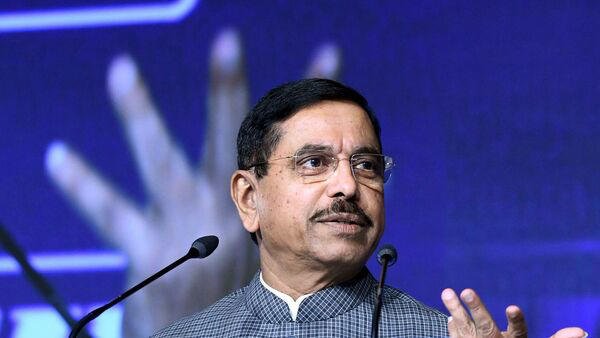
A remark made by Prahlad Joshi in 2022 about the National Eligibility-cum-Entrance Test (NEET) has resurfaced following his appointment as India’s new Union Education Minister. The statement, in which Joshi observed that “90% fail…” in the highly competitive examination, has drawn renewed attention on social media and in political circles as he assumes responsibility for the country’s education portfolio.
The resurfaced comments come at a time when the NEET examination continues to remain at the centre of public debate, particularly after recent controversies surrounding alleged irregularities and demands for reforms in the examination process.
What Prahlad Joshi said in 2022
In his 2022 remarks, Prahlad Joshi spoke about the intensely competitive nature of the NEET examination, noting that only a small percentage of candidates are ultimately able to secure admission to medical colleges.
Referring to the exam’s highly selective nature, he remarked that nearly “90% fail,” highlighting the immense pressure faced by students competing for limited medical seats. His comments were made in the context of discussing the challenges associated with competitive entrance examinations and the aspirations of lakhs of students appearing for NEET every year.
Following his appointment as Education Minister, the statement has resurfaced across digital platforms, with many revisiting his earlier observations on the examination system.
Appointment comes amid renewed focus on NEET
Prahlad Joshi’s appointment to the education ministry comes at a significant time, with the NEET examination remaining one of the most discussed issues in the country’s education sector.
The exam has witnessed heightened public scrutiny following allegations of irregularities, concerns over examination security, and widespread discussions about improving transparency and fairness in the admission process.
Students, parents, educators, and policymakers have called for measures to strengthen the credibility of national-level entrance examinations while ensuring equal opportunities for all aspirants.
Against this backdrop, Joshi’s earlier remarks have gained fresh relevance as expectations grow regarding the future direction of education policy.
Social media revives old statement
Soon after the cabinet reshuffle, excerpts from Prahlad Joshi’s 2022 statement began circulating widely on social media platforms. Users shared clips and screenshots of his comments, linking them to the current debates surrounding NEET and the responsibilities of the new Education Minister.
Supporters interpreted the remarks as an acknowledgement of the intense competition students face, while critics argued that the statement reflects the broader challenges within India’s entrance examination system.
The renewed attention has added another dimension to discussions surrounding educational reforms and examination policies.
NEET remains one of India’s most competitive examinations
The National Eligibility-cum-Entrance Test serves as the gateway for admission to undergraduate medical courses across India. Every year, millions of students appear for the examination, competing for a limited number of seats in government and private medical colleges.
The large gap between the number of applicants and available seats makes NEET one of the country’s most competitive entrance examinations. Consequently, students often undergo years of preparation, coaching, and rigorous study to improve their chances of qualifying.
The intense competition has frequently sparked discussions on examination reforms, expansion of medical education infrastructure, and increasing the availability of seats.
Challenges awaiting the new Education Minister
As Union Education Minister, Prahlad Joshi will oversee policies related to school education, higher education, and national examinations. The ministry is expected to address several key issues, including examination reforms, strengthening educational institutions, improving access to quality education, and enhancing transparency in competitive tests.
The ongoing discussions surrounding NEET are likely to remain among the ministry’s major priorities. Stakeholders have been seeking stronger safeguards to ensure fairness, credibility, and integrity in the conduct of national entrance examinations.
Observers believe the ministry’s approach to examination reforms will be closely watched by students, educational institutions, and policymakers alike.
Debate over examination reforms continues
The resurfacing of Joshi’s 2022 remarks has once again brought attention to broader concerns about India’s competitive examination system. Education experts have long argued that increasing access to quality higher education, expanding medical seats, and improving examination processes are essential to reducing pressure on students.
Many have also called for technological improvements, stronger security measures, and greater transparency in conducting national-level examinations to maintain public confidence.
The debate reflects the growing demand for an education system that balances merit, accessibility, and fairness.
Expectations from the education ministry
With Prahlad Joshi taking charge of the education portfolio, expectations remain high regarding policy initiatives aimed at strengthening India’s education system. Students and parents will be looking for measures that improve examination management, expand educational opportunities, and address long-standing concerns surrounding competitive entrance tests.
His previous observations on the demanding nature of NEET have resurfaced at a time when educational reforms are receiving significant national attention, placing additional focus on how the ministry will approach future challenges.
Renewed attention on NEET policy
Prahlad Joshi’s 2022 remark that “90% fail…” in the NEET examination has regained public attention following his appointment as Union Education Minister. While the statement originally highlighted the highly competitive nature of the examination, its resurfacing reflects the continuing national conversation on examination reforms, transparency, and student welfare.
As the new Education Minister assumes office, his decisions on NEET and the broader education sector are expected to play a significant role in shaping the future of India’s academic and entrance examination landscape.