

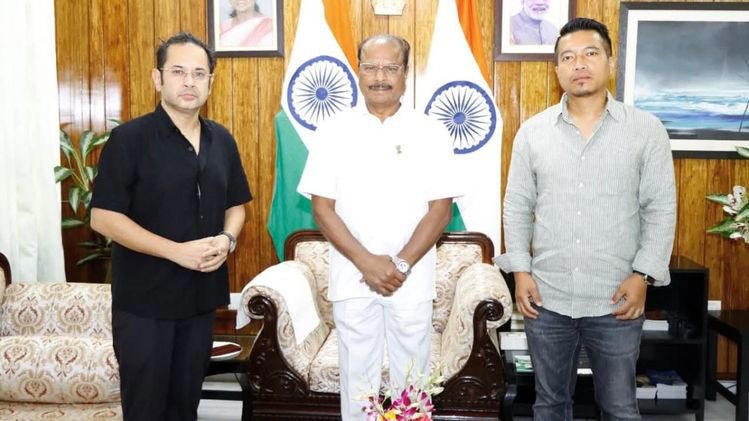
TIPRA Motha founder and Tripura royal scion Pradyot Kishore Debbarma has sought the intervention of Governor Indra Sena Reddy Nallu over 18 bills passed by the Tripura Tribal Areas Autonomous District Council (TTAADC) that have reportedly remained pending for years.
Pradyot Kishore raised concerns over the prolonged delay in dealing with the bills and urged the Governor to examine the matter and take appropriate steps. The issue has once again brought attention to the powers and functioning of the TTAADC, which was established to protect and promote the interests of Tripura’s indigenous communities.
The pending legislation covers matters connected with the administration and development of areas under the jurisdiction of the autonomous district council. According to Pradyot Kishore, the delay in obtaining approval for the bills has affected the ability of the TTAADC to implement measures intended for the welfare and protection of the indigenous population.
Pradyot Kishore Seeks Governor’s Intervention
Pradyot Kishore Debbarma raised the issue of the 18 pending TTAADC bills and appealed to Governor Indra Sena Reddy Nallu to intervene.
He expressed concern that the bills, despite being passed by the autonomous district council, have remained pending for several years.
The TIPRA Motha founder sought the Governor’s assistance in ensuring that the pending legislation receives due consideration.
His appeal has added a new dimension to the ongoing debate over the functioning and powers of the TTAADC and the need to ensure that the institution can effectively address issues concerning tribal communities.
Pradyot Kishore has consistently advocated for greater constitutional safeguards and administrative rights for Tripura’s indigenous people, and the latest demand is in line with his broader emphasis on strengthening institutions meant to protect tribal interests.
What Are the Pending TTAADC Bills?
The Tripura Tribal Areas Autonomous District Council has the authority to frame and pass legislation on certain subjects within its jurisdiction under the constitutional provisions governing autonomous councils.
However, such bills may require approval at different stages before they can become effective.
The 18 bills referred to by Pradyot Kishore have reportedly been awaiting further action for years.
The prolonged delay has raised questions about the status of the proposed legislation and the reasons why the approval process has not been completed.
Pradyot Kishore has argued that bills passed by a constitutionally recognised autonomous body should receive timely consideration.
The demand is therefore focused not only on the individual bills but also on ensuring a more efficient process for handling legislation passed by the TTAADC.
TTAADC and Its Role in Tribal Administration
The TTAADC plays an important role in the administration of tribal areas in Tripura.
Established under the Sixth Schedule of the Constitution, the council has responsibilities related to the protection of tribal customs, traditions and interests.
The autonomous district council also plays a role in local development and administration within the areas under its jurisdiction.
For indigenous communities, the functioning of the TTAADC is closely connected with issues of identity, land, language, culture and self-governance.
The pending bills have therefore become a significant political and administrative issue, particularly among groups that believe stronger autonomous institutions are necessary to protect tribal rights.
Concern Over Years-Long Delay
The key concern raised by Pradyot Kishore is the length of time for which the 18 bills have remained pending.
Delays in the legislative process can prevent policies and administrative measures from being implemented.
For the TTAADC, the inability to move forward with bills passed by the council may affect its capacity to respond to local needs and exercise the powers available to it.
Pradyot Kishore has sought to draw the Governor’s attention to this issue and urged him to examine why the bills have remained unresolved.
The intervention sought from the Governor could potentially bring greater administrative attention to the status of the pending legislation.
Demand Linked to Indigenous Rights
The issue of the pending TTAADC bills is closely linked to the larger political discussion surrounding indigenous rights in Tripura.
Pradyot Kishore and TIPRA Motha have consistently raised concerns related to the constitutional and administrative protection of the state’s indigenous communities.
The party’s political movement has focused on demands for stronger safeguards and measures aimed at protecting tribal identity, land and culture.
By highlighting the 18 pending bills, Pradyot Kishore has argued that existing constitutional institutions should be allowed to function effectively.
The issue is likely to resonate with those who believe that greater attention must be given to legislation and policies formulated by the autonomous district council.
Governor’s Role in the Matter
The Governor’s intervention has been sought because of the constitutional and administrative procedures associated with legislation passed by autonomous district councils.
Pradyot Kishore has urged Governor Indra Sena Reddy Nallu to look into the pending bills and help facilitate an appropriate resolution.
While the Governor’s response to the appeal remains to be seen, the demand has brought renewed attention to the legislative process involving the TTAADC.
Any action on the matter could have implications for the functioning of the council and its ability to pursue legislation within the powers granted to it.
The development may also prompt further discussions between the TTAADC, the Tripura government and other constitutional authorities.
Political Significance of the Issue
The issue is politically significant because indigenous rights and the powers of the TTAADC remain central to Tripura’s political landscape.
TIPRA Motha has emerged as a major political force by focusing on issues affecting the indigenous population.
Pradyot Kishore’s demand for intervention over the pending bills reinforces his party’s broader campaign for stronger institutional and constitutional safeguards.
The prolonged pendency of the bills could therefore become an important issue in future political discussions involving the TTAADC and tribal administration.
The matter may also lead to calls for greater transparency regarding the status of the legislation and the procedures required for their approval.
Calls for Timely Action on TTAADC Legislation
The appeal to the Governor has highlighted the importance of ensuring that bills passed by the TTAADC are dealt with within a reasonable timeframe.
Timely consideration of legislation is important for the effective functioning of any elected or constitutionally established institution.
For the TTAADC, resolving the issue of the 18 pending bills could allow the council to move forward with measures intended to address issues within its jurisdiction.
Pradyot Kishore’s intervention has placed the matter firmly in the public and political spotlight.
Focus Now on Governor’s Response
With Pradyot Kishore Debbarma seeking the intervention of Governor Indra Sena Reddy Nallu, attention will now be focused on the response of the Raj Bhavan and the subsequent steps taken by the concerned authorities.
The demand centres on ensuring that the 18 TTAADC bills pending for years receive proper consideration and that the reasons behind the prolonged delay are addressed.
The issue has once again highlighted the broader debate over the powers, autonomy and effective functioning of the Tripura Tribal Areas Autonomous District Council.
As discussions continue, the status of the pending bills is likely to remain an important issue for indigenous organisations, political parties and communities connected with the TTAADC.
For Pradyot Kishore and TIPRA Motha, the demand represents another effort to push for stronger institutional mechanisms and timely action on matters concerning Tripura’s indigenous population.