

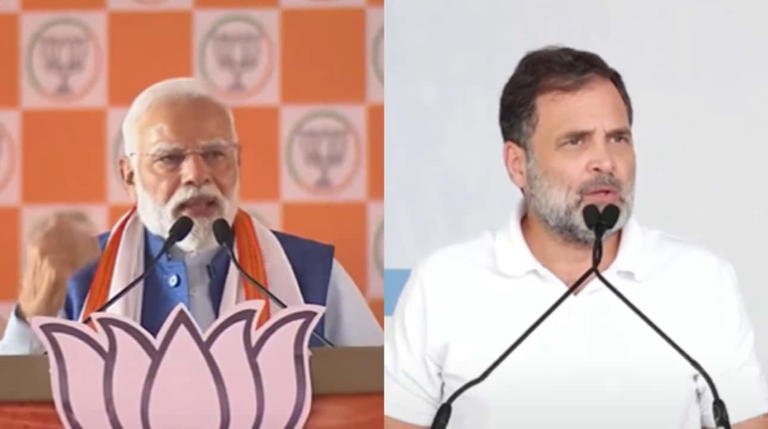
Prime Minister Narendra Modi and Congress leader Rahul Gandhi recorded a sharp increase in Instagram engagement following the recent Gen-Z stir, according to a new report analysing the social media performance of prominent Indian political leaders.
The report found that engagement on Prime Minister Modi’s Instagram account surged by 289.9 per cent, while Rahul Gandhi registered a 180.7 per cent increase during the period examined.
The findings highlight the growing importance of social media platforms in shaping political communication and public engagement, particularly among younger audiences. With Gen Z increasingly participating in political conversations online, Instagram has emerged as an important platform for leaders and political parties seeking to communicate directly with voters.
PM Modi Records 289.9% Surge in Instagram Engagement
According to the report, Prime Minister Narendra Modi witnessed the highest growth in Instagram engagement among the political figures examined.
His engagement increased by 289.9 per cent following the Gen-Z stir, reflecting a significant rise in interactions with his social media content.
Instagram engagement generally includes user interactions such as likes, comments, shares and other forms of activity associated with published content.
The increase indicates that Modi’s posts generated substantially greater attention during the period covered by the report.
The Prime Minister has maintained a strong presence across major social media platforms, using them to communicate government initiatives, share updates and engage with citizens.
The latest figures suggest that political developments and heightened online discussions involving younger users may have contributed to increased activity around political content.
Rahul Gandhi Sees 180.7% Increase
Congress leader Rahul Gandhi also recorded a substantial rise in Instagram engagement, with the report placing the increase at 180.7 per cent.
The growth indicates a sharp increase in interactions with Gandhi’s social media content during the period studied.
Rahul Gandhi has increasingly used social media platforms to communicate political positions, respond to current events and connect with younger audiences.
The rise in engagement suggests that the broader surge in online political discussion extended across leaders from different political parties.
While Modi’s engagement growth was significantly higher in percentage terms, Gandhi’s increase also demonstrated the ability of major political figures to attract heightened attention during periods of intense online discussion.
Gen-Z Stir Brings Social Media Into Political Focus
The report linked the rise in engagement to the recent Gen-Z stir, which brought greater attention to political content on social media.
Young users increasingly use platforms such as Instagram to access news, share opinions and participate in discussions surrounding political and social developments.
The growing influence of digital platforms has changed the way political communication takes place.
Unlike traditional communication channels, social media allows leaders to publish content directly to large audiences and receive immediate responses.
This has made engagement metrics an increasingly important indicator for understanding how political messages travel online and how audiences respond to them.
The reported surge following the Gen-Z stir demonstrates the potential impact that major social and political developments can have on online engagement.
Instagram Emerges as an Important Political Platform
Instagram, traditionally known as a visual and lifestyle-focused platform, has increasingly become a space for political communication.
Political leaders now use short videos, photographs, graphics and interactive content to communicate with followers.
The platform’s appeal among younger users makes it particularly important for political outreach to Gen Z and other digitally active groups.
A rise in engagement can indicate greater visibility and interaction, although high engagement does not necessarily translate directly into political support or electoral outcomes.
Nevertheless, social media performance has become an important part of modern political communication strategies.
The latest report illustrates how both the ruling party and the opposition are benefiting from increased public attention to political discussions online.
Political Communication Adapts to Digital Audiences
The growth in Instagram engagement reflects a broader shift in political communication.
Leaders are increasingly required to adapt their messaging to audiences that consume information through short videos, visual content and mobile platforms.
For younger users, social media may serve as one of the first points of contact with political debates and public figures.
Political parties have responded by investing more heavily in digital communication and developing content specifically designed for online audiences.
The increase in engagement recorded by Modi and Gandhi shows how periods of heightened political interest can generate significant attention for leaders with established digital followings.
It also highlights the importance of timing, content and online conversations in determining the reach of political messaging.
Engagement Growth Does Not Directly Equal Political Support
While the reported figures show a sharp increase in online interactions, social media engagement should not automatically be treated as a direct measure of political popularity or electoral support.
Users may interact with political content for different reasons, including agreement, criticism, curiosity or participation in wider public debates.
Comments and shares can also reflect disagreement or controversy rather than support.
However, engagement data can provide useful insight into which leaders and political topics are attracting attention online.
The report’s findings suggest that both Narendra Modi and Rahul Gandhi experienced significantly higher levels of interaction during the period following the Gen-Z stir.
The figures underline the growing role of digital platforms in shaping political visibility and influencing public conversations.
Gen Z Expected to Play Growing Role in Political Conversations
India’s large youth population makes younger voters and social media users an increasingly important audience for political leaders.
Gen Z is expected to play a growing role in political conversations as more young citizens enter the electorate and participate in public discussions.
Digital platforms allow young users to follow political leaders directly, access information from multiple sources and share their views with wider audiences.
The recent surge in Instagram engagement reflects this changing environment.
Political leaders are likely to continue adapting their communication strategies to reach younger audiences through platforms where they are most active.
The ability to create engaging, relevant and timely content could become increasingly important as political discussions continue to shift towards digital spaces.
Report Highlights Changing Political Engagement
The reported 289.9 per cent increase in Prime Minister Modi’s Instagram engagement and the 180.7 per cent rise recorded by Rahul Gandhi highlight the growing influence of social media in Indian politics.
The figures show that periods of heightened political interest, particularly those involving younger users, can lead to significant changes in online engagement.
Both leaders remain among the most prominent political figures on social media, and their increased engagement demonstrates the importance of maintaining an active digital presence.
As Gen Z becomes more influential in public and political conversations, platforms such as Instagram are likely to play an even greater role in how leaders communicate and how citizens interact with political content.
The report’s findings offer a snapshot of this changing digital landscape, showing how a major online and youth-driven stir can generate increased attention for political leaders across party lines.
While online engagement alone cannot determine political influence or electoral outcomes, the sharp rise recorded by both Narendra Modi and Rahul Gandhi underlines the growing significance of digital platforms in India’s evolving political communication ecosystem.