

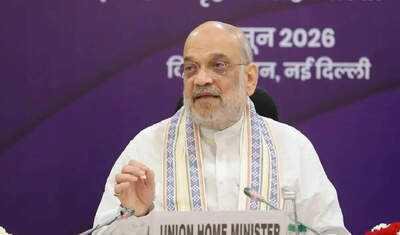
Union Home Minister Amit Shah has underscored the urgent need to intensify India’s fight against drug trafficking, stressing that the menace of narcotics poses a serious threat to the country’s youth, social fabric, and national security. Reaffirming the Centre’s commitment to building a drug-free India, Shah called upon law enforcement agencies, state governments, and citizens to work together in eliminating the illegal drug trade.
The Home Minister said that combating narcotics requires sustained action at every level, including stronger enforcement, better intelligence sharing, stricter border surveillance, public awareness, and rehabilitation initiatives. He observed that the fight against drug trafficking is not solely a law enforcement challenge but a national mission involving every section of society.
His remarks reinforce the government’s continued emphasis on adopting a comprehensive approach to curb the production, transportation, and distribution of illegal narcotic substances.
Drug Trafficking Described as a National Security Challenge
Amit Shah stated that drug trafficking extends beyond criminal activity and has wider implications for national security, public health, and economic stability. He noted that organised drug syndicates often operate across state and international borders, making coordinated enforcement essential.
The Home Minister stressed that illegal narcotics not only destroy individual lives but also fuel organised crime, illegal financial networks, and other unlawful activities. Preventing the spread of drugs, he said, is therefore critical for ensuring both internal security and social stability.
He urged all enforcement agencies to remain vigilant and continue taking decisive action against individuals and networks involved in the illegal drug trade.
Need for Stronger Coordination Among Agencies
Highlighting the importance of inter-agency cooperation, Shah emphasised that effective action against drug trafficking requires seamless coordination between central agencies, state police forces, border security organisations, customs authorities, and intelligence agencies.
He said information sharing and joint operations have become increasingly important in identifying trafficking routes, dismantling organised networks, and intercepting illegal consignments before they reach communities.
According to the Home Minister, collaborative efforts have significantly improved the country’s ability to combat narcotics trafficking, and these mechanisms should be strengthened further.
He encouraged all concerned agencies to continue working together with a common objective of eliminating drug-related crimes.
Protecting Youth Remains a Top Priority
The Home Minister observed that young people remain among the most vulnerable victims of drug abuse. He stressed that protecting the youth from addiction is one of the government’s highest priorities and requires a combination of preventive education, community awareness, and strict law enforcement.
Shah urged educational institutions, parents, civil society organisations, and community leaders to actively participate in awareness campaigns highlighting the harmful effects of narcotics.
He said that creating awareness among young people is essential to reducing demand for illegal drugs while strengthening the nation’s future human capital.
The Home Minister also encouraged greater public participation in identifying and reporting drug-related activities.
Technology Strengthening Anti-Drug Operations
Amit Shah highlighted the growing role of technology in strengthening anti-drug enforcement efforts. Advanced surveillance systems, digital intelligence platforms, forensic capabilities, data analysis, and coordinated communication networks are increasingly helping authorities detect and disrupt trafficking operations.
He noted that technological advancements have significantly enhanced the ability of enforcement agencies to monitor suspicious activities, identify organised criminal networks, and conduct intelligence-driven operations.
The government, he said, remains committed to continuously modernising enforcement capabilities to stay ahead of evolving trafficking methods.
Technology will continue to play an important role in improving operational efficiency and investigative outcomes.
Focus on Border Security
The Home Minister also stressed the importance of securing India’s international borders against the illegal movement of narcotics. Strengthened surveillance, coordinated patrols, intelligence gathering, and improved infrastructure are being used to intercept drug consignments attempting to enter the country.
Shah observed that border management forms a critical component of the national anti-drug strategy, particularly in regions vulnerable to cross-border trafficking.
He called upon security forces stationed along India’s borders to maintain heightened vigilance and continue working closely with intelligence agencies to prevent the infiltration of narcotics.
According to the Home Minister, effective border security significantly reduces the availability of illegal drugs within the country.
Balanced Approach Includes Rehabilitation
While emphasising strict enforcement, Amit Shah also acknowledged the importance of rehabilitation and social reintegration for individuals affected by substance abuse. He noted that addiction should be addressed through accessible treatment, counselling, and rehabilitation services alongside legal action against traffickers.
The government continues to encourage greater investment in rehabilitation centres, awareness campaigns, and community-based support programmes aimed at helping individuals overcome addiction.
The Home Minister said that a balanced approach combining enforcement with rehabilitation offers the most effective long-term solution to the narcotics challenge.
Supporting recovering individuals, he added, contributes to healthier families and stronger communities.
Government Continues Nationwide Anti-Drug Campaign
The Union government has launched several initiatives in recent years to strengthen anti-drug enforcement across the country. These include coordinated operations, enhanced intelligence sharing, destruction of seized narcotics, awareness campaigns, capacity building for enforcement agencies, and improved legal mechanisms.
Amit Shah stated that the government remains determined to sustain this momentum by strengthening institutional coordination and encouraging active participation from state governments.
He reiterated that every successful seizure, investigation, and prosecution contributes to the larger objective of building a safer and drug-free India.
The Centre will continue supporting state authorities in implementing comprehensive anti-narcotics strategies.
Public Participation Essential for Success
The Home Minister emphasised that the fight against drug trafficking cannot succeed through government action alone. Citizens, local communities, educational institutions, healthcare professionals, and non-governmental organisations all have important roles to play in preventing substance abuse and reporting illegal activities.
He urged people to remain alert and cooperate with authorities by sharing credible information regarding drug trafficking or suspicious activities.
Community vigilance, he said, significantly strengthens the effectiveness of law enforcement while helping prevent narcotics from reaching vulnerable populations.
Creating a drug-free society requires collective responsibility and sustained public engagement.
Call for Collective National Action
Amit Shah’s renewed emphasis on the urgency of combating drug trafficking reflects the government’s determination to address one of the country’s most pressing social and security challenges. By advocating stronger coordination, enhanced enforcement, improved technology, tighter border security, rehabilitation programmes, and widespread public participation, the Home Minister outlined a comprehensive strategy aimed at eliminating the illegal narcotics trade.
As India continues strengthening its anti-drug framework, coordinated efforts between the Centre, state governments, enforcement agencies, and citizens will remain essential. The Home Minister’s message reinforces the belief that safeguarding the nation’s youth, protecting public health, and ensuring internal security require unwavering commitment and collective action. With sustained vigilance and cooperation, India aims to build a safer, healthier, and drug-free future for generations to come.