

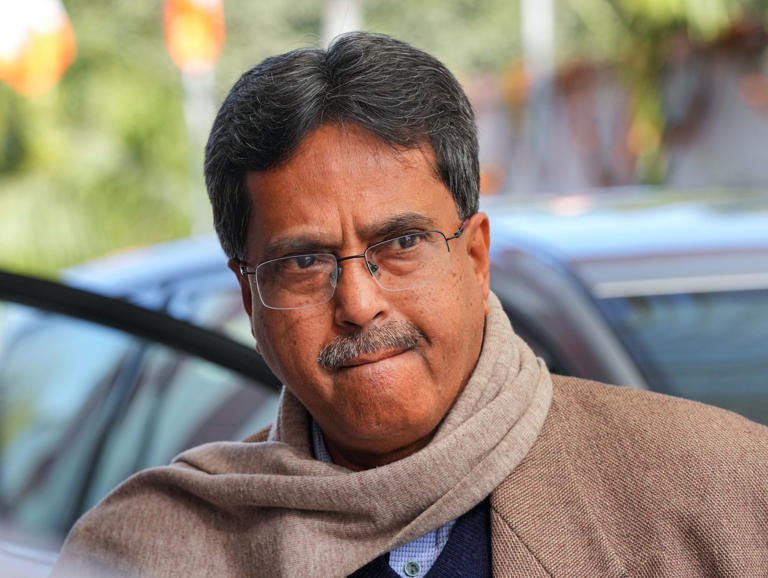
Tripura Chief Minister Manik Saha has said that the average income of farmers in the state has doubled over the last ten years, attributing the improvement to sustained government initiatives, modern agricultural practices, and enhanced support for the farming community. The Chief Minister stated that agriculture remains one of the key pillars of Tripura’s economy, and improving farmers’ livelihoods continues to be a top priority for the state government.
Speaking on the progress made in the agricultural sector, Saha said the government’s policies have focused on increasing farm productivity, expanding market access, encouraging diversification, and strengthening rural infrastructure. According to him, these combined efforts have contributed significantly to raising the earning potential of farmers across the state.
The Chief Minister reiterated that the government remains committed to making agriculture more profitable, sustainable, and resilient in the years ahead.
Government Initiatives Drive Agricultural Growth
Highlighting the factors behind the increase in farmers’ income, the Chief Minister pointed to various government schemes aimed at improving agricultural productivity and reducing the financial burden on cultivators. Investments in irrigation, quality seeds, farm mechanisation, soil health management, and extension services have helped farmers adopt more efficient and scientific cultivation practices.
He noted that the government has also focused on ensuring better access to agricultural inputs, improving storage facilities, and strengthening marketing infrastructure to enable farmers to secure better prices for their produce.
According to Saha, these initiatives have created a more supportive ecosystem for agriculture, allowing farmers to increase both production and profitability.
Diversification Boosting Rural Livelihoods
Chief Minister Saha emphasised that crop diversification has played an important role in increasing rural incomes. Farmers in Tripura are increasingly adopting high-value crops, horticulture, fruits, vegetables, spices, bamboo, rubber, and other commercial agricultural activities alongside traditional farming.
The government has encouraged diversification by providing technical guidance, financial assistance, and improved market linkages. This approach has helped reduce dependence on a single crop while creating multiple sources of income for farming households.
The Chief Minister observed that diversified agriculture has also improved resilience against climate-related challenges and market fluctuations, ensuring more stable earnings for farmers.
Focus on Modern Farming Techniques
The state government has been promoting the adoption of modern farming technologies to improve productivity and efficiency. Chief Minister Saha stated that farmers are increasingly using improved cultivation techniques, mechanised equipment, scientific irrigation methods, and digital advisory services.
Training programmes organised by the Agriculture Department and agricultural institutions have enabled cultivators to acquire new skills and implement best farming practices.
The Chief Minister said that embracing technology has allowed farmers to optimise resource utilisation, reduce production costs, and enhance crop quality, thereby improving overall profitability.
He stressed that continuous innovation will remain essential for sustaining agricultural growth in the future.
Strengthening Market Access for Farmers
Improving market access has been another important component of the government’s agricultural strategy. Chief Minister Saha stated that efforts have been made to strengthen agricultural marketing systems, expand procurement opportunities, and improve transportation infrastructure connecting rural production centres with larger markets.
Better market connectivity has enabled farmers to receive improved returns for their produce while reducing post-harvest losses.
The government has also encouraged the formation of farmer producer organisations and cooperative models that enable cultivators to market their products collectively, negotiate better prices, and access value-added opportunities.
According to the Chief Minister, efficient marketing systems play a crucial role in enhancing farm income.
Support Through Welfare Schemes
The Chief Minister highlighted the contribution of various farmer welfare programmes that provide financial assistance, crop insurance, credit support, and direct benefit transfers to eligible beneficiaries.
He noted that timely financial assistance helps farmers invest in better inputs, manage production costs, and recover more effectively from natural disasters or unexpected crop losses.
Government support has also encouraged small and marginal farmers to adopt improved farming practices that contribute to higher productivity and sustainable income growth.
Saha reaffirmed that welfare initiatives will continue to complement long-term agricultural development strategies.
Agriculture Remains Backbone of Rural Economy
Chief Minister Saha described agriculture as the backbone of Tripura’s rural economy, supporting the livelihoods of a significant portion of the state’s population. Strengthening the agricultural sector, he said, contributes not only to food security but also to employment generation and overall economic development.
He emphasised that investments in agriculture create multiplier effects across allied sectors such as horticulture, fisheries, animal husbandry, food processing, transportation, and rural entrepreneurship.
The government’s integrated approach seeks to ensure that agricultural growth translates into broader rural prosperity.
Commitment to Sustainable Agriculture
The Chief Minister also highlighted the importance of promoting environmentally sustainable agricultural practices. He encouraged farmers to adopt soil conservation measures, efficient water management techniques, balanced fertiliser usage, and climate-resilient farming methods.
According to Saha, sustainable agriculture is essential for preserving natural resources while ensuring long-term productivity and food security.
The government continues to promote awareness regarding environmentally responsible farming practices through extension services and training programmes conducted across various districts.
These initiatives are expected to strengthen agricultural resilience in the face of changing climatic conditions.
Vision for Future Agricultural Development
Looking ahead, Chief Minister Saha stated that the government will continue investing in agricultural infrastructure, research, innovation, and capacity building to further improve farmers’ incomes. Expansion of irrigation facilities, better post-harvest management, food processing industries, and digital agricultural services remain key priorities.
He also emphasised the importance of encouraging young people to view agriculture as a modern, technology-driven profession capable of generating sustainable livelihoods.
The administration aims to create an enabling environment where farmers can benefit from innovation, improved market integration, and enhanced institutional support.
Agriculture to Remain Central to Tripura’s Growth
Chief Minister Manik Saha’s assertion that the average income of farmers in Tripura has doubled over the past decade reflects the state’s continued emphasis on strengthening the agricultural sector through comprehensive policy interventions. Improved infrastructure, modern farming techniques, crop diversification, better market access, and farmer welfare initiatives have collectively contributed to enhancing rural livelihoods.
The government remains committed to building on these achievements by promoting sustainable agriculture, expanding opportunities for value addition, and ensuring that farmers continue to benefit from technological advancements and supportive public policies. As Tripura moves forward, agriculture is expected to remain a central pillar of inclusive economic development, helping improve the quality of life for farming communities while contributing to the state’s long-term prosperity and food security.