

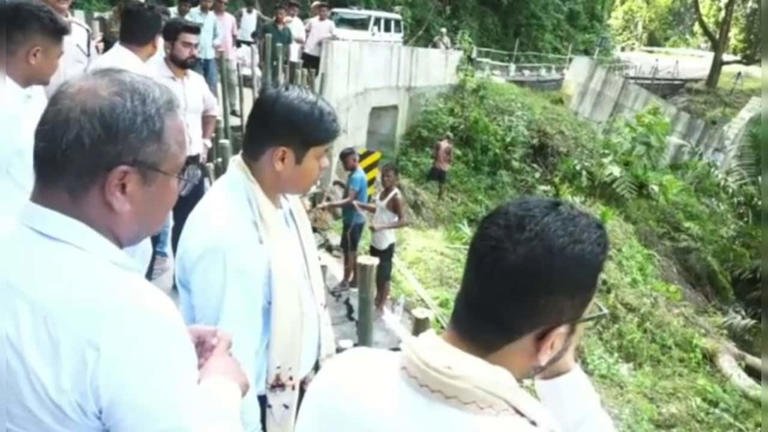
Continuous heavy rainfall has led to multiple landslides along the Assam-Arunachal Pradesh border, forcing the temporary closure of a key highway connecting the two northeastern states. The disruption has severely affected the movement of passengers and goods, leaving hundreds of vehicles stranded while authorities work to clear debris and restore traffic.
The incessant rainfall, driven by the active monsoon, has triggered landslides at several vulnerable locations in the hilly terrain, raising concerns over road safety and the possibility of further slope failures. Officials have urged travellers to avoid unnecessary journeys until weather conditions improve and road clearance operations are completed.
The highway serves as a crucial transportation corridor for residents, businesses, and government agencies, making its closure a significant challenge for both states.
Heavy Rain Causes Multiple Landslides
Persistent rainfall over the past several days saturated hill slopes along the highway, resulting in landslides that deposited large quantities of mud, rocks, and uprooted trees onto the roadway. In several stretches, the debris completely blocked vehicular movement, making the route impassable.
Authorities reported that fresh landslides continued to occur as rain persisted, complicating restoration efforts. The unstable terrain has also increased the risk of additional slope failures, prompting officials to prioritise the safety of road users and emergency personnel.
The India Meteorological Department has forecast continued rainfall in parts of the Northeast, keeping disaster management agencies on alert for further weather-related incidents.
Highway Closure Disrupts Transportation
The closure of the Assam-Arunachal highway has disrupted one of the region’s most important transport links. Passenger buses, commercial trucks, private vehicles, and essential goods carriers have all been affected, with many vehicles stranded on either side of the blocked sections.
The highway plays a vital role in connecting Arunachal Pradesh with Assam, facilitating the movement of food supplies, fuel, medicines, construction materials, and other essential commodities. Any prolonged disruption has the potential to affect supply chains and create logistical challenges for businesses and local communities.
Travellers have been advised to postpone non-essential journeys or use alternative routes where available, although options remain limited in many areas due to the mountainous terrain.
Road Clearance Operations Underway
Road restoration teams from the concerned departments have been deployed to the affected locations with excavators, bulldozers, and other heavy machinery to remove debris and reopen the highway. Workers are operating under difficult conditions as intermittent rainfall continues to increase the risk of fresh landslides.
Officials stated that clearance operations are progressing in phases, with priority being given to restoring at least one lane for emergency movement wherever conditions permit. However, restoration efforts remain dependent on weather conditions and the stability of surrounding slopes.
Authorities have also stationed personnel at vulnerable stretches to regulate traffic and prevent motorists from entering dangerous zones until the roads are declared safe.
Safety Measures and Public Advisory
District administrations have issued advisories asking residents and travellers to remain cautious during the ongoing monsoon season. Motorists have been urged to avoid travelling through landslide-prone areas during periods of intense rainfall, particularly at night when visibility is poor.
Officials have warned that even after debris is cleared, loose rocks and unstable slopes may continue to pose risks. Drivers have been advised to follow instructions issued by traffic authorities and avoid crossing blocked sections without official permission.
Emergency response teams remain on standby to respond quickly if additional landslides or weather-related incidents occur.
Monsoon Challenges in the Himalayan Region
Landslides are a recurring challenge across the Himalayan states during the monsoon due to steep slopes, fragile geology, and prolonged periods of heavy rainfall. Road networks connecting remote regions are particularly vulnerable, with even moderate landslides capable of disrupting transportation for several hours or days.
Climate experts have observed that increasingly intense rainfall events are contributing to a rise in flash floods, slope failures, and erosion across many parts of the Himalayan belt. These changing weather patterns have reinforced the need for stronger disaster preparedness and resilient infrastructure.
Governments in the region continue to invest in slope stabilisation, retaining walls, improved drainage systems, and early warning mechanisms to minimise the impact of such disasters.
Impact on Local Communities
The highway closure has affected not only travellers but also local communities that rely on uninterrupted road connectivity for access to healthcare, education, markets, and government services. Delays in transporting essential commodities could temporarily impact businesses and daily life in remote areas.
Commercial transport operators have also experienced disruptions, with delivery schedules affected due to blocked roads. Agricultural producers may face delays in transporting perishable goods to markets, potentially resulting in financial losses.
Residents living near vulnerable hill slopes have been advised to remain alert for signs of fresh landslides, including cracks in the ground, falling rocks, or unusual water seepage.
Authorities Monitor Weather Conditions
State governments, disaster management authorities, and road maintenance agencies are closely monitoring rainfall patterns and weather forecasts to guide restoration efforts. Coordination between various departments has been strengthened to ensure timely response to emergencies and minimise disruption.
Officials have emphasised that reopening the highway will depend on comprehensive safety assessments to ensure that traffic can resume without endangering commuters. Continuous monitoring of vulnerable stretches will continue even after road connectivity is restored.
Emergency helplines and local administrative offices remain available to assist residents and travellers requiring information or support during the disruption.
Restoring Connectivity Remains the Priority
The temporary closure of the Assam-Arunachal highway highlights the challenges posed by the monsoon season in the mountainous Northeast. While road restoration teams continue working to clear landslide debris, authorities remain focused on ensuring public safety and preventing further accidents.
The incident also underscores the importance of developing climate-resilient infrastructure capable of withstanding increasingly frequent extreme weather events. Investments in slope protection, improved drainage, regular maintenance, and advanced monitoring systems will be crucial for reducing future disruptions.
As weather conditions improve and clearance operations progress, authorities hope to restore normal traffic at the earliest while continuing to monitor vulnerable areas throughout the remainder of the monsoon season.