

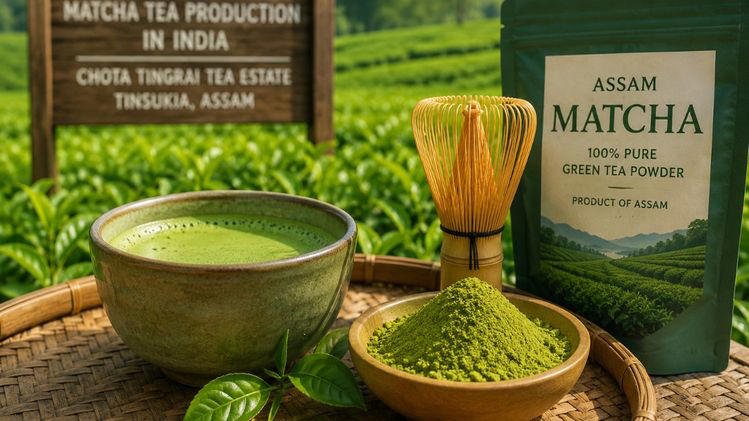
Assam has become the first state in India to commercially produce matcha tea, marking a significant milestone in the evolution of the country’s tea industry. Announcing the achievement, Chief Minister Himanta Biswa Sarma said the development represents a major step towards product diversification, value addition, and expanding global market opportunities for Assam’s world-renowned tea sector.
The commercial production of matcha tea is expected to open new avenues for tea growers, exporters, and entrepreneurs while strengthening Assam’s position in the international premium tea market. Traditionally associated with Japan, matcha has witnessed a surge in global demand due to its health benefits, culinary applications, and growing popularity among health-conscious consumers.
The Chief Minister described the achievement as a reflection of Assam’s commitment to innovation in agriculture and tea production while creating greater economic opportunities for the state’s tea industry.
Assam Enters the Premium Matcha Market
The launch of commercial matcha production places Assam among the emerging global producers of one of the world’s most sought-after specialty teas. Unlike conventional tea, matcha is produced through a specialised cultivation and processing method that involves shading tea plants before harvest, carefully selecting tender leaves, steaming them to preserve their colour and nutrients, and grinding the processed leaves into an ultra-fine green powder.
The production process requires strict quality standards and specialised expertise to achieve the vibrant green colour, delicate flavour, and nutritional characteristics that distinguish premium matcha from ordinary green tea.
Officials believe that Assam’s favourable climate, fertile soil, and long-standing expertise in tea cultivation provide a strong foundation for producing high-quality matcha capable of competing in international markets.
Chief Minister Highlights Historic Achievement
Chief Minister Himanta Biswa Sarma said Assam’s successful entry into commercial matcha production demonstrates the state’s growing emphasis on innovation and value addition within the tea sector. He noted that while Assam has earned global recognition for its black tea, diversification into premium specialty teas can further strengthen the industry’s competitiveness and profitability.
The Chief Minister observed that global consumer preferences are evolving rapidly, with increasing demand for organic, wellness-oriented, and premium tea products. Commercial matcha production allows Assam to tap into these expanding international markets while enhancing the income potential of tea producers.
He described the achievement as another milestone in Assam’s efforts to modernise its agricultural economy and promote high-value exports.
Boost for the Tea Industry
Assam is widely recognised as one of the world’s largest tea-producing regions, with tea contributing significantly to the state’s economy, employment, and export earnings. The introduction of commercial matcha production represents an important step in diversifying the product portfolio of Assam’s tea industry.
Industry experts believe that specialty tea products such as matcha offer considerably higher value compared to conventional tea, creating opportunities for improved profitability throughout the supply chain. Tea estates, small growers, processors, exporters, and entrepreneurs are expected to benefit from expanding into premium market segments.
The initiative also supports efforts to reduce dependence on traditional tea markets by exploring new consumer categories and international demand.
Growing Global Demand for Matcha
Matcha has gained remarkable popularity worldwide over the past decade due to its nutritional properties and versatility. Rich in antioxidants, amino acids, vitamins, and natural compounds, matcha has become a preferred ingredient in beverages, desserts, bakery products, confectionery, health supplements, and wellness foods.
Its increasing acceptance among health-conscious consumers has led to rising demand across North America, Europe, the Middle East, and several Asian markets. Global cafés and food companies have also incorporated matcha into an expanding range of products, further boosting international demand.
Officials believe that Assam’s entry into commercial matcha production positions the state to benefit from these rapidly growing global consumption trends.
Value Addition Through Innovation
The commercial production of matcha reflects a broader shift towards value addition in Assam’s agricultural and tea sectors. Rather than relying solely on conventional tea exports, producers are increasingly exploring specialised products that command premium prices in international markets.
Value-added processing generates greater economic returns while encouraging technological innovation, improved cultivation techniques, and skill development within the tea industry. The initiative is also expected to stimulate investment in specialised processing facilities, quality certification, packaging, branding, and export infrastructure.
Experts note that diversification into specialty teas strengthens the long-term resilience and competitiveness of the industry.
Opportunities for Farmers and Entrepreneurs
The introduction of commercial matcha production is expected to create new opportunities for tea growers, startups, food processing companies, exporters, and entrepreneurs across Assam. As demand for premium tea products expands, producers may benefit from higher market prices and access to specialised domestic and international buyers.
The initiative also has the potential to encourage innovation among small tea growers by promoting advanced cultivation techniques and sustainable farming practices. Entrepreneurs may explore new business opportunities involving branded matcha products, ready-to-drink beverages, organic teas, nutraceuticals, and wellness products.
Officials believe that expanding into value-added products can generate additional employment while strengthening rural livelihoods.
Supporting Assam’s Export Potential
Commercial matcha production aligns with the state’s broader strategy of enhancing agricultural exports and promoting Assam as a global hub for premium tea products. Specialty teas can contribute significantly to export earnings while strengthening India’s presence in international tea markets.
The government has been encouraging product diversification, branding, quality improvement, and export promotion to improve the competitiveness of Assam’s tea sector. Matcha production complements these efforts by introducing a globally recognised premium product with strong commercial potential.
Improved processing standards and international quality certification are expected to play a key role in ensuring successful market penetration.
Strengthening Sustainable Tea Production
Officials also highlighted the importance of sustainable cultivation practices in specialty tea production. Matcha cultivation requires careful management of soil health, water resources, and cultivation techniques to maintain consistent quality and environmental sustainability.
The adoption of modern agricultural practices, scientific research, and innovation will support long-term productivity while preserving Assam’s rich tea-growing ecosystem. Collaboration between research institutions, tea estates, government agencies, and industry stakeholders is expected to further strengthen the sector.
Sustainable production methods are increasingly important as global consumers place greater emphasis on environmentally responsible agricultural practices.
A New Chapter for Assam’s Tea Industry
Assam’s emergence as the first Indian state to commercially produce matcha tea marks a landmark achievement for the country’s tea industry. By entering the premium specialty tea segment, the state has demonstrated its ability to innovate while building upon its centuries-old reputation as one of the world’s leading tea-producing regions.
The initiative not only enhances Assam’s global competitiveness but also creates new opportunities for growers, exporters, entrepreneurs, and the broader agricultural economy. As demand for premium wellness products continues to rise internationally, commercial matcha production has the potential to become an important driver of economic growth and export expansion.
With continued investment in quality, research, sustainable cultivation, and value addition, Assam is well positioned to establish itself as a significant player in the global matcha market while opening a promising new chapter in the history of Indian tea.