

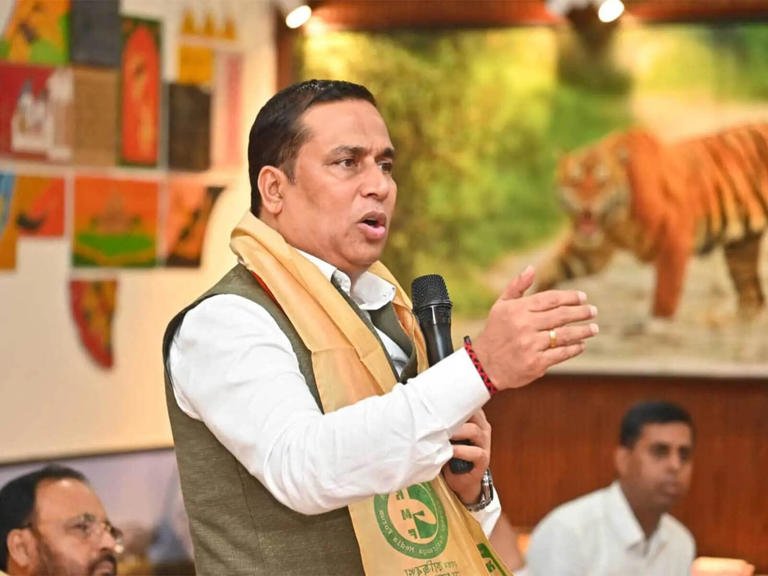
Assam Forest Minister Chandra Mohan Patowary has reviewed the tourism preparedness of Kaziranga National Park, emphasizing the need for an integrated development strategy to strengthen one of India’s most iconic wildlife destinations. During the review, the minister sought suggestions from stakeholders, including tourism operators, local communities, conservationists, and government officials, to improve visitor experience while ensuring sustainable conservation.
The meeting focused on assessing the park’s readiness for the upcoming tourist season, identifying infrastructure requirements, and exploring ways to balance tourism growth with environmental protection. Officials highlighted that collaborative planning involving all stakeholders is essential to preserve Kaziranga’s rich biodiversity while promoting responsible tourism.
The initiative reflects the Assam government’s commitment to enhancing Kaziranga’s position as a world-class eco-tourism destination without compromising its ecological significance.
Review Focuses on Tourism Preparedness
The review meeting examined the overall preparedness of Kaziranga National Park to welcome domestic and international visitors. Discussions centred on improving tourism facilities, transportation, accommodation, visitor safety, and overall management within and around the protected area.
Officials assessed existing tourism infrastructure and identified areas requiring further improvement before the peak tourist season. The objective is to provide visitors with a safe, comfortable, and enriching wildlife experience while maintaining the park’s ecological balance.
The Forest Minister stressed that careful planning is essential to accommodate increasing tourist numbers without placing additional pressure on the fragile ecosystem.
Stakeholder Participation Encouraged
A key feature of the review was the emphasis on stakeholder participation in planning Kaziranga’s future development.
The minister invited suggestions from tourism operators, local residents, hospitality businesses, wildlife experts, environmental organisations, and government departments. By incorporating diverse perspectives, the government aims to prepare a comprehensive development plan that benefits both conservation and local livelihoods.
Stakeholder engagement is expected to help identify practical solutions for improving tourism services while addressing environmental concerns and community expectations.
Officials believe collaborative decision-making will strengthen long-term sustainability.
Balancing Tourism and Conservation
Kaziranga National Park is internationally recognised for its exceptional biodiversity and is home to the world’s largest population of the endangered one-horned rhinoceros. It also supports elephants, tigers, wild buffaloes, swamp deer, numerous bird species, and diverse ecosystems.
The Forest Minister emphasised that tourism development must always remain compatible with wildlife conservation objectives. Sustainable tourism practices are essential to minimise environmental impact while allowing visitors to appreciate the park’s natural heritage.
Authorities discussed strategies to regulate tourist activities, reduce ecological disturbance, and strengthen conservation measures alongside tourism expansion.
Maintaining this balance remains central to Kaziranga’s long-term management.
Improving Visitor Experience
Enhancing the visitor experience formed an important part of the discussions during the review meeting.
Officials explored measures to improve entry facilities, tourist information services, guided safari operations, interpretation centres, sanitation infrastructure, and digital services that make travel more convenient for visitors.
Efforts are also being directed toward improving accessibility while ensuring that tourism activities remain environmentally responsible.
A better visitor experience not only increases tourist satisfaction but also strengthens Kaziranga’s reputation as one of India’s premier wildlife destinations.
Strengthening Tourism Infrastructure
Infrastructure development is considered crucial for supporting the growing number of tourists visiting Kaziranga every year.
Discussions included improving road connectivity, parking facilities, accommodation options, public amenities, and transport services around the national park. Authorities also examined the need for upgraded visitor centres and enhanced communication facilities.
Modern and well-planned infrastructure can improve convenience for tourists while supporting local businesses that depend on the tourism sector.
Officials stressed that all infrastructure projects should follow environmentally sustainable principles.
Supporting Local Communities
Tourism plays an important role in generating livelihoods for communities living around Kaziranga National Park.
Hotels, homestays, restaurants, transport operators, handicraft sellers, guides, and local entrepreneurs all benefit from the steady flow of visitors. During the review, emphasis was placed on ensuring that future tourism development creates greater economic opportunities for nearby communities.
Encouraging community participation in eco-tourism initiatives, cultural tourism, and hospitality services can promote inclusive growth while strengthening conservation efforts.
Officials noted that local communities remain valuable partners in protecting the park’s biodiversity.
Promoting Sustainable Eco-Tourism
The Assam government continues to promote eco-tourism as a means of supporting both conservation and economic development.
Sustainable tourism practices include responsible wildlife viewing, waste management, environmental education, regulated safari operations, and conservation awareness among visitors.
Authorities believe that environmentally responsible tourism helps preserve the natural ecosystem while generating revenue that supports conservation programmes.
The review highlighted the importance of ensuring that tourism growth does not compromise Kaziranga’s ecological integrity or wildlife habitats.
Kaziranga’s Importance to Assam Tourism
Kaziranga National Park remains one of Assam’s most significant tourism attractions and a major contributor to the state’s tourism economy.
Recognised as a UNESCO World Heritage Site, the park attracts thousands of wildlife enthusiasts, photographers, researchers, and nature lovers from India and abroad every year.
Its global reputation not only promotes wildlife tourism but also encourages visitors to explore other destinations across Assam, contributing to broader economic development.
Strengthening Kaziranga’s tourism infrastructure is therefore viewed as an important investment in the state’s overall tourism sector.
A Collaborative Vision for Future Growth
The review of Kaziranga’s tourism preparedness and the invitation for stakeholder suggestions demonstrate Assam’s commitment to adopting a collaborative approach toward sustainable tourism development.
By combining conservation priorities with improved infrastructure, enhanced visitor services, and greater community participation, the government aims to create a balanced model that benefits wildlife, local residents, and the tourism industry alike.
As Kaziranga continues to attract visitors from around the world, integrated planning and responsible management will remain essential for preserving its extraordinary natural heritage while ensuring that tourism contributes to long-term economic and environmental sustainability.