

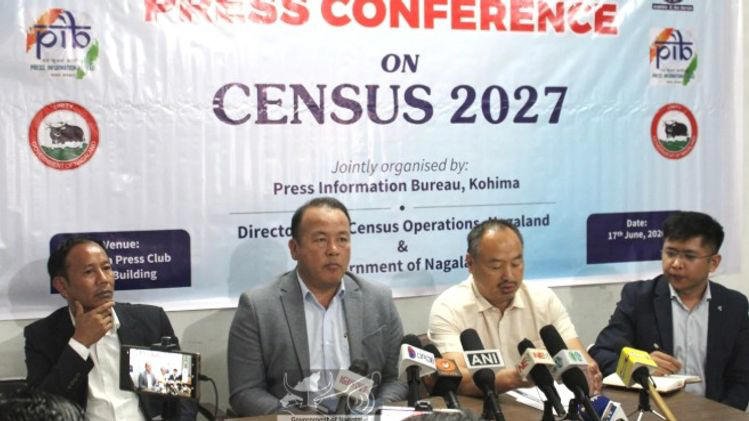
A senior census official in Nagaland has emphasized the importance of Census 2027, describing it as a critical exercise that will significantly influence development planning, policy formulation, and resource allocation in the years ahead. The official stated that accurate population data collected during the census will serve as the foundation for government decisions across multiple sectors, including education, healthcare, infrastructure, employment, and social welfare.
As preparations gradually gain momentum for the nationwide census exercise, authorities in Nagaland have begun highlighting the importance of public participation and cooperation. Officials believe that comprehensive and reliable demographic data will enable policymakers to better understand population trends and address the evolving needs of communities across the state.
The census, regarded as one of the largest administrative exercises in the country, is expected to provide a detailed snapshot of demographic, social, and economic conditions, helping governments at various levels design effective development strategies.
Census as the Backbone of Development Planning
According to the census official, development planning depends heavily on accurate and up-to-date population data. Governments rely on census figures to assess current needs, identify future challenges, and allocate resources efficiently.
The official explained that every major development initiative, whether related to education, healthcare, transportation, housing, or employment, requires reliable demographic information. Without accurate data, policymakers may find it difficult to determine where resources are most needed and how services should be expanded.
Census information provides insights into population size, growth patterns, age distribution, literacy rates, housing conditions, and other critical indicators. These statistics form the basis for evidence-based planning and informed decision-making.
The official noted that Census 2027 will play a particularly important role as governments seek to address emerging developmental requirements and respond to changing demographic trends.
Importance for Nagaland’s Future Growth
For Nagaland, the census is expected to be especially significant due to the state’s unique geographical, social, and cultural characteristics. Accurate data can help authorities better understand population distribution across urban and rural areas and identify development priorities for different districts.
Officials believe that the findings of Census 2027 will support long-term planning efforts aimed at improving infrastructure, expanding educational opportunities, strengthening healthcare systems, and enhancing public service delivery.
The census will also provide valuable information on migration patterns, workforce participation, and household characteristics, enabling policymakers to formulate targeted interventions.
The official stressed that reliable demographic data is essential for ensuring balanced development and addressing disparities between regions.
By understanding where people live and what services they require, governments can implement more effective and inclusive development programs.
Supporting Social Welfare and Public Services
One of the key functions of census data is its role in strengthening social welfare initiatives. The official explained that information collected during the census helps governments identify vulnerable populations and design programs tailored to their needs.
Welfare schemes related to healthcare, housing, education, nutrition, and social protection often rely on demographic statistics generated through census exercises. Accurate data ensures that benefits reach intended beneficiaries and that resources are distributed equitably.
In Nagaland, where many communities reside in remote and geographically challenging areas, detailed population information can assist authorities in improving service delivery and expanding access to essential facilities.
The official noted that Census 2027 will help policymakers evaluate existing welfare programs and identify areas where additional support may be required.
Such data-driven approaches contribute to more efficient governance and improved outcomes for citizens.
Role in Infrastructure Development
Infrastructure planning is another area where census data plays a crucial role. Roads, schools, hospitals, water supply systems, and public transportation networks are often planned based on population distribution and projected growth trends.
The census official highlighted that accurate population figures enable governments to determine where new infrastructure investments are needed and how existing facilities can be upgraded to meet growing demand.
In a state like Nagaland, where terrain and accessibility present unique challenges, careful planning is essential to ensure that infrastructure development reaches all communities.
The official emphasized that Census 2027 will provide updated information that can guide future investments and support sustainable development strategies.
Infrastructure projects informed by reliable demographic data are more likely to address actual needs and deliver long-term benefits.
Strengthening Educational and Healthcare Planning
Education and healthcare remain among the most important sectors influenced by census findings. The official stated that population statistics help authorities estimate future demand for schools, colleges, teachers, healthcare facilities, and medical personnel.
Data related to age groups, literacy levels, and household composition can guide educational planning and support efforts to improve learning outcomes. Similarly, information on population distribution and demographic characteristics assists healthcare planners in identifying service gaps and expanding access to medical care.
In Nagaland, where improving educational and healthcare infrastructure remains a key priority, Census 2027 is expected to provide valuable insights that support evidence-based policymaking.
The official stressed that effective planning in these sectors depends on accurate and comprehensive information about the population being served.
Public Participation Essential for Success
The census official underscored the importance of public cooperation in ensuring the success of Census 2027. Citizens were encouraged to provide accurate information and actively participate in the exercise when enumeration begins.
The official noted that the quality of census data depends largely on the willingness of households to respond truthfully and completely. Inaccurate or incomplete information can affect planning outcomes and reduce the effectiveness of development initiatives.
Authorities are expected to undertake awareness campaigns to educate the public about the purpose and significance of the census. These initiatives will aim to build trust and encourage widespread participation across all sections of society.
The official emphasized that the census is not merely a statistical exercise but a collective effort that contributes to the future development of communities and the nation as a whole.
Adoption of Modern Technology
Preparations for Census 2027 are also expected to involve greater use of technology and digital tools. Officials believe that technological advancements can improve the efficiency, accuracy, and speed of data collection and processing.
Digital enumeration methods, data verification systems, and real-time monitoring mechanisms are likely to play an important role in enhancing the quality of census operations.
The census official stated that technology can help reduce errors, streamline workflows, and ensure more effective management of large-scale data collection activities.
However, he also emphasized the importance of maintaining data security and protecting the privacy of respondents throughout the process.
The integration of technology is expected to make Census 2027 one of the most comprehensive and efficient census exercises conducted in the country.
Building a Foundation for Evidence-Based Governance
The official highlighted that census data serves as a cornerstone of evidence-based governance. Policymakers, researchers, planners, and institutions rely on demographic information to understand societal trends and formulate appropriate responses.
Reliable data enables governments to anticipate future challenges, measure development outcomes, and evaluate the effectiveness of policies. It also helps ensure accountability and transparency in decision-making processes.
For Nagaland, the census will provide an updated demographic profile that can inform strategic planning across various sectors. The information gathered will contribute to shaping policies aimed at improving quality of life and promoting inclusive growth.
The official noted that data-driven governance is becoming increasingly important in a rapidly changing world where informed decisions are essential for sustainable development.
Looking Ahead to Census 2027
As preparations for Census 2027 continue, officials remain optimistic about its potential to support long-term development goals. The exercise is expected to generate critical insights that will guide policy decisions and resource allocation for years to come.
The Nagaland census official reiterated that accurate population data is indispensable for effective governance and sustainable development. From infrastructure and education to healthcare and welfare, nearly every aspect of public policy depends on reliable demographic information.
The official urged citizens to recognize the significance of the census and participate actively when the exercise begins. Their cooperation, he said, will help create a comprehensive and accurate picture of the state’s population and developmental needs.
With robust planning, modern technology, and widespread public participation, Census 2027 is expected to serve as a vital tool for shaping Nagaland’s future and supporting the broader objectives of inclusive growth and national development.