

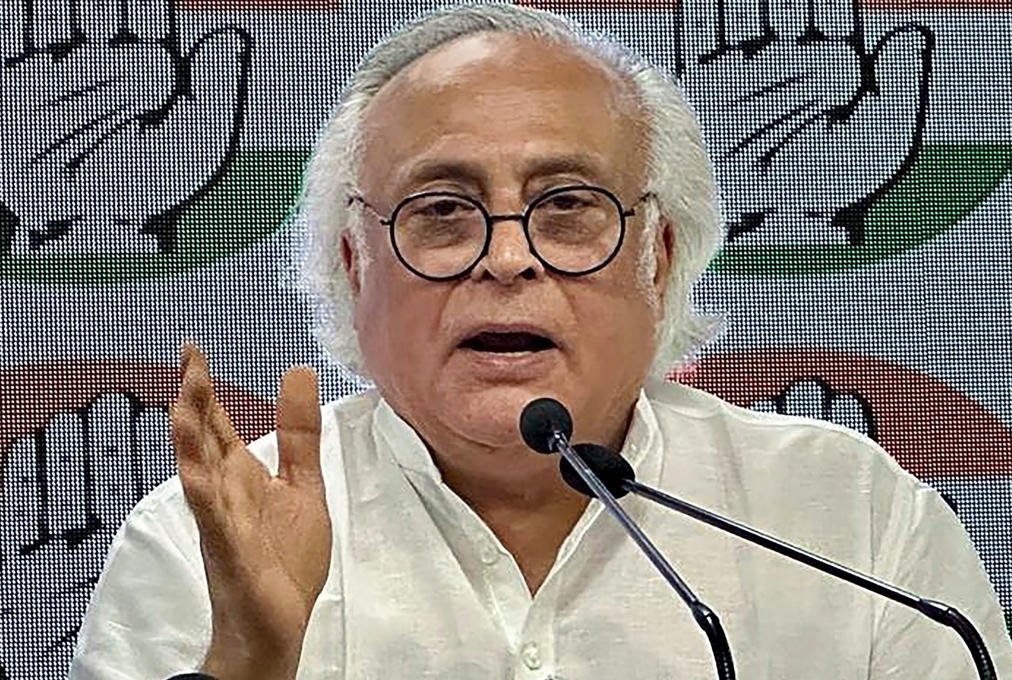
The Congress has alleged that Prime Minister Narendra Modi was aware of the Election Commission of India’s (ECI) decision to restrict Electoral Registration Officers’ (EROs) access to its ECINet voter-roll system.
The allegation was made amid the continuing political controversy over the functioning of ECINet and the Special Intensive Revision (SIR) of electoral rolls.
Congress general secretary Jairam Ramesh accused the Election Commission of violating electoral laws by limiting the authority of local registration officers and overriding their decisions in states such as Goa and West Bengal.
The party has also questioned the role of Chief Election Commissioner Gyanesh Kumar and demanded accountability over the functioning of the poll panel.
Jairam Ramesh Questions ECINet’s Legal Compliance
Ramesh criticised the Election Commission’s September 26 press note, which announced the formation of a committee to examine whether ECINet complies with the relevant laws and rules.
He questioned why such a review was necessary after the platform’s launch.
ECINet was launched on January 22, 2026, with the stated objective of improving transparency, credibility and public trust in election management.
According to Ramesh, the Election Commission had assured the public that the platform complied with the Constitution, the Representation of the People Acts of 1950 and 1951, and the Registration of Electors Rules, 1960.
The Congress leader alleged that subsequent developments contradicted those assurances.
Congress Raises Questions Over EROs’ Powers
At the centre of the controversy is the statutory authority of Electoral Registration Officers.
Under the electoral framework, EROs are responsible for maintaining electoral rolls and making decisions concerning voter registration.
Ramesh alleged that restrictions imposed through ECINet prevented these officers from exercising their legal powers independently.
He also claimed that decisions taken by EROs in Goa and West Bengal were overridden through the centralised software system.
The Congress argues that technological systems should facilitate the work of statutory officers rather than restrict their decision-making authority.
Maharashtra CEO’s Letter Adds to Controversy
The Congress has cited a September 24 letter written by Maharashtra Chief Electoral Officer S Chockalingam to the Election Commission.
The letter reportedly sought four changes to ECINet to allow electoral registration officers to exercise their discretion in cases involving discrepancies in voter records.
The requests included changes to procedures concerning hearings, supporting documents and decision-making powers.
The issue gained further attention after reports that Election Commissioners Sukhbir Singh Sandhu and Vivek Joshi had raised objections to certain decisions and orders related to the SIR process.
The reported disagreements have added to questions about the internal functioning of the Election Commission.
Goa Voter Roll Case Raises Further Concerns
The ECINet controversy also follows reports concerning 97 voters in Goa who were found eligible for inclusion in the final electoral roll by local EROs but were allegedly left out.
According to reports, the centralised system did not allow the officers to reverse earlier deletion decisions before the final list was published.
The Goa Chief Electoral Officer reportedly sent repeated communications seeking a correction facility.
The Congress has cited the episode to support its argument that centralised control over electoral software could affect the statutory responsibilities of local officers.
The Election Commission’s position and the circumstances surrounding individual cases remain important to understanding the dispute.
Election Commission Announces Review and Corrective Measures
The Election Commission has announced a committee to examine ECINet’s compliance with the relevant legal framework.
It has also introduced procedural changes concerning voters who receive notices because of unmatched records or logical discrepancies during the SIR process.
Under the revised arrangement, officials will visit the homes of affected electors to collect supporting documents. These documents will then be uploaded to ECINet for consideration by the concerned ERO.
The Commission has also directed a special enrolment drive to identify eligible voters who may have been left out of electoral rolls.
Congress Demands Accountability
The Congress has called for accountability over the alleged restrictions on EROs and the functioning of ECINet.
Ramesh said the INDIA bloc, citizens and civil society organisations would raise the issue through protests and public action.
The party has linked the controversy to its broader criticism of the SIR exercise and its demand for the removal of CEC Gyanesh Kumar.
The allegations concerning Prime Minister Modi’s awareness of the restrictions remain the Congress’s political claim. The central questions surrounding ECINet’s legal compliance, the authority of EROs and the handling of electoral roll decisions remain part of the ongoing debate.