

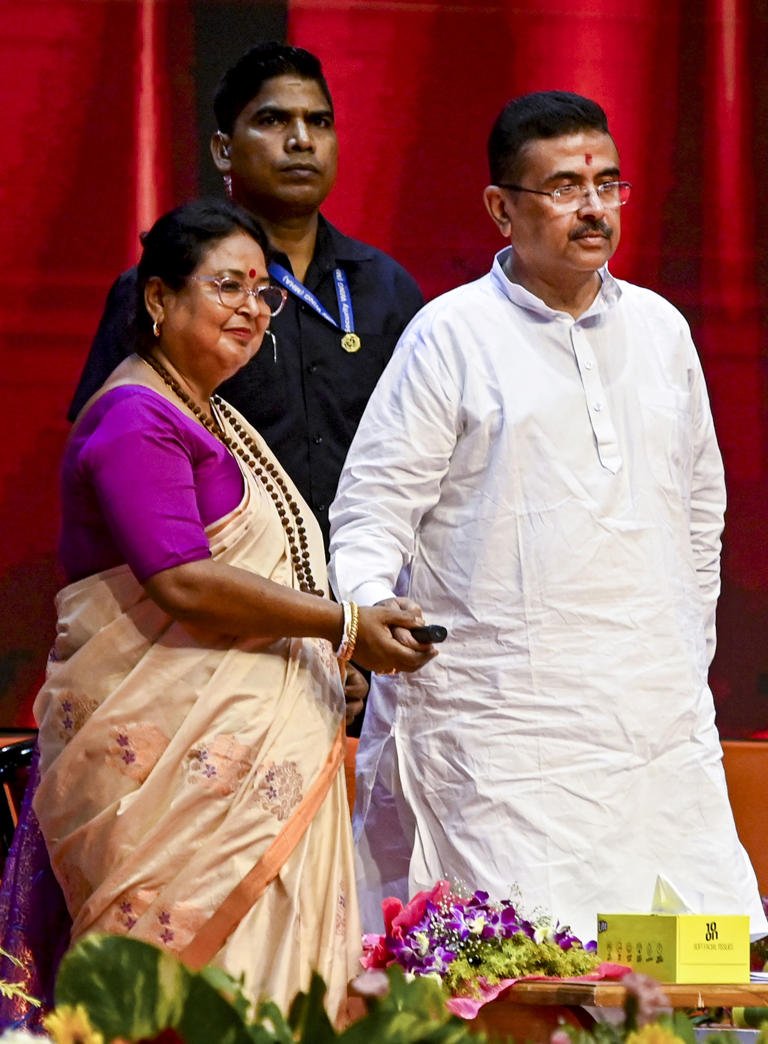
West Bengal Chief Minister Suvendu Adhikari on Wednesday announced that the first tranche of financial assistance under the Annapurna Yojana has been transferred to the bank accounts of nearly 1.1 crore women beneficiaries across the state. The announcement marks the formal rollout of one of the BJP government’s flagship welfare schemes aimed at strengthening the financial security of women through direct monetary assistance.
Speaking at the official launch of the scheme at Netaji Indoor Stadium in Kolkata, the Chief Minister said the government had received nearly 1.6 crore applications under the Annapurna Yojana. Following an extensive verification process, around 26 lakh applications were rejected due to reasons including doubts over citizenship, domicile status, duplication, deletion from electoral rolls, and the inclusion of deceased beneficiaries.
The Chief Minister said the financial assistance has been transferred directly into the bank accounts of eligible beneficiaries through the Direct Benefit Transfer (DBT) mechanism, ensuring transparency, efficiency, and accountability in the implementation of the scheme. He added that beneficiaries who had not received the amount by Wednesday morning would receive the funds by the end of the day.
Around 1.1 Crore Women Receive First Instalment
Addressing the gathering during the launch programme, Chief Minister Suvendu Adhikari said that nearly 1.1 crore eligible women had already received the first instalment of financial assistance under the Annapurna Yojana.
According to the Chief Minister, the state government carried out an extensive verification exercise before releasing the funds to ensure that only eligible beneficiaries received financial assistance. He emphasised that public money should be distributed only in accordance with prescribed rules and after proper scrutiny.
Officials stated that the digital transfer process enabled beneficiaries across both urban and rural areas to receive the funds directly into their bank accounts without intermediaries, reducing delays and enhancing transparency.
The successful transfer represents one of the largest direct benefit transfers undertaken by the state government since assuming office.
Verification Process Led to Rejection of 26 Lakh Applications
Chief Minister Adhikari said nearly 26 lakh applications submitted under the Annapurna Yojana were rejected after scrutiny revealed multiple discrepancies. According to him, the rejected applications included cases involving doubts over citizenship and domicile status, names deleted from electoral rolls, multiple applications by the same individual, and records of deceased applicants.
He maintained that the verification process was essential to ensure that financial assistance reached only genuine and eligible beneficiaries.
The Chief Minister stated that taxpayer-funded welfare schemes must be implemented responsibly and that strict screening was necessary to prevent misuse of public funds.
Officials indicated that the government would continue monitoring the scheme to ensure transparency and maintain the integrity of the beneficiary database.
Annapurna Yojana Aims to Strengthen Women’s Financial Security
The Annapurna Yojana has been introduced by the West Bengal government to provide monthly financial assistance to eligible women across the state. The scheme seeks to strengthen household incomes while promoting women’s financial independence and social security.
Officials believe that direct financial support will help beneficiaries meet essential household expenses, including food, education, healthcare, and other daily requirements.
The government has described the scheme as an important component of its broader welfare agenda focused on improving the economic well-being of women and vulnerable families.
By providing assistance directly to women beneficiaries, the programme is also expected to strengthen their participation in household financial decision-making.
Direct Benefit Transfer Ensures Transparent Delivery
The implementation of the Annapurna Yojana through the Direct Benefit Transfer system has been highlighted as one of the scheme’s major strengths. Funds are credited directly into beneficiaries’ bank accounts, reducing administrative delays and eliminating the role of intermediaries.
Officials stated that digital transfers improve accountability while allowing beneficiaries to receive assistance quickly and securely.
The DBT system also enables the government to monitor fund disbursement efficiently and address any issues related to beneficiary verification or payment delays.
The successful rollout demonstrates the state’s increasing reliance on digital governance to deliver public welfare programmes.
Scheme Expected to Benefit Rural and Urban Households
The Annapurna Yojana is expected to provide financial support to eligible women residing in both rural and urban areas of West Bengal. The scheme aims to improve household financial stability by providing regular monetary assistance to economically weaker families.
Officials believe that additional financial support will help beneficiaries better manage daily expenses while reducing economic vulnerability.
The programme is also expected to stimulate local economic activity as recipients utilise the funds for essential purchases, thereby increasing demand within local markets.
The wide coverage of the scheme reflects the government’s objective of ensuring inclusive welfare across all districts of the state.
Women’s Empowerment at the Centre of Welfare Agenda
The state government has described the Annapurna Yojana as an important initiative for promoting women’s empowerment through direct financial assistance. Officials believe that improving women’s economic security contributes to stronger households and better socio-economic outcomes.
The scheme complements other government initiatives aimed at improving access to healthcare, education, employment, and social protection for women.
Direct financial assistance enables women to exercise greater financial independence while contributing to family welfare and community development.
The government has reiterated its commitment to implementing welfare programmes that support women across different socio-economic backgrounds.
CM Announces Additional Measures for Women’s Safety
During the launch programme, Chief Minister Suvendu Adhikari also emphasised the government’s commitment to ensuring women’s safety across West Bengal. He announced that a dedicated women’s helpdesk would become operational in every police station across the state from Thursday to facilitate quicker response to complaints.
The Chief Minister said the government follows a zero-tolerance policy towards crimes against women and is strengthening administrative mechanisms to ensure prompt action whenever complaints are received.
He also stated that the government is taking measures to confiscate the properties of individuals accused in serious crimes as part of its efforts to strengthen law enforcement.
Government Commits to Transparent Welfare Delivery
The West Bengal government has reiterated that transparency and accountability will remain central to the implementation of the Annapurna Yojana. Officials said regular verification and monitoring will continue to ensure that only eligible beneficiaries receive financial assistance under the scheme.
The administration also plans to address grievances relating to beneficiary status, payment delays, and verification through designated support mechanisms.
The government believes that efficient implementation and continuous monitoring will strengthen public confidence in welfare delivery while ensuring optimal utilisation of public funds.
Officials expressed confidence that the scheme would become an important pillar of the state’s social welfare framework.
A Major Step Towards Women’s Economic Empowerment
The transfer of the first tranche of financial assistance under the Annapurna Yojana to nearly 1.1 crore women marks a significant milestone in West Bengal’s welfare initiatives under the BJP government. By combining direct benefit transfers with a robust verification process, the government aims to provide timely financial support while ensuring transparency and accountability.
As the scheme expands, it is expected to strengthen the financial security of millions of women, improve household resilience, and contribute to inclusive socio-economic development across the state. The successful rollout of the first instalment reflects the government’s commitment to efficient welfare delivery and women’s empowerment through targeted financial assistance.