

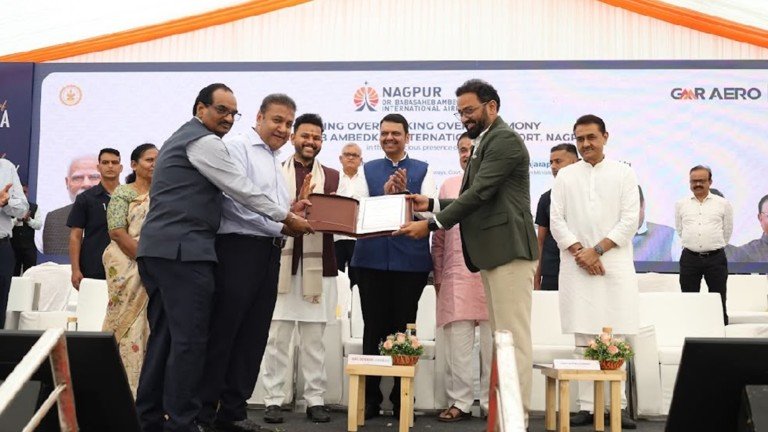
GMR Group has strengthened its position in India’s rapidly growing aviation sector by taking over the operations of Nagpur Airport, marking another significant milestone in its expanding airport management portfolio. The development is expected to accelerate infrastructure upgrades, enhance passenger services, improve operational efficiency, and support the long-term growth of one of central India’s most strategically located airports.
The takeover reflects the increasing role of private sector participation in the modernisation of India’s aviation infrastructure. With extensive experience in developing and managing world-class airports, GMR Group is expected to bring global best practices in airport operations, customer service, technology integration, and infrastructure development to Nagpur.
The transition is viewed as an important step towards transforming the airport into a major regional aviation hub.
Nagpur’s Strategic Importance
Nagpur occupies a central geographical location in India, making it an important transportation and logistics hub. The city serves as a gateway to central India and has witnessed steady growth in passenger traffic, cargo movement, and industrial activity over the years.
Its strategic position provides significant opportunities for expanding domestic and international air connectivity while strengthening logistics and cargo operations.
Officials believe that improved airport infrastructure can further support Nagpur’s emergence as an important centre for commerce, manufacturing, tourism, education, and investment.
The airport’s location also complements national initiatives aimed at improving multimodal connectivity across the country.
Focus on Infrastructure Modernisation
One of the key priorities following the takeover is expected to be the modernisation of airport infrastructure. GMR Group is likely to focus on enhancing passenger terminals, operational facilities, digital systems, security infrastructure, and overall airport capacity.
Modern airport infrastructure plays an essential role in improving operational efficiency while delivering better travel experiences for passengers.
Upgraded facilities may include improved check-in systems, enhanced baggage handling, expanded waiting areas, digital information systems, upgraded security processes, and modern passenger amenities.
Infrastructure development is expected to support future growth in passenger and cargo traffic.
Enhancing Passenger Experience
GMR Group has consistently emphasised customer-centric airport operations across its aviation projects. Similar improvements are expected at Nagpur Airport through the introduction of advanced technologies and enhanced passenger services.
Officials anticipate improvements in terminal management, digital ticketing support, passenger information systems, retail facilities, food courts, accessibility services, and overall airport convenience.
Reducing waiting times, improving passenger comfort, and ensuring seamless airport operations remain important objectives.
The adoption of modern technologies is expected to create a smoother and more efficient travel experience for both domestic and international passengers.
Boost for Regional Connectivity
The expansion of airport infrastructure at Nagpur is expected to improve regional connectivity by facilitating additional domestic and potentially international flight operations.
Enhanced connectivity strengthens economic integration by improving access for businesses, tourists, investors, students, and professionals travelling to and from central India.
Officials believe better air connectivity encourages greater investment while supporting regional economic development and tourism growth.
The airport’s strategic location makes it well positioned to serve as an important transit point connecting various regions of the country.
Improved connectivity also contributes to balanced regional development.
Strengthening Cargo and Logistics
Nagpur has long been recognised for its logistics potential due to its central location and growing industrial base. The airport’s cargo infrastructure is expected to receive considerable attention under GMR Group’s management.
Modern cargo facilities support industries such as manufacturing, pharmaceuticals, agriculture, e-commerce, and exports by enabling faster and more efficient movement of goods.
Officials believe improved cargo infrastructure can strengthen supply chains while attracting greater commercial activity to the region.
The integration of airport operations with road, rail, and logistics networks is expected to enhance Nagpur’s competitiveness as a logistics hub.
Supporting Economic Development
Airport expansion often generates broader economic benefits extending beyond aviation alone. Improved infrastructure stimulates tourism, trade, hospitality, retail, transportation, and real estate development while creating employment opportunities across multiple sectors.
The takeover of Nagpur Airport is expected to contribute to the city’s long-term economic growth by improving accessibility and attracting investment.
Construction activities, operational expansion, maintenance services, airport retail, hospitality, and aviation support services are likely to create new employment opportunities.
Officials expect the airport’s growth to have positive multiplier effects throughout the regional economy.
Private Sector Role in Aviation Growth
The takeover highlights the increasing contribution of private sector participation in strengthening India’s airport infrastructure. Public-private partnerships have enabled significant investments in airport modernisation, operational efficiency, technological innovation, and customer service improvements across the country.
GMR Group has established expertise in managing major airports while implementing international operational standards.
Officials believe private investment complements government efforts to expand aviation infrastructure and meet the rising demand for air travel in one of the world’s fastest-growing aviation markets.
The collaboration supports India’s long-term infrastructure development goals.
Future Expansion Opportunities
Looking ahead, Nagpur Airport is expected to explore opportunities for expanding passenger capacity, increasing airline connectivity, strengthening cargo operations, and developing commercial infrastructure.
Future investments may include additional terminal expansion, improved airside facilities, digital transformation, sustainable infrastructure, and enhanced operational systems.
Officials have indicated that long-term planning will focus on accommodating future growth while maintaining high standards of safety, efficiency, and environmental sustainability.
The airport’s development is expected to align with India’s broader aviation expansion strategy and regional connectivity objectives.
A New Chapter for Nagpur Airport
GMR Group’s takeover of Nagpur Airport marks the beginning of a new phase in the airport’s development and reinforces the company’s growing presence in India’s aviation sector. By combining infrastructure modernisation, technological innovation, enhanced passenger services, and improved cargo capabilities, the airport is expected to emerge as a stronger aviation hub serving central India.
The development also reflects India’s continued emphasis on expanding world-class airport infrastructure through strategic public-private partnerships. As passenger traffic, regional connectivity, and logistics demand continue to grow, Nagpur Airport is well positioned to play an increasingly important role in the country’s aviation network. With GMR Group’s operational expertise and long-term investment vision, the airport is expected to contribute significantly to regional economic development, improved connectivity, and the overall growth of India’s rapidly evolving aviation industry.