

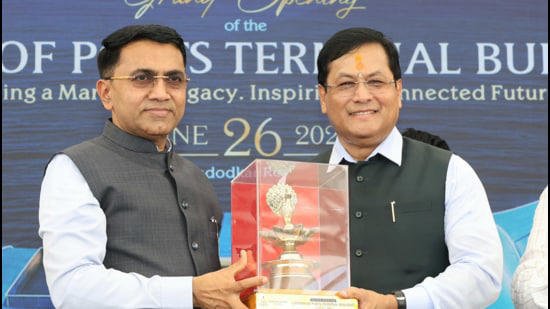
Union Minister for Ports, Shipping and Waterways Sarbananda Sonowal has announced that the Union government will prioritise the development of a Kochi-like Water Metro system in Goa, highlighting the Centre’s commitment to expanding sustainable and efficient water-based urban transport across the country. The proposed initiative is expected to improve connectivity, reduce road congestion, and promote environmentally friendly public transportation in the coastal state.
Speaking about the proposal, Sonowal said the success of the Kochi Water Metro has demonstrated the potential of integrated water transport systems in urban areas. He noted that Goa’s extensive network of rivers, estuaries, and waterways provides favourable conditions for developing a similar model tailored to the state’s geographical and transportation needs.
The announcement reflects the government’s broader vision of modernising inland water transport while encouraging sustainable urban mobility.
Inspired by the Success of Kochi Water Metro
The proposed Goa Water Metro is expected to draw inspiration from the Kochi Water Metro, which has emerged as one of India’s flagship urban water transport projects. Designed to integrate ferry services with existing public transport systems, the Kochi model has improved commuter connectivity while reducing travel time and road traffic.
Sonowal observed that the project has demonstrated how waterways can complement conventional transport infrastructure in densely populated urban regions.
He said the experience gained from Kochi would help planners develop a similar but locally adapted transportation network for Goa, taking into account its unique geography, tourism sector, and commuter requirements.
The initiative seeks to replicate successful practices while addressing Goa’s specific mobility challenges.
Goa’s Waterways Offer Significant Potential
Goa possesses an extensive network of navigable rivers and inland waterways that have historically supported transportation and trade. Sonowal said these natural assets provide an excellent opportunity to expand modern water-based public transport.
Developing a Water Metro in Goa could improve connectivity between key urban centres, tourist destinations, residential areas, and commercial hubs while reducing dependence on road transport.
Officials believe the state’s geographical advantages make it well suited for sustainable ferry services integrated with buses, railways, and other modes of transportation.
The project also aligns with efforts to maximise the use of India’s inland waterways for passenger mobility.
Reducing Traffic Congestion
One of the primary objectives of the proposed Water Metro is to reduce traffic congestion on Goa’s increasingly busy roads. With growing tourism, urbanisation, and vehicle ownership, transportation infrastructure faces mounting pressure, particularly during peak travel seasons.
Water-based public transport can provide an alternative mode of travel that reduces congestion while improving commuter convenience.
Sonowal stated that integrated transportation systems allow passengers to shift seamlessly between different modes of travel, creating a more efficient urban mobility network.
The Water Metro is expected to complement existing transportation infrastructure rather than replace it.
Promoting Sustainable and Green Mobility
The Union Minister highlighted environmental sustainability as a major advantage of Water Metro projects. Modern ferry systems increasingly utilise cleaner technologies, energy-efficient vessels, and environmentally responsible operational practices that reduce carbon emissions compared to conventional road transport.
Promoting water-based transportation supports India’s broader commitment to sustainable urban development and cleaner mobility solutions.
Sonowal emphasised that environmentally friendly transportation infrastructure contributes to improved air quality, reduced fuel consumption, and more efficient utilisation of natural waterways.
The proposed Goa Water Metro aligns with the government’s long-term vision of green transportation.
Boost for Tourism and Local Economy
Goa’s tourism industry is expected to benefit significantly from the proposed Water Metro. Improved water transport can enhance visitor experiences by providing scenic, convenient, and efficient travel options connecting beaches, heritage sites, riverfront destinations, and urban centres.
Officials believe the project could diversify transportation choices for both residents and tourists while encouraging sustainable tourism practices.
In addition to passenger services, improved water connectivity may stimulate local businesses, hospitality services, restaurants, recreational activities, and waterfront development.
The project is expected to generate employment opportunities during construction, vessel operations, maintenance, and associated tourism activities.
Strengthening Inland Waterways Infrastructure
The announcement forms part of the Union government’s larger strategy to strengthen inland waterways infrastructure across the country. The Ministry of Ports, Shipping and Waterways has been promoting greater utilisation of rivers and inland water bodies for cargo movement, passenger transport, tourism, and economic development.
Sonowal reiterated that inland waterways represent an important national resource capable of improving transportation efficiency while reducing logistics costs and environmental impact.
Investments in modern terminals, navigation systems, vessels, and supporting infrastructure continue to expand India’s inland water transport network.
The Goa Water Metro would contribute to this broader national vision.
Integrated Urban Transport Model
The proposed Water Metro is expected to function as part of an integrated urban transportation system, linking ferry services with buses, railways, and other public transport facilities.
Officials noted that multimodal connectivity improves commuter convenience by enabling smoother travel across different transport networks.
Digital ticketing, coordinated schedules, modern passenger terminals, and improved accessibility are expected to be important components of the project if implemented.
Integrated planning helps maximise transportation efficiency while encouraging greater use of public transport.
The experience gained from similar projects will guide future planning and execution.
Government Reaffirms Commitment to Maritime Development
Sonowal reiterated the government’s commitment to strengthening maritime infrastructure, inland waterways, coastal connectivity, and sustainable transportation throughout India.
He stated that expanding water-based transport systems supports multiple national objectives, including economic growth, environmental sustainability, urban development, tourism promotion, and improved public mobility.
The ministry will continue working with state governments and relevant agencies to identify suitable projects capable of delivering long-term public benefits.
The proposed Goa Water Metro represents another step in India’s ongoing maritime modernisation efforts.
Towards a Sustainable Transportation Future
Union Minister Sarbananda Sonowal’s announcement that the Centre will prioritise a Kochi-like Water Metro for Goa underscores the government’s growing emphasis on sustainable, efficient, and integrated transportation systems. By leveraging Goa’s extensive waterways, the proposed project has the potential to improve urban mobility, reduce traffic congestion, strengthen tourism, and promote environmentally responsible public transport.
Drawing upon the successful experience of the Kochi Water Metro, the initiative seeks to develop a modern transportation network that complements existing infrastructure while enhancing connectivity across the coastal state. As India continues expanding its inland waterways and maritime infrastructure, projects such as the Goa Water Metro reflect a broader vision of creating cleaner, smarter, and more resilient transport systems capable of supporting economic growth and improving the quality of life for citizens and visitors alike.