

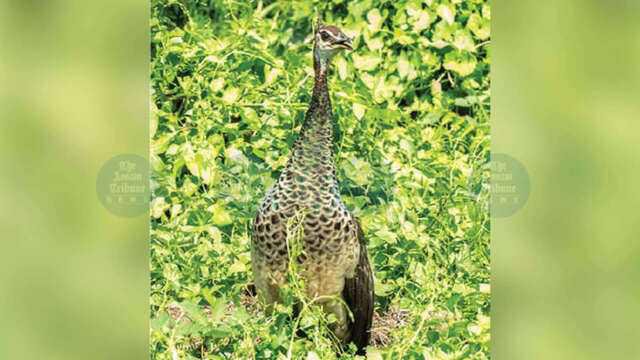
The sighting of an Indian peafowl in Assam’s Orang National Park has drawn attention from wildlife enthusiasts and birdwatchers. The observation is being described as significant for the park, which is better known for its one-horned rhinoceroses, tigers, elephants and rich grassland ecosystem.
The Indian peafowl, scientifically known as Pavo cristatus, is India’s national bird. Its appearance in Orang adds another notable species to the park’s growing wildlife profile. The species is easily recognised by the male bird’s brilliant blue plumage, crest and long, iridescent train.
Indian Peafowl Sighting Gains Attention
The recent observation is particularly notable because peafowl are not traditionally associated with Orang’s best-known wildlife attractions. Assam’s official wildlife information highlights Orang for its rhinos, tigers, elephants, deer and diverse waterbirds.
The sighting therefore provides an interesting addition to records of bird diversity in the protected area. It also underlines the importance of continued bird monitoring across Assam’s national parks.
However, available public sources do not establish that this is the first-ever record of Indian peafowl in Orang. Therefore, the sighting is best described as historic or significant without making an unsupported claim that the species has never previously been recorded there.
Orang’s Rich Grassland Habitat
Orang National Park lies on the northern bank of the Brahmaputra and is known for its extensive grasslands, wetlands and woodland habitats. According to Assam Tourism, around 60% of the park consists of grassland.
These habitats support a wide variety of animals and birds. The park is home to the greater one-horned rhinoceros and also supports tigers, elephants, sambar, barking deer and several species of waterbirds.
Assam’s Forest Department notes that grasslands and savannah habitats occur across several protected areas in the state, including Orang. Such landscapes provide important feeding and breeding grounds for numerous bird species.
A New Addition to Orang’s Bird Diversity
Bird diversity forms an important part of Assam’s overall biodiversity. The state is recognised as an important bird region and records around 950 bird species, according to the Assam Forest Department.
The Indian peafowl itself is a widely recognised species across the Indian subcontinent. It belongs to the pheasant family and is particularly associated with open woodland, forest edges, grasslands and areas where suitable food and cover are available.
Its presence in Orang could therefore reflect the availability of suitable habitat within or around the park.
Conservation Significance
The observation also highlights the value of protecting habitats beyond those occupied by Assam’s most famous large mammals.
Orang has undergone significant conservation expansion in recent years. The Government of India reported that the park’s habitat was expanded by more than 200 square kilometres as part of broader efforts to strengthen rhino conservation and wildlife habitat in Assam.
Such habitat expansion can benefit a wide range of species. While the primary conservation focus may involve threatened mammals such as the greater one-horned rhinoceros, improved habitat connectivity can also create opportunities for birds and smaller wildlife.
Importance for Birdwatchers
The appearance of the Indian peafowl could also add another attraction for birdwatchers visiting Orang National Park.
The park already supports numerous bird species, including waterbirds and grassland-associated birds. Assam’s wider protected-area network also provides habitats for several notable bird species, including Bengal florican and other threatened birds.
For bird enthusiasts, sightings of additional species can help build a more complete understanding of the park’s ecological diversity.
Continued Monitoring Can Provide More Answers
Wildlife experts and forest authorities can gain valuable information through systematic bird surveys, camera traps and field observations. Continued monitoring would help establish whether the peafowl sighting represents an isolated occurrence or indicates a more established presence in the landscape.
Long-term wildlife monitoring is already an important part of conservation work in Orang. Conservation organisation Aaranyak, for example, has conducted long-term monitoring of tigers, prey species and ecosystems in the national park.
Regular surveys could similarly strengthen knowledge about Orang’s bird populations.
Orang’s Wildlife Story Continues to Expand
The Indian peafowl sighting adds another interesting chapter to the wildlife story of Orang National Park. Although the park is widely recognised for its rhinoceroses and other large mammals, its grasslands, wetlands and forests support a much broader range of species.
As conservation efforts continue across Assam, observations such as this can help highlight the importance of protecting entire ecosystems rather than focusing on individual species alone.
The sighting also offers an encouraging reminder that Orang’s ecological significance extends beyond its iconic mammals. Further surveys may reveal additional information about the presence and distribution of birds across the park in the future.