

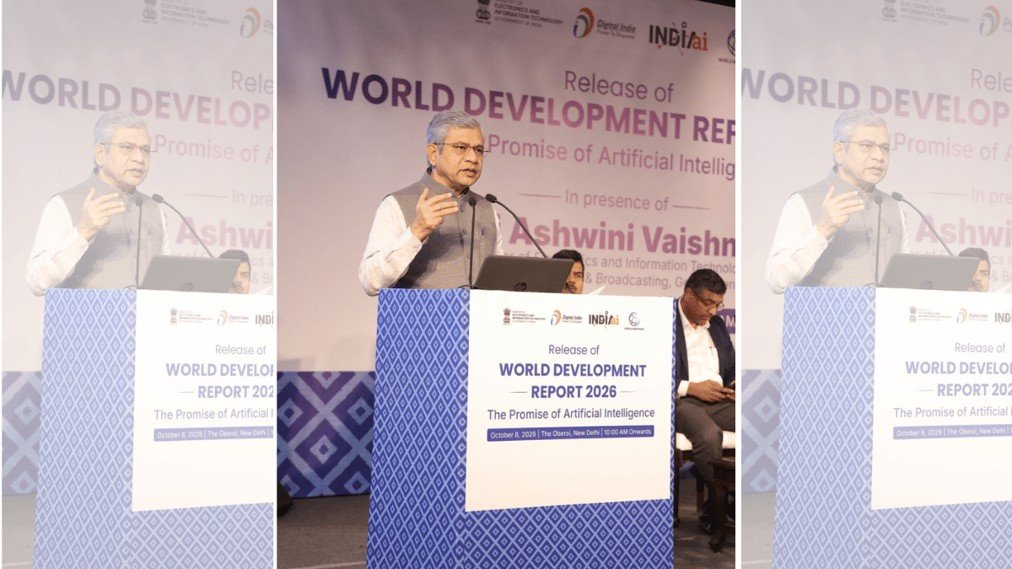
India is stepping up efforts to develop a broader framework for artificial intelligence regulation, with a consultation paper expected to be released next month as the government looks to address concerns surrounding deepfakes, AI safety and accountability.
The move comes as the rapid expansion of generative AI raises new questions about misinformation, privacy, digital safety and the responsibilities of technology companies. India has already introduced measures targeting synthetic content, but the proposed consultation is expected to explore wider aspects of AI governance.
Government Focuses on AI Safety
The proposed consultation paper is expected to examine how AI systems can be developed and deployed while limiting risks to users and society.
AI tools are increasingly being used for content creation, education, business, healthcare and public services. At the same time, the technology has created new challenges involving manipulated content, impersonation, privacy violations and automated misinformation.
The government is therefore looking at ways to balance technological innovation with safeguards for users.
Deepfakes Remain a Major Concern
One of the most prominent issues in India’s AI policy discussions is the spread of deepfakes and other forms of synthetic media.
Deepfakes can create realistic images, videos or audio recordings that appear to show people saying or doing things that never happened. Such material can be used to spread misinformation, damage reputations, facilitate fraud or manipulate public opinion.
The Ministry of Electronics and Information Technology has already proposed amendments to the IT Rules concerning synthetically generated information, including requirements related to labelling, traceability and accountability.
Existing Rules Already Cover Synthetic Content
India’s regulatory approach to AI is not starting from scratch.
The government has already amended the IT Rules to establish provisions relating to synthetically generated information. The framework defines synthetic content broadly to include realistic AI-generated or AI-altered audio, images and videos that could be mistaken for authentic material.
The rules also distinguish between harmful synthetic content and routine forms of editing, such as technical corrections, formatting or enhancement that do not materially alter the underlying information.
These provisions are intended to ensure that legitimate uses of AI and digital editing are not unnecessarily restricted.
Balancing Innovation and Regulation
A major challenge for policymakers will be finding a balance between regulation and innovation.
India has been encouraging the development and adoption of artificial intelligence across sectors, with businesses and startups increasingly incorporating AI into their products and services.
Overly restrictive regulations could potentially increase compliance costs for smaller companies and discourage experimentation. At the same time, a lack of safeguards could expose users to significant risks.
The upcoming consultation is therefore expected to seek views from technology companies, researchers, startups, civil society organisations and other stakeholders.
Accountability Could Become a Key Issue
Another important area likely to receive attention is accountability.
As AI systems become more capable, questions arise over who should be responsible when an AI-generated product causes harm. Depending on the circumstances, responsibility could involve developers, platforms, deployers or users.
A clear regulatory framework could help establish expectations for risk assessment, transparency, content moderation and user protection.
India has previously indicated interest in strengthening intermediary responsibilities and digital oversight through amendments to the IT Rules.
India’s Wider AI Governance Push
The latest initiative forms part of a broader effort to establish an Indian approach to AI governance.
The government has previously explored issues including high-risk AI systems, algorithmic accountability, content moderation and cybersecurity. Earlier policy proposals under the Digital India framework also discussed regulatory models for high-risk AI and mechanisms for testing and assessing AI-related risks.
More recently, the Ministry of Electronics and Information Technology has also established an AI Governance and Economic Group, signalling continued work on the policy and economic dimensions of artificial intelligence.
What the Consultation Paper Could Address
The proposed paper could provide an opportunity to examine several unresolved questions around AI regulation.
These may include the identification of high-risk AI applications, transparency requirements, safeguards against harmful synthetic content, cybersecurity, accountability mechanisms and protection of users from AI-enabled fraud.
The government may also need to consider how any new framework would interact with existing laws covering data protection, cybersecurity and intermediary responsibilities.
A Crucial Stage for India’s AI Policy
The expected consultation paper could mark an important stage in India’s evolving approach to artificial intelligence.
With AI adoption accelerating across industries, policymakers face the challenge of protecting citizens without restricting useful technological development.
Deepfakes, misinformation and AI safety are likely to remain central to that discussion. The consultation process could provide industry, experts and civil society with an opportunity to contribute to the framework before the government decides on further regulatory measures.
For India, the next phase will be about establishing rules that encourage innovation while ensuring that increasingly powerful AI systems are developed and used with appropriate safeguards.
[…] India Steps Up AI Regulation Push: Consultation Paper Likely Next Month, Deepfakes in Focus […]
[…] India Steps Up AI Regulation Push: Consultation Paper Likely Next Month, Deepfakes in Focus […]
[…] India Steps Up AI Regulation Push: Consultation Paper Likely Next Month, Deepfakes in Focus […]
[…] India Steps Up AI Regulation Push: Consultation Paper Likely Next Month, Deepfakes in Focus […]