

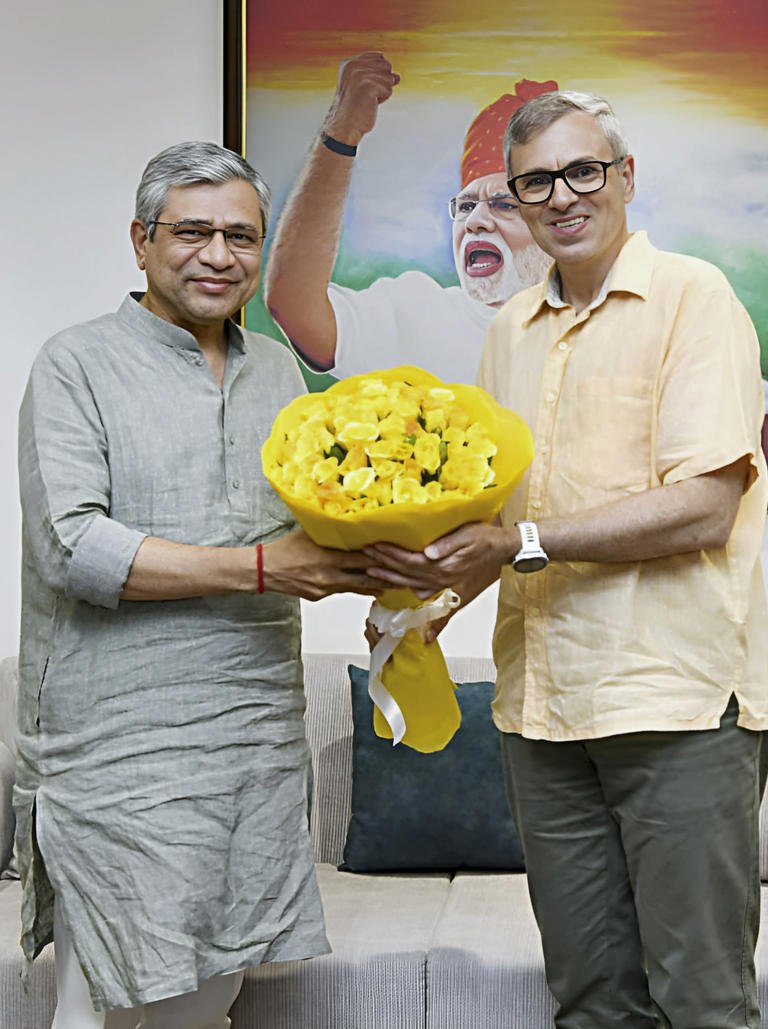
Jammu and Kashmir Chief Minister Omar Abdullah met the Union Railway Minister and urged the Centre to introduce more train services for Kashmir, highlighting the growing demand for improved rail connectivity in the region. The meeting focused on strengthening transportation infrastructure, enhancing passenger convenience, and supporting economic growth through an expanded railway network.
The Chief Minister emphasized that railway connectivity has emerged as a vital component of Jammu and Kashmir’s development strategy. With rail services increasingly becoming a preferred mode of transport for residents, tourists, students, and business travelers, the demand for additional trains and improved scheduling has continued to rise.
The discussions come at a time when railway infrastructure in the Union Territory is undergoing significant transformation, creating new opportunities for connectivity and regional integration.
Omar Abdullah Raises Demand for Additional Train Services
During the meeting, Omar Abdullah highlighted the need for more train services connecting Kashmir with various parts of the country. He reportedly stressed that improved railway connectivity would benefit thousands of passengers who rely on rail transport for travel, education, employment, tourism, and trade.
The Chief Minister noted that existing services have witnessed increasing passenger demand, indicating the growing importance of rail transport in the region. Additional trains, he argued, would help accommodate this demand while providing greater flexibility and convenience for travelers.
He also emphasized that enhanced rail services could contribute significantly to economic development by facilitating the movement of people and goods more efficiently.
The proposal reflects the government’s broader efforts to strengthen transportation infrastructure and improve connectivity across Jammu and Kashmir.
Railway Connectivity Key to Regional Development
Railway infrastructure plays a crucial role in supporting economic and social development. Omar Abdullah reportedly informed the Railway Minister that improved train services can help connect communities, boost tourism, and support business activities throughout the region.
Reliable transportation networks are essential for facilitating trade and improving access to markets. Better connectivity can help local producers transport goods more efficiently while reducing logistical challenges and costs.
The Chief Minister emphasized that enhanced rail connectivity would also support educational and healthcare access by enabling residents to travel more conveniently to major institutions and service centers.
Government officials believe that continued investment in railway infrastructure can generate long-term developmental benefits for the Union Territory.
Growing Demand for Passenger Services
Passenger demand has increased steadily as railway connectivity in Jammu and Kashmir has expanded. Residents increasingly view rail transport as a comfortable, affordable, and reliable mode of travel.
Students traveling for higher education, professionals commuting for work, and families undertaking long-distance journeys have all benefited from improved railway services. Tourism-related travel has also contributed to growing passenger numbers.
The Chief Minister reportedly pointed out that additional train services would help address capacity constraints during peak travel periods and improve overall passenger experience.
Railway authorities have acknowledged that demand for transportation services is expected to increase further as connectivity projects continue to progress.
Boost for Tourism Sector
Tourism remains one of the most important sectors of Jammu and Kashmir’s economy. Improved railway connectivity has the potential to significantly enhance tourist arrivals by making travel more accessible and convenient.
Omar Abdullah highlighted the role that additional train services could play in supporting the tourism industry. Better connectivity can encourage more visitors to explore the region’s scenic destinations, cultural attractions, and religious sites.
Tourism stakeholders have long advocated for stronger transportation networks to facilitate visitor movement and improve travel experiences. Increased rail services could complement ongoing efforts to promote Jammu and Kashmir as a premier tourism destination.
The economic benefits of tourism extend to hotels, restaurants, transport operators, handicraft businesses, and numerous other sectors that depend on visitor spending.
Strengthening National Integration Through Railways
Railway connectivity serves not only economic purposes but also contributes to national integration by connecting regions and communities more effectively. Enhanced rail services can facilitate greater interaction between people from different parts of the country.
The Chief Minister reportedly emphasized that improved connectivity can strengthen social and cultural exchanges while creating new opportunities for collaboration and development.
Railways have historically played a significant role in promoting mobility and fostering economic integration across India. Expanding services in Jammu and Kashmir aligns with broader national objectives related to connectivity and inclusive development.
Officials believe that stronger transportation links can help bridge regional gaps and support balanced growth.
Infrastructure Development Remains a Priority
The meeting also underscored the importance of continued investment in railway infrastructure. The Union Territory has witnessed substantial progress in transportation projects aimed at improving accessibility and connectivity.
Officials noted that infrastructure development remains essential for maximizing the benefits of existing and future rail services. Modern stations, upgraded facilities, and efficient operational systems can contribute to a better passenger experience.
The Chief Minister expressed confidence that ongoing collaboration between the Jammu and Kashmir administration and the Ministry of Railways would help accelerate development initiatives and address transportation needs.
Infrastructure improvements are expected to complement broader efforts to enhance mobility and support economic growth across the region.
Economic Benefits of Expanded Rail Services
Additional train services could generate significant economic benefits for Jammu and Kashmir. Improved transportation networks facilitate commerce, reduce travel costs, and support the movement of goods and services.
Businesses can benefit from enhanced connectivity by gaining easier access to markets and customers. Better transportation options can also encourage investment and support entrepreneurship by improving logistical efficiency.
The Chief Minister reportedly emphasized that stronger rail connectivity can contribute to employment generation and economic diversification. Infrastructure investments often create direct and indirect opportunities across multiple sectors.
Experts note that transportation development is closely linked to economic growth and can play a transformative role in regional development.
Looking Ahead
The meeting between Chief Minister Omar Abdullah and the Union Railway Minister reflects the growing importance of rail connectivity in Jammu and Kashmir’s development agenda. By seeking additional train services for Kashmir, the Chief Minister has highlighted the need to meet rising passenger demand and support broader economic objectives.
As discussions continue, residents, businesses, and tourism stakeholders will be closely watching for decisions regarding expanded railway services. Enhanced connectivity has the potential to improve mobility, strengthen economic activity, and create new opportunities across the region.
With railway infrastructure continuing to evolve, additional train services could play a key role in shaping the future of transportation in Jammu and Kashmir. The request underscores the administration’s commitment to improving public infrastructure and ensuring that the benefits of development reach communities throughout the Union Territory.