

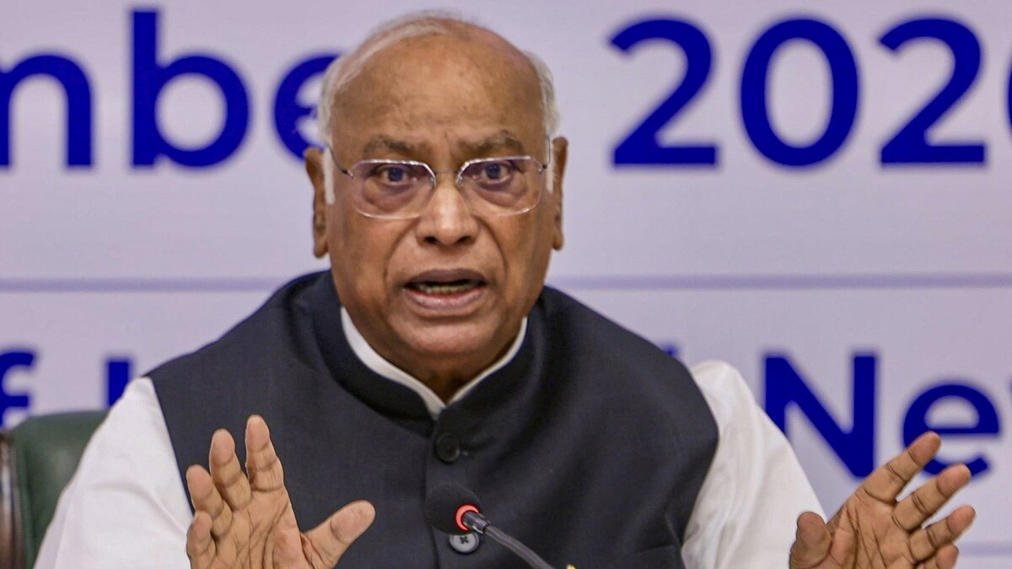
Congress president Mallikarjun Kharge on Saturday, October 3, demanded the dissolution of the Lok Sabha and all state Assemblies, calling for fresh elections through ballot papers instead of Electronic Voting Machines (EVMs).
Speaking to reporters in Kalaburagi, Karnataka, Kharge alleged that elections conducted across the country were illegal and claimed that irregularities in the electoral process had undermined democratic principles.
His remarks came amid the opposition’s continuing criticism of the Election Commission’s Special Intensive Revision (SIR) of electoral rolls and its demand for greater transparency in elections.
Kharge Questions Legitimacy of Elected Governments
Kharge called for the dissolution of the Lok Sabha and state Assemblies, arguing that fresh elections should be conducted using traditional ballot papers.
He also questioned the legitimacy of Prime Minister Narendra Modi, Union Home Minister Amit Shah and chief ministers elected through the existing electoral process.
The Congress president alleged that EVMs were being misused, although he did not establish these allegations as verified findings.
The Congress and other opposition parties have repeatedly raised concerns about the functioning of EVMs and demanded a return to ballot paper voting.
Congress Raises Concerns Over SIR
Kharge also criticised the Election Commission’s ongoing Special Intensive Revision of electoral rolls, alleging that the exercise contained several irregularities.
He claimed that the revision could disproportionately affect poor people, workers, less-educated citizens and minorities.
Referring to alleged voter deletions, Kharge questioned how elections could be considered free and fair if hundreds of names were removed from a polling booth.
He also raised concerns over the process of adding names to electoral rolls, calling for greater transparency and safeguards to protect eligible voters.
The Election Commission’s voter-roll revision has become a major issue between opposition parties and the poll panel, with the opposition demanding clearer information about deletions, additions and the process followed.
INDIA Bloc Plans Nationwide Protests
Kharge said the INDIA bloc had discussed the issue at a meeting held on September 30, attended by leaders and representatives of around 20 opposition parties.
According to him, the parties agreed to continue protests against the SIR exercise and demand changes to the electoral process.
He said the opposition would organise demonstrations and public-awareness campaigns across the country to highlight concerns about voting rights.
A march by opposition MPs to the Election Commission in New Delhi is scheduled for October 6. Kharge said protests would also take place in different states at regular intervals.
The opposition’s demands include greater transparency in electoral rolls, the restoration of ballot paper voting and action on concerns surrounding the Election Commission.
Kharge Questions Legal and Institutional Safeguards
The Congress president also criticised the legal framework governing the appointment and protection of Election Commissioners.
He alleged that the government had weakened institutional independence and questioned the role of the Election Commission in addressing opposition complaints.
Kharge expressed doubts about pursuing legal remedies, alleging that key institutions were influenced by the ruling establishment. These remarks reflect the Congress leadership’s position amid the ongoing dispute.
The Election Commission and the government have faced criticism from opposition parties over the SIR process and election-related procedures.
Fresh Poll Demand Intensifies Electoral Debate
Kharge’s demand for dissolving the Lok Sabha and state Assemblies marks a further escalation in the Congress-led opposition’s campaign over electoral transparency.
While the opposition is calling for fresh elections through ballot papers, the controversy also centres on voter-list revision, EVMs and the accountability of election authorities.
The INDIA bloc has indicated that it will continue its campaign through protests, public outreach and legal interventions as it presses for changes to the electoral process.