

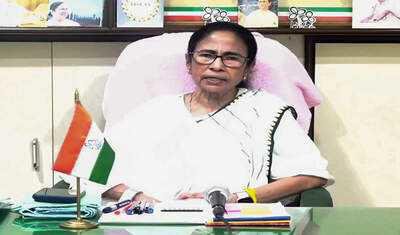
Trinamool Congress (TMC) chief Mamata Banerjee has strongly criticized the Central government over its handling of social activist Sonam Wangchuk, who was shifted from his hunger strike protest at Delhi’s Jantar Mantar to a government hospital amid deteriorating health. Calling the incident deeply concerning, Banerjee accused the Centre of failing to listen to peaceful voices of protest and urged it to respect democratic rights.
Wangchuk, who has been on an indefinite hunger strike demanding accountability over alleged examination paper leaks and broader education reforms, was taken to Safdarjung Hospital after medical concerns intensified. Authorities said the move followed medical advice and a Delhi High Court directive, while opposition leaders alleged that the activist was removed against his wishes.
Banerjee Says Peaceful Voices Should Not Be Ignored
Reacting to the development through a post on social media, Mamata Banerjee said that Sonam Wangchuk’s voice had been ignored, just as, according to her, the voices of many young Indians continue to be ignored. She expressed concern over the treatment meted out to the activist and questioned the Centre’s approach towards peaceful protests.
The TMC leader stressed that democratic governments should engage in dialogue rather than suppress dissent. She called upon the Central government to respond to citizens’ concerns through discussion and constructive action instead of coercive measures.
Wangchuk Shifted to Hospital After Health Deteriorated
Sonam Wangchuk was admitted to Safdarjung Hospital after spending more than three weeks on an indefinite hunger strike. According to officials, his health had deteriorated significantly, with doctors warning of severe dehydration and the risk of serious medical complications.
Police stated that the decision to move him to the hospital was taken to ensure he received essential medical care, following medical recommendations and directions issued by the Delhi High Court. However, Wangchuk reportedly declined medical treatment, including intravenous fluids, and expressed his intention to continue the fast.
Opposition Leaders Rally Behind Wangchuk
Mamata Banerjee was among several opposition leaders who condemned the government’s handling of the situation. Leaders from different political parties argued that peaceful protests should be protected in a democracy and questioned the manner in which Wangchuk was removed from the protest site.
Several opposition figures alleged that the government’s actions reflected an attempt to silence dissent, while reiterating their support for Wangchuk’s demands and his right to protest peacefully.
Protest Continues Despite Hospitalisation
Despite being shifted to the hospital, Wangchuk has continued his hunger strike, according to his family and supporters. His wife stated that he remains committed to the protest, and organisers have announced that their planned march to Parliament will proceed as scheduled.
Supporters have maintained that the movement is aimed at securing accountability and reforms rather than creating political confrontation. The protest has attracted support from students, activists, and members of civil society across the country.
Centre Defends Medical Intervention
Authorities have maintained that Wangchuk’s transfer to the hospital was undertaken solely to protect his health. Officials cited medical advice indicating that his prolonged fast had placed him at risk of serious complications and said the intervention was necessary to prevent further deterioration.
The Delhi High Court had earlier sought responses from the concerned governments regarding a petition seeking medical intervention for the activist, highlighting concerns over his prolonged hunger strike.
Debate Over Democratic Rights Intensifies
The episode has sparked a wider political debate over the balance between ensuring an individual’s health and protecting the right to peaceful protest. Opposition parties have argued that democratic dissent must be respected, while the government has maintained that safeguarding life and health is a priority when medical risks become severe.
The incident has generated extensive discussion on social media and across political circles, with supporters and critics offering differing views on the government’s response.
Political Reactions Likely to Continue
As Sonam Wangchuk continues his protest from the hospital, political reactions are expected to persist in the coming days. Mamata Banerjee’s criticism has added to the growing chorus of opposition voices demanding greater engagement with peaceful protesters and a more consultative approach to addressing public grievances.
Meanwhile, authorities continue to monitor Wangchuk’s health, while the protest movement remains active and supporters press ahead with their planned programmes. The developments have ensured that the issue remains at the centre of national political discourse, with attention focused on both the activist’s health and the government’s response.