

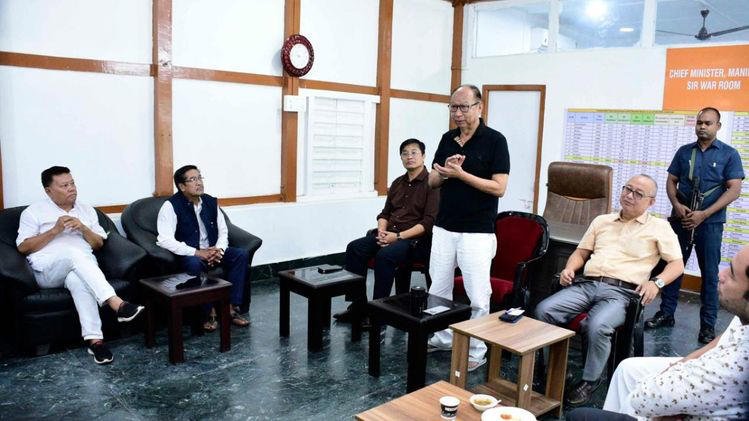
Manipur Chief Minister Yumnam Khemchand has called for a greater role for art and culture in promoting peace and reconciliation in the state. He also backed the implementation of the National Register of Citizens (NRC), describing it as an important step in addressing concerns linked to population and identity.
The Chief Minister’s remarks come as Manipur continues efforts to restore peace after prolonged ethnic tensions and violence. The state government has been working on reconciliation, rehabilitation and the restoration of normal life.
Khemchand said art can help create dialogue between communities and provide a platform for people to express their experiences. At the same time, he supported the NRC process as part of the government’s broader approach to addressing concerns over undocumented migration and demographic changes.
CM Highlights Art’s Role in Peacebuilding
Khemchand stressed that art should play a larger role in efforts to promote peace in Manipur. Music, painting, theatre, literature and other forms of creative expression can provide communities with ways to communicate when conventional political dialogue becomes difficult.
Art can also help preserve memories and experiences from periods of conflict. By allowing people to express pain, loss and hope, cultural activities can contribute to healing.
The Chief Minister’s remarks reflect an approach that goes beyond administrative and security measures. Peacebuilding also requires rebuilding relationships between communities and creating opportunities for people to interact in non-political settings.
Cultural programmes can provide such opportunities. Artists from different communities can collaborate on performances and exhibitions, helping audiences focus on shared experiences rather than differences.
Culture Can Build Bridges Between Communities
Manipur has a rich cultural heritage, with different communities maintaining distinct traditions, languages and artistic practices. Despite these differences, cultural activities can create common spaces for interaction.
Khemchand has called for greater use of this cultural diversity as a tool for peace. He believes artists can help communicate messages of harmony and encourage people to look beyond divisions.
Music and literature can be particularly powerful in this regard. They can communicate emotions and experiences that may be difficult to express through political speeches.
Young people can also benefit from greater exposure to cultural activities. Schools and colleges can organise art programmes that encourage students from different communities to participate together.
Such initiatives could help create new relationships among younger generations.
Art Can Support Reconciliation
The role of art becomes especially important in societies recovering from conflict. Creative activities can help people process difficult experiences while creating opportunities for dialogue.
In Manipur, where violence has caused displacement and loss, cultural programmes could provide safe spaces for expression.
Artists can document the experiences of affected communities through paintings, films, theatre and literature. Such work can preserve important memories while also encouraging conversations about peace.
However, cultural initiatives need to remain sensitive to the experiences of all communities. Peacebuilding efforts can succeed only when people feel that their concerns and suffering receive recognition.
Government’s Focus on Restoring Peace
The Chief Minister’s remarks come as Manipur continues to work towards restoring normalcy. The state has faced serious ethnic tensions since violence erupted in May 2023.
Thousands of people were displaced during the conflict, while communities experienced loss of homes, livelihoods and property.
Restoring peace therefore requires more than ending violence. Authorities must also address rehabilitation, resettlement and the rebuilding of trust.
The government has been pursuing measures aimed at improving security and restoring essential services. However, reconciliation between communities remains a longer-term challenge.
Khemchand’s emphasis on art adds a cultural dimension to these efforts.
CM Backs NRC Implementation
Alongside his comments on art and peace, Khemchand has supported the implementation of the National Register of Citizens in Manipur.
The NRC is intended to identify citizens based on officially recognised records. Supporters of the process argue that it can help address concerns about undocumented migration and demographic changes.
In Manipur, the issue has become particularly sensitive because of long-standing concerns about migration and changes in population patterns.
Khemchand’s support for the NRC reflects the government’s position that accurate population records are important for administration and policymaking.
NRC Debate Remains Sensitive
The implementation of an NRC is a politically and socially sensitive issue. Questions can arise over documentation, citizenship status and the treatment of people who cannot immediately establish their claims.
Any verification process therefore requires clear procedures and adequate safeguards.
Authorities need to ensure that legitimate citizens are not wrongly excluded because of documentation difficulties. This is particularly important in areas where historical records may be incomplete or difficult to obtain.
A transparent and legally sound process can help reduce confusion and build public confidence.
Need for Proper Verification
The implementation of an NRC involves extensive verification of records. Authorities must examine documents carefully and provide individuals with opportunities to present evidence.
The process can become complicated when families have moved between states or when records are unavailable.
Therefore, officials need to establish clear guidelines and provide adequate assistance to people who require help with documentation.
The government must also ensure that the process follows constitutional and legal safeguards. Independent oversight and accessible grievance mechanisms can help address disputes.
NRC and Manipur’s Demographic Concerns
Demographic concerns have played an important role in Manipur’s political debates. Different groups have expressed concerns about population growth, migration and land ownership.
The NRC has been presented by its supporters as one mechanism for addressing some of these concerns.
However, the issue is closely connected with questions of identity and belonging. Any implementation therefore needs to take into account the state’s diverse population and complex history.
The government will have to communicate clearly about the purpose and procedures of the process. Misinformation can create fear and deepen existing tensions.
Peace and Administrative Measures
The Chief Minister’s comments bring together two different aspects of Manipur’s current challenges. Art and culture can contribute to reconciliation, while administrative measures such as population documentation can address governance concerns.
Both require careful implementation.
Peacebuilding depends on trust, dialogue and community participation. Administrative processes require transparency, accurate records and legal safeguards.
The government will need to ensure that these approaches complement rather than undermine each other.
Young People Can Play Key Role
Young people could become an important part of both cultural peacebuilding and community reconciliation.
Manipur has a strong tradition of music, sports, theatre and other cultural activities. These platforms can bring young people from different backgrounds together.
Government departments, educational institutions and cultural organisations can organise joint programmes and workshops. Such initiatives can encourage young people to develop relationships outside their immediate communities.
Art can also give young people an alternative way to discuss conflict and peace. Films, photography, music and writing can help them share their perspectives.
Rebuilding Social Trust
The long-term challenge for Manipur remains the rebuilding of trust between communities. Administrative decisions alone cannot achieve this.
People need opportunities to interact, communicate and rebuild relationships. Cultural activities can provide relatively neutral spaces for such interaction.
At the same time, the government must address practical concerns such as rehabilitation, livelihoods and security. People displaced by violence need sustainable solutions.
The combination of social, cultural and administrative measures can therefore play a role in restoring stability.
Manipur Faces Complex Road Ahead
Chief Minister Yumnam Khemchand’s call for greater use of art in peacebuilding highlights the importance of cultural engagement in Manipur’s recovery. Art can provide communities with a way to express experiences, preserve memories and encourage dialogue.
His support for NRC implementation reflects another major concern facing the state. Accurate population records and a transparent citizenship verification process could address some administrative and demographic concerns, but the process will require careful handling.
For Manipur, restoring peace will require sustained efforts across several areas. Security measures must be accompanied by reconciliation, rehabilitation and community engagement.
The government’s challenge will be to ensure that each initiative strengthens public confidence rather than deepening existing divisions. If cultural programmes create opportunities for dialogue and administrative processes follow clear legal safeguards, they could contribute to a more stable future.
Khemchand’s remarks therefore underline two important priorities for Manipur: rebuilding social connections through art and culture, while strengthening governance through transparent administrative processes. The success of both efforts will depend on inclusiveness, dialogue and the confidence of the state’s diverse communities.