

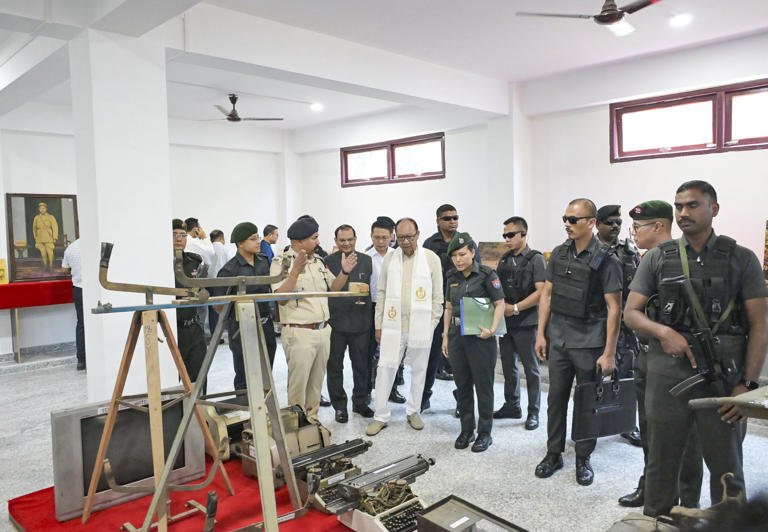
Manipur Chief Minister N. Biren Singh has described the Manipur Police Museum as a fitting tribute to the dedication, courage, and sacrifices made by generations of police personnel who have served the state under challenging circumstances. Speaking at an event related to the museum, the Chief Minister emphasized the importance of preserving the rich history and legacy of the Manipur Police while inspiring future generations to uphold the values of service and duty.
The museum stands as a symbol of recognition for police officers who have worked tirelessly to maintain law and order, protect citizens, and safeguard public peace. According to the Chief Minister, the institution not only documents the history of policing in Manipur but also highlights the personal sacrifices made by officers in the line of duty.
Officials believe the museum will serve as an educational and historical resource while fostering greater public appreciation for the role of the police force.
Preserving the Legacy of Manipur Police
Addressing the gathering, Chief Minister N. Biren Singh stated that the Manipur Police has a long and distinguished history marked by professionalism, commitment, and service to society.
He noted that police personnel have often worked under difficult conditions, facing security challenges and public responsibilities that demand extraordinary dedication. The museum has been established to preserve and showcase this legacy for future generations.
According to the Chief Minister, documenting the history of the police force is essential because it helps citizens understand the contributions made by officers over the decades.
The museum contains exhibits, historical records, photographs, uniforms, equipment, and memorabilia that reflect the evolution of policing in the state.
Officials hope these collections will help visitors gain a deeper appreciation of the institution’s role in Manipur’s development.
Honouring Sacrifices Made in the Line of Duty
A major theme of the Chief Minister’s remarks was the recognition of police personnel who sacrificed their lives while serving the public.
He stated that many officers and personnel have displayed exceptional courage while confronting difficult situations, including insurgency-related challenges, law-and-order duties, disaster response operations, and public safety missions.
The museum pays tribute to these individuals by preserving their stories and achievements. According to Singh, such recognition ensures that their contributions are remembered and respected by future generations.
The Chief Minister emphasized that every police officer who serves with dedication contributes to the safety and stability of society.
By commemorating their sacrifices, the museum aims to strengthen public understanding of the challenges faced by law enforcement personnel.
A Source of Inspiration for Young People
The Chief Minister expressed hope that the museum would inspire young people to consider careers in public service and law enforcement.
He noted that the stories of bravery, commitment, and integrity showcased within the museum can motivate future generations to serve society with the same dedication demonstrated by past officers.
Officials believe educational visits and awareness programmes can help students learn about the responsibilities and values associated with policing.
The museum is expected to function as more than a repository of historical artifacts. It will also serve as a platform for learning and inspiration.
According to the Chief Minister, understanding the sacrifices of police personnel can help strengthen respect for public institutions and civic responsibility.
Showcasing the Evolution of Policing
The Manipur Police Museum documents the transformation of policing practices and institutions over time. Through its exhibits, visitors can trace the development of law enforcement systems from earlier periods to the present day.
Officials explained that the museum highlights technological advancements, changes in policing methods, and the modernization of the force.
Historical records and displays provide valuable insights into how the police adapted to evolving challenges while continuing to serve the public.
The museum also reflects the broader social and political history of the state, illustrating how law enforcement institutions contributed to maintaining stability during different periods.
Experts believe such historical documentation plays an important role in preserving institutional memory.
Strengthening Public Awareness
One of the key objectives of the museum is to improve public awareness about the role of the police in society.
Police officials noted that many citizens are familiar with the day-to-day functions of law enforcement but may not fully understand the scope of responsibilities undertaken by officers.
The museum seeks to bridge this gap by presenting information about various aspects of policing, including crime prevention, public safety, disaster response, traffic management, and community engagement.
By increasing awareness, authorities hope to strengthen trust and cooperation between the police and the public.
The Chief Minister emphasized that community support remains essential for effective policing and public safety.
Recognizing Service Beyond Enforcement
The museum also highlights the humanitarian and community-oriented aspects of police work. Officers often contribute to disaster relief efforts, rescue operations, public awareness campaigns, and welfare initiatives.
According to officials, these contributions are sometimes overlooked despite their importance to society. The museum therefore seeks to present a more comprehensive picture of the police force and its diverse responsibilities.
The Chief Minister noted that police personnel frequently serve as first responders during emergencies and crises. Their role extends beyond enforcing laws to providing assistance and protection during difficult situations.
Recognizing these efforts can help foster a greater appreciation of the profession.
Importance of Institutional Heritage
Experts believe institutions benefit from preserving their history and heritage. Museums serve as valuable platforms for documenting achievements, learning from past experiences, and promoting organizational pride.
The Manipur Police Museum contributes to these objectives by safeguarding records and artifacts associated with the force’s history.
Officials stated that preserving institutional heritage strengthens identity and continuity. It also provides opportunities for research and education.
The museum is expected to become an important destination for students, researchers, police personnel, and members of the public interested in understanding the state’s law enforcement history.
Government’s Commitment to Police Welfare
During his remarks, the Chief Minister also reiterated the government’s commitment to supporting police personnel and improving their welfare.
He acknowledged the demanding nature of police work and emphasized the importance of providing adequate resources, infrastructure, and support systems.
Officials stated that efforts to modernize the police force and enhance operational capabilities remain ongoing. The government continues to invest in training, equipment, and welfare measures aimed at improving service delivery.
The museum, they noted, complements these initiatives by recognizing the contributions of officers and preserving their legacy.
Looking Ahead
The Manipur Police Museum stands as a tribute to the dedication, courage, and sacrifices of police personnel who have served the state over the years. Chief Minister N. Biren Singh’s remarks highlighted the institution’s role in preserving history, honoring service, and inspiring future generations.
By documenting the evolution of policing and recognizing the contributions of officers, the museum provides valuable insights into the challenges and achievements of the force. It also strengthens public understanding of the critical role played by law enforcement in maintaining peace and security.
As the museum continues to develop as a center for education and remembrance, it is expected to serve as a lasting symbol of respect for the men and women who have devoted their lives to protecting the people of Manipur.