

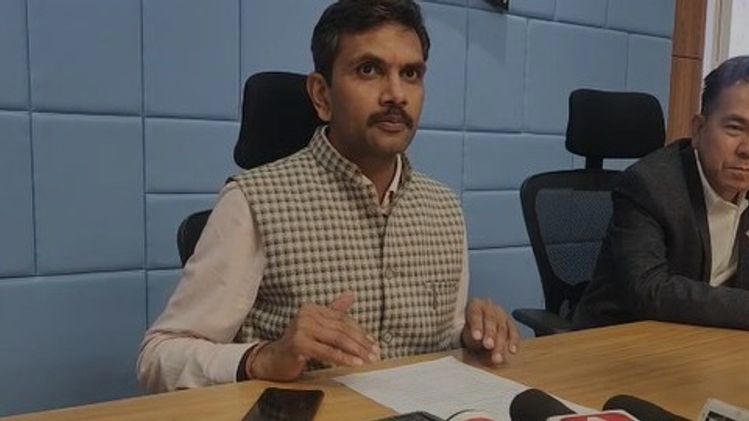
The Election Commission has announced that the Rajya Sabha election in Meghalaya will be held on June 18, setting the stage for an important political contest in the northeastern state. The nomination process for candidates will begin on June 1, marking the start of the formal electoral process for the lone Rajya Sabha seat from Meghalaya.
The election has attracted considerable attention among political parties and legislators, as the outcome will determine who represents the state in the Upper House of Parliament for the next term. With preparations now underway, parties are expected to finalize their candidates and strategize ahead of the polling date.
Officials have also outlined the schedule for nominations, scrutiny, withdrawals, and voting in accordance with election guidelines.
Election Schedule Announced
According to the official notification, the nomination process for the Rajya Sabha election will commence on June 1. Candidates seeking to contest the election can submit their nomination papers during the prescribed period.
After the filing process concludes, election authorities will scrutinize nomination papers to ensure compliance with all legal and procedural requirements. Candidates will then have an opportunity to withdraw their nominations before the final list of contestants is published.
Voting for the Rajya Sabha seat is scheduled to take place on June 18. If required, counting of votes will be conducted on the same day, following established electoral procedures.
Officials have stated that all arrangements are being made to ensure a smooth and transparent election process.
Importance of the Rajya Sabha Seat
The Rajya Sabha serves as the Upper House of Parliament and plays a crucial role in India’s legislative framework. Members of the House participate in debates, review legislation, and contribute to discussions on national policy issues.
For Meghalaya, representation in the Rajya Sabha provides an important platform for raising concerns related to the state’s development, infrastructure, economy, tribal welfare, and regional interests.
Political observers note that Rajya Sabha members often play a significant role in highlighting issues affecting northeastern states at the national level. Consequently, the election carries considerable importance beyond party politics.
The successful candidate will represent Meghalaya in Parliament and contribute to legislative discussions over the course of the term.
Electoral Process Explained
Unlike Lok Sabha elections, Rajya Sabha members are not directly elected by the public. Instead, they are chosen by elected members of the respective state legislative assembly.
In Meghalaya, Members of the Legislative Assembly (MLAs) will cast their votes to elect the state’s Rajya Sabha representative. The election is conducted through a system of proportional representation using the single transferable vote method.
Political parties therefore focus heavily on securing support among legislators during Rajya Sabha contests.
The strength of parties and alliances within the Meghalaya Legislative Assembly will play a decisive role in determining the outcome of the election.
Political Parties Begin Preparations
With the election schedule now announced, political parties have intensified internal consultations regarding candidate selection. Senior leaders are expected to hold discussions over the coming days to finalize their nominees.
The ruling coalition and opposition parties are likely to assess their numerical strengths and explore possible strategies ahead of the election.
Political analysts believe candidate selection will be an important factor in shaping the contest. Parties often consider factors such as experience, political standing, public profile, and regional representation while choosing nominees.
The announcement of candidates is expected to generate significant political activity in the state.
Meghalaya’s Political Landscape
Meghalaya’s political environment is known for its coalition-based dynamics. Multiple regional and national parties play influential roles in state politics, often resulting in complex electoral calculations.
As a result, Rajya Sabha elections in the state frequently attract attention due to the possibility of alliance-building and strategic negotiations.
Political observers note that the election will provide insights into current political alignments within the Assembly. The contest may also reflect broader trends in the state’s evolving political landscape.
Leaders across party lines are expected to closely monitor developments as the nomination process begins.
Role of Election Authorities
Election authorities have emphasized their commitment to conducting the Rajya Sabha election in a free, fair, and transparent manner.
Officials will oversee every stage of the process, including nomination filing, scrutiny, polling, and counting. Strict adherence to election laws and procedures will remain a priority.
Authorities have also issued guidelines regarding nomination requirements and election conduct. Candidates and political parties are expected to comply with all applicable regulations.
The Election Commission continues to play a crucial role in ensuring the credibility and integrity of electoral processes across the country.
Significance for Meghalaya
The upcoming Rajya Sabha election is important not only because it will determine parliamentary representation but also because it offers an opportunity for Meghalaya’s legislators to choose a representative capable of effectively voicing the state’s interests at the national level.
Issues such as infrastructure development, connectivity, education, tourism, tribal welfare, environmental conservation, and economic growth remain key priorities for Meghalaya. The state’s representative in the Rajya Sabha is expected to advocate for these concerns in Parliament.
Political leaders across the spectrum recognize the importance of strong representation in national institutions. Consequently, the election is expected to attract considerable interest from both policymakers and the public.
Focus on Democratic Representation
The Rajya Sabha election highlights the functioning of India’s parliamentary democracy and federal structure. Through this process, states secure representation in the Upper House, ensuring that regional voices contribute to national decision-making.
Meghalaya’s elected representative will participate in legislative discussions, policy debates, and parliamentary committees. The position therefore carries significant responsibility.
Observers note that effective parliamentary representation can help strengthen coordination between state and central governments while advancing development priorities.
The upcoming election will determine who assumes that responsibility on behalf of Meghalaya.
Looking Ahead
With the Rajya Sabha election scheduled for June 18 and the nomination process beginning on June 1, Meghalaya is set for an important political exercise. Political parties are expected to finalize candidates, strengthen alliances, and prepare for the contest in the days ahead.
The election will not only decide the state’s representative in the Rajya Sabha but also provide insights into current political dynamics within the Meghalaya Legislative Assembly. As parties begin their preparations, attention will increasingly focus on candidate announcements and electoral strategies.
For Meghalaya, the election represents an opportunity to secure strong representation in Parliament and ensure that the state’s priorities continue to receive attention at the national level. The coming weeks are therefore likely to witness heightened political activity as the contest unfolds.