

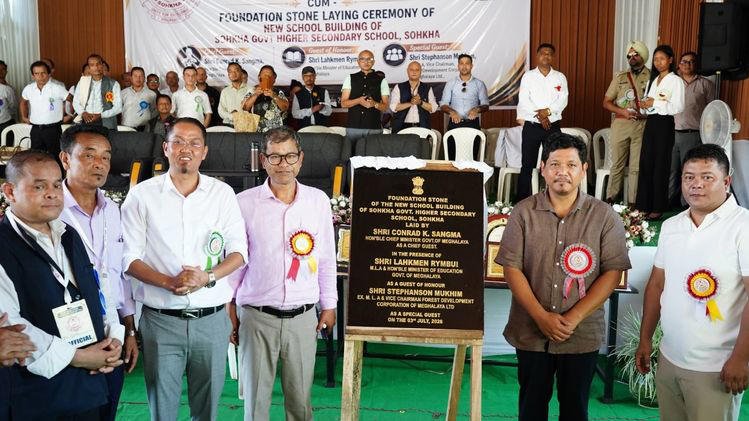
Meghalaya Chief Minister Conrad K. Sangma laid the foundation stone for a new school building in West Jaiñtia Hills district, reaffirming the state government’s commitment to strengthening educational infrastructure and improving learning opportunities for students across Meghalaya. The initiative forms part of the government’s broader strategy to modernize school facilities and ensure that quality education reaches every corner of the state.
Addressing the gathering during the foundation stone-laying ceremony, the Chief Minister emphasized that education remains one of the government’s highest priorities. He stated that investing in schools is an investment in the future of Meghalaya, as improved educational infrastructure creates a better learning environment and equips young people with the knowledge and skills needed for personal and professional success.
The project is expected to provide students and teachers with a modern, safe, and well-equipped academic environment while addressing the growing educational needs of the district.
Government Prioritises Quality Education
Speaking at the event, Conrad Sangma reiterated that the government is committed to improving both educational infrastructure and the overall quality of education across Meghalaya. He observed that while access to schools has expanded significantly over the years, there is also a need to ensure that educational institutions provide a conducive environment for effective teaching and learning.
The Chief Minister highlighted the importance of constructing durable school buildings equipped with adequate classrooms, sanitation facilities, electricity, clean drinking water, and other essential amenities that support academic excellence.
He stated that the government’s education initiatives focus not only on physical infrastructure but also on improving teaching standards, student learning outcomes, and access to modern educational resources.
According to Sangma, strengthening the education sector is central to achieving inclusive and sustainable development across the state.
Modern Infrastructure to Benefit Students
The new school building is expected to significantly improve the learning experience for students by providing upgraded educational facilities capable of accommodating growing enrolment and enhancing classroom environments.
Modern school infrastructure plays an important role in creating safe, comfortable, and motivating spaces where students can focus on their studies. Improved classrooms, better ventilation, adequate lighting, sanitation facilities, and enhanced accessibility contribute to higher attendance rates and improved academic performance.
Teachers are also expected to benefit from improved working conditions that enable more effective classroom instruction and better engagement with students.
The Chief Minister expressed confidence that the project would strengthen educational opportunities for children in West Jaiñtia Hills while contributing to the long-term development of the district.
Education as the Foundation of Development
During his address, Conrad Sangma described education as the foundation upon which social and economic progress is built. He noted that well-educated youth are essential for driving innovation, entrepreneurship, employment, and community development.
The government, he said, continues to invest in schools, colleges, vocational education, skill development programmes, and digital learning initiatives to prepare students for emerging opportunities in an increasingly competitive world.
He encouraged students to pursue their education with dedication while urging teachers and parents to continue supporting children’s academic growth and character development.
According to the Chief Minister, strong educational institutions not only produce skilled professionals but also nurture responsible citizens who contribute positively to society.
Strengthening Educational Infrastructure Across Meghalaya
The foundation stone-laying ceremony reflects the Meghalaya government’s ongoing efforts to upgrade educational infrastructure throughout the state. Several initiatives have been launched to renovate existing schools, construct new academic buildings, improve hostel facilities, and enhance access to digital learning resources.
Officials noted that educational infrastructure development remains a priority, particularly in rural and remote areas where improved facilities can significantly increase access to quality education.
The government is also working to reduce infrastructure gaps by ensuring that schools have adequate classrooms, libraries, laboratories, sports facilities, and essential utilities.
Such investments are expected to improve student retention, reduce dropout rates, and create more inclusive educational environments across Meghalaya.
Focus on Rural and Remote Areas
West Jaiñtia Hills, like many other districts in Meghalaya, includes rural communities where access to modern educational infrastructure remains an important developmental priority.
The Chief Minister stressed that students living in remote areas deserve the same quality of educational facilities as those in urban centres. He reaffirmed the government’s commitment to ensuring balanced educational development by investing in schools across all districts.
Improved school infrastructure in rural regions can encourage higher enrolment, better attendance, and greater community participation in education.
The government believes that equitable access to quality education is essential for reducing regional disparities and creating equal opportunities for children regardless of their geographical location.
Community Participation in Education
Conrad Sangma also highlighted the important role of local communities in supporting educational development. Parents, teachers, school management committees, village leaders, and civil society organizations all contribute significantly to creating a positive learning environment.
He encouraged communities to take collective responsibility for maintaining school infrastructure, promoting regular student attendance, and supporting educational initiatives introduced by the government.
Community involvement strengthens accountability while fostering a shared commitment to improving educational outcomes.
The Chief Minister observed that successful education systems are built through collaboration between government institutions and the people they serve.
Government Reaffirms Long-Term Commitment
Concluding the programme, Conrad Sangma reaffirmed the Meghalaya government’s long-term commitment to strengthening the education sector through sustained investments in infrastructure, teaching quality, technology integration, and student welfare.
He stated that the construction of the new school building in West Jaiñtia Hills represents more than just the development of physical infrastructure—it symbolizes the government’s dedication to empowering future generations through education.
Officials expressed confidence that the project would create improved learning opportunities for students while contributing to the district’s educational and social development. As Meghalaya continues to invest in strengthening its education system, initiatives such as the new school building are expected to play an important role in enhancing academic excellence, promoting inclusive growth, and preparing young people to contribute meaningfully to the state’s future development.
By prioritizing modern educational infrastructure alongside quality teaching and community participation, the government aims to build a stronger and more resilient education system capable of meeting the aspirations of students across Meghalaya for years to come.