

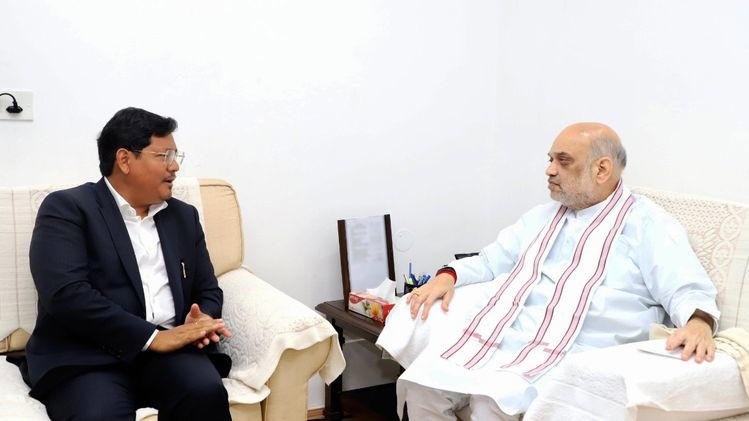
Meghalaya Chief Minister Conrad K. Sangma has formally appealed to the central government to grant a 10-year visa to an elderly priest who has served the community in the state for several decades. This significant request highlights the government’s acknowledgment of the priest’s unwavering commitment and contribution to Meghalaya’s spiritual and social fabric.
The elderly priest has played a pivotal role in the religious life of the local community, providing guidance, performing essential rituals, and actively participating in various social welfare activities. His long-standing presence in Meghalaya has made him a respected figure, cherished by devotees and community members alike.
Read More: Arunachal Cabinet Unveils Youth Policy 2025
Decades of Dedicated Service
The elderly priest has been serving Meghalaya for over four decades, offering not only religious services but also acting as a mentor and counselor to many. His influence extends beyond temple walls as he has been involved in community-building initiatives, promoting peace and harmony among diverse groups.
Despite his advancing age, the priest remains actively engaged in his duties, underscoring his dedication and resilience. His continuous service has been a source of comfort and spiritual strength for many families, especially in rural and remote areas where such leadership is rare.
Why a 10-Year Visa Matters
The Chief Minister’s request for a 10-year visa is a move aimed at providing the priest with stability and security. Unlike short-term visas that require frequent renewals and cause uncertainty, a decade-long visa would allow the priest to focus entirely on his work without worrying about bureaucratic delays or legal status issues.
Such long-term visa provisions are uncommon but justified in this case due to the priest’s exceptional service record. Granting this visa would also be a recognition of his integral role in Meghalaya’s religious and cultural landscape.
The Chief Minister’s Formal Appeal
In his formal letter to the Ministry of Home Affairs, Chief Minister Conrad K. Sangma emphasized the priest’s invaluable contributions over the years. He stressed that the visa extension would be a gesture of respect and gratitude from the government and the people of Meghalaya.
The appeal also highlighted the broader importance of preserving Meghalaya’s rich cultural heritage by supporting individuals who contribute significantly to community welfare and spiritual well-being.
Community Response and Support
The local communities have warmly welcomed the Chief Minister’s initiative. Many community leaders, religious organizations, and devotees have expressed their gratitude for this step, seeing it as an acknowledgment of the priest’s lifelong dedication.
Several local organizations have also voiced their support, encouraging the government to extend similar considerations to other elderly individuals serving in religious and social capacities across the state. This could foster a more supportive environment for those who dedicate their lives to community service.
Preserving Meghalaya’s Cultural and Spiritual Heritage
The elderly priest symbolizes the continuity of Meghalaya’s vibrant religious traditions. His role is not confined to rituals but extends to mentoring youth, resolving disputes, and fostering inter-community dialogue.
Granting a long-term visa ensures that such spiritual leadership remains uninterrupted, which is crucial for maintaining social cohesion and cultural identity. The priest’s continued presence reinforces Meghalaya’s reputation as a state that values its cultural custodians.
Government’s Broader Support for Religious Service Providers
Meghalaya’s government has shown consistent support for individuals engaged in religious and social services. This visa request fits into a wider framework aimed at facilitating the work of people who contribute selflessly to the welfare of society.
Such initiatives not only preserve cultural traditions but also promote inclusive development by empowering grassroots leaders. They encourage community participation and help bridge gaps between government policies and local realities.
Addressing Challenges Faced by Elderly Community Workers
Elderly priests and social service providers often face challenges such as visa restrictions, health concerns, and limited access to formal support systems. The Chief Minister’s request addresses these issues by seeking to provide legal and social security through a long-term visa.
This approach recognizes the unique circumstances of senior community workers and sets a precedent for humane and practical governance. It underscores the importance of accommodating the needs of those who have dedicated their lives to service.
Potential Policy Implications
If approved, the 10-year visa for the elderly priest could serve as a model for similar policies in Meghalaya and other states. It may pave the way for formal mechanisms that allow deserving individuals in religious and social roles to receive extended or lifetime visas.
Such policies would strengthen social infrastructure and cultural preservation efforts, encouraging more individuals to contribute without fear of legal or bureaucratic hurdles.
Honoring a Lifetime of Service
Meghalaya Chief Minister Conrad K. Sangma’s request for a 10-year visa for the elderly priest is a commendable initiative that honors decades of dedicated service. By facilitating a long-term stay, the government not only supports the priest’s spiritual and social work but also reinforces its commitment to preserving Meghalaya’s cultural heritage.
This move reflects a broader vision of inclusive governance that values the contributions of every individual, especially those who serve as pillars of community strength and unity. The state’s support for its religious leaders sends a strong message about the importance of cultural continuity and social harmony.
As Meghalaya awaits the central government’s response, the initiative has already generated goodwill among citizens and strengthened the bond between the government and its people. It stands as a testament to Meghalaya’s respect for its cultural custodians and the enduring power of dedicated service.
Read More: NFR GM Inspects Site for New Wagon Workshop in Assam