

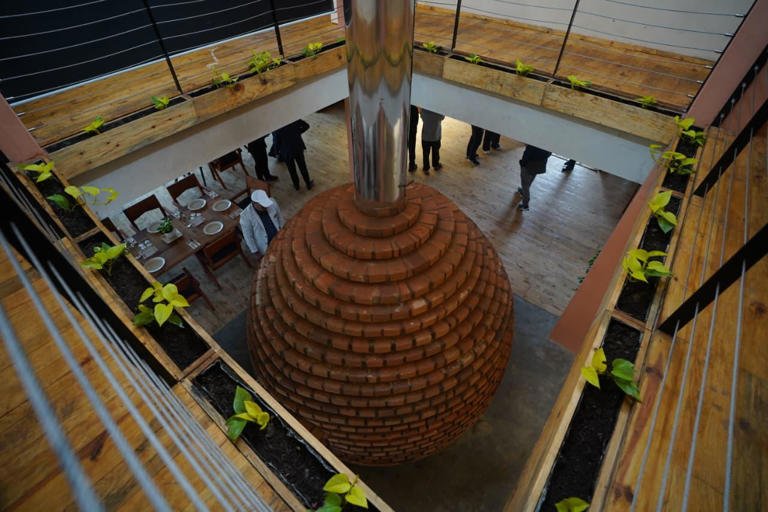
Meghalaya has taken another step towards promoting sustainable and community-led tourism with the launch of an eco-friendly tourism project and an open-air museum showcasing the state’s cultural heritage. Chief Minister Conrad K. Sangma inaugurated the state’s first eco-sustainable habitat, known as the Pine Home, at Mawlangwir village in South West Khasi Hills. He also virtually inaugurated the Twahlongwar Open-Air Museum in Mawsynram.
The two initiatives bring together two important aspects of Meghalaya’s tourism strategy: protecting the environment and preserving indigenous culture. The government hopes such projects will attract visitors while ensuring that local communities receive a greater share of the economic benefits.
The initiatives also reflect Meghalaya’s broader shift towards experiential tourism. Instead of focusing only on conventional tourist infrastructure, the state is developing destinations that allow visitors to experience local architecture, traditions, landscapes and community life.
Pine Home Promotes Eco-Friendly Tourism
The Pine Home Eco-Sustainable Model Project at Mawlangwir represents Meghalaya’s first major eco-sustainable habitat initiative. The government launched the project to demonstrate how tourism infrastructure can work in harmony with the environment and local traditions.
The project combines ecological design with local craftsmanship. Its architecture aims to respond to Meghalaya’s natural surroundings while maintaining a strong connection with the cultural character of the region.
According to the Meghalaya government, the building component of the project cost around ₹2 crore, while the overall project has an outlay of approximately ₹4 crore. Meghalayan Age Limited and the Directorate of Tourism, Meghalaya, have funded the project.
The initiative demonstrates how the state can develop tourism infrastructure without losing sight of environmental sustainability.
Community at the Centre of Tourism Development
Meghalaya has increasingly focused on community participation in tourism. The state government recognises that local residents often serve as the strongest link between visitors and the region’s culture.
Community-led tourism can create opportunities for families to operate homestays, restaurants, guide services and local craft businesses. It can also encourage young people to explore tourism-related employment within their own communities.
The state’s tourism strategy places strong emphasis on local entrepreneurs. The 2026-27 budget allocated ₹162 crore for tourism infrastructure, destination development and community tourism. The government also planned to support 1,000 homestays under the Chief Minister’s Meghalaya Homestay Mission.
The Pine Home project fits into this wider approach.
Open-Air Museum Highlights Khasi Heritage
Alongside the eco-sustainable habitat, the government has launched the Twahlongwar Open-Air Museum in Mawsynram.
The museum aims to showcase the cultural heritage of the Khasi community through an immersive outdoor experience. Visitors can explore traditional elements of Khasi life while learning about the community’s relationship with its environment.
An open-air museum offers a different experience from a conventional indoor museum. Instead of displaying artefacts behind glass, it can recreate aspects of traditional settlements, architecture and everyday life.
This approach can make cultural tourism more interactive and accessible, particularly for younger visitors.
Preserving Indigenous Knowledge
Meghalaya’s cultural heritage includes traditional architecture, agriculture, crafts, music, food and systems of community governance.
Much of this knowledge has passed through generations. However, changing lifestyles and modernisation can gradually reduce the use of traditional practices.
Tourism projects that document and present these traditions can help keep them visible. They can also create economic incentives for younger generations to learn traditional skills.
The state’s efforts to preserve indigenous heritage extend beyond tourism. Earlier this year, India submitted the Jingkieng Jri/Lyu Chrai Cultural Landscape of Meghalaya to UNESCO for possible inclusion on the World Heritage List. The landscape represents the relationship between Khasi and Jaintia communities and their natural environment.
Tourism and Culture Can Support Each Other
The government sees cultural heritage as an important tourism asset.
Visitors increasingly seek experiences that allow them to understand local communities rather than simply visit scenic locations. Meghalaya’s traditional architecture, indigenous practices and natural landscapes provide opportunities for this form of tourism.
The Twahlongwar museum can help visitors understand Khasi culture while also encouraging them to explore the surrounding region.
Such attractions can extend tourists’ stays and encourage spending in nearby communities. Local guides, homestays, restaurants and craft producers can all benefit from increased visitor activity.
Sustainable Development Becomes a Priority
Meghalaya’s natural environment remains one of its biggest tourism attractions. The state is known for its waterfalls, forests, caves, living root bridges and dramatic landscapes.
However, increased tourism can also create pressure on these resources. Waste, traffic, water consumption and unplanned construction can affect fragile ecosystems.
The government has therefore been promoting a more sustainable model of tourism.
The state’s tourism department has already pursued projects under an Integrated Eco-tourism and Sustainable Agri-based Livelihood Development Project supported by the Asian Development Bank. The programme includes tourism and cultural infrastructure across several districts.
The Pine Home project reflects this broader policy direction.
New Tourism Destinations Beyond Shillong
Another objective of Meghalaya’s tourism strategy is to reduce pressure on the state’s most popular tourist routes.
The Shillong-Sohra-Dawki belt attracts large numbers of visitors. The government has identified destinations in Ri-Bhoi, West Khasi Hills, East and West Jaintia Hills and other regions for tourism development.
Developing new destinations can distribute tourists more evenly across the state.
It can also bring investment and employment opportunities to areas that have traditionally received fewer tourism-related benefits.
The open-air museum in Mawsynram contributes to this effort by adding another cultural attraction outside the main tourist centres.
Tourism Can Create Rural Livelihoods
Tourism development can generate income in rural communities through several channels.
A visitor staying in a village may spend money on accommodation, food, transportation, local products and guided experiences. This allows tourism revenue to circulate within the community.
Local artisans can also sell traditional crafts and textiles. Farmers can supply food to homestays and restaurants. Young people can work as guides, drivers or hospitality professionals.
This creates a wider economic network around tourism.
The Meghalaya government has repeatedly highlighted the importance of local communities and entrepreneurs in making tourism economically meaningful. Its tourism budget specifically states that longer visitor stays can increase local spending and help more families earn.
Traditional Architecture Gets a New Platform
The Pine Home project also demonstrates how traditional knowledge can influence modern construction.
Meghalaya has distinctive architectural traditions shaped by its climate, landscape and available materials. Modern tourism infrastructure can draw from these traditions while incorporating contemporary safety and comfort standards.
The government’s description of Pine Home highlights the combination of environmental sustainability, cultural sensitivity and local craftsmanship.
This approach can create buildings that feel connected to their surroundings rather than imposing standardised designs on rural landscapes.
Meghalaya Promotes Responsible Tourism
The latest projects form part of a larger transformation in Meghalaya’s tourism sector.
The state is moving towards a model that combines nature, culture and community participation. Projects such as the Pine Home and Twahlongwar Open-Air Museum demonstrate this approach.
The government also continues to develop larger tourism projects, including the Rain and Bamboo Interpretation Centre at Mawsynram and cultural and experiential centres in different parts of the state.
These projects aim to create more varied experiences for visitors while spreading tourism activity across different regions.
A New Chapter for Khasi Heritage Tourism
The Meghalaya eco-tourism 2026 push represents more than an infrastructure programme. It reflects an attempt to connect tourism with environmental responsibility and cultural preservation.
The Pine Home project demonstrates how eco-friendly architecture can support rural tourism. The Twahlongwar Open-Air Museum creates a platform for showcasing Khasi heritage and traditional knowledge.
Together, the projects can provide new opportunities for local communities while giving visitors a deeper understanding of Meghalaya.
The success of this approach will depend on responsible management. Local communities must remain involved, cultural traditions must receive genuine protection and tourism growth must not damage the natural environment.
If Meghalaya can maintain that balance, eco-tourism could become an important source of sustainable livelihoods while helping preserve the state’s unique identity. The latest initiatives show the government’s intention to make nature, culture and communities the foundation of Meghalaya’s tourism future.