

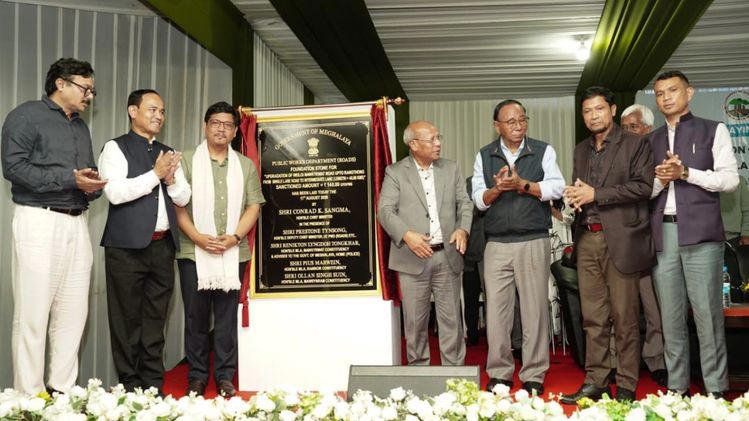
The Meghalaya government has launched a major Rs 140-crore road upgrade project in South West Khasi Hills, marking another step in the state’s efforts to improve rural connectivity and strengthen infrastructure.
Chief Minister Conrad K. Sangma inaugurated the project during a visit to the district. The initiative aims to improve important roads connecting villages and towns while making transportation safer and more reliable for local communities.
The project forms part of the state government’s broader infrastructure programme. Meghalaya has focused heavily on improving road connectivity because its hilly terrain often makes transportation difficult and expensive.
Better roads can also support agriculture, tourism, education and healthcare. The government expects the latest investment to improve movement for residents and create stronger links between local markets and larger commercial centres.
Rs 140 Crore Investment for Road Infrastructure
The road upgrade programme involves an investment of around Rs 140 crore. The project covers several important stretches in South West Khasi Hills.
The government plans to improve road surfaces, strengthen existing routes and upgrade infrastructure in areas where poor connectivity has affected daily life.
Road construction in Meghalaya often requires additional engineering because of the state’s mountainous landscape and heavy rainfall. Roads must withstand landslides, erosion and prolonged monsoon conditions.
The latest project therefore focuses not only on improving transportation but also on creating stronger and more durable road infrastructure.
Conrad Sangma Highlights Connectivity
Chief Minister Conrad K. Sangma has repeatedly highlighted road connectivity as an important part of Meghalaya’s development strategy.
During the launch, he stressed that better roads can improve access to essential services and create economic opportunities for communities.
For residents of remote areas, road connectivity can determine how easily they can reach hospitals, schools and government offices. It can also affect the cost of transporting agricultural products to markets.
Improved roads can therefore have an impact far beyond transportation.
The government sees infrastructure investment as a way to connect rural communities with wider economic opportunities.
South West Khasi Hills Needs Better Roads
South West Khasi Hills contains several remote and hilly communities. Many residents depend on agriculture and small-scale businesses for their livelihoods.
Poor road conditions can increase transportation costs and reduce farmers’ access to markets. Heavy rainfall can also damage roads and create disruptions during the monsoon.
The new investment aims to address some of these difficulties by upgrading key road links.
Better roads could allow farmers to transport crops more quickly and reduce the risk of products getting damaged during long journeys.
The improvements may also encourage traders and businesses to operate more actively in the district.
Agriculture Could Benefit From Improved Connectivity
Agriculture remains an important source of income for communities across South West Khasi Hills.
Farmers produce crops and other agricultural products that need to reach markets outside their immediate villages. Poor roads can make transportation slow and expensive.
A stronger road network can reduce these challenges. Farmers could reach markets faster and potentially receive better prices for their produce.
Improved connectivity can also make it easier to bring seeds, fertilisers, farm equipment and other inputs into rural areas.
The road project could therefore support the agricultural economy while improving everyday mobility.
Better Access to Healthcare and Education
Road connectivity also plays a major role in public services.
Residents of remote villages often need to travel considerable distances to access hospitals and specialised healthcare. Poor roads can make these journeys longer and more difficult.
Improved roads could reduce travel times and make emergency transportation easier.
Students and teachers can also benefit from better connectivity. Reliable roads can improve attendance and make it easier for students to travel between villages and educational institutions.
The government expects infrastructure development to improve access to these essential services.
Road Development Can Boost Tourism
South West Khasi Hills also has significant tourism potential. The region’s landscapes, waterfalls, forests and traditional communities attract visitors interested in nature and culture.
However, tourism growth often depends on reliable road connectivity.
Better roads can make tourist destinations easier to reach. They can also encourage the development of hotels, homestays, restaurants and local businesses.
Improved connectivity could therefore create additional employment opportunities for young people.
The government has been promoting tourism as an important part of Meghalaya’s economic strategy. Road infrastructure can support that effort by connecting tourist destinations with major towns and transport networks.
Monsoon Resilience Remains Important
Meghalaya receives heavy rainfall, which creates unique challenges for road construction and maintenance.
Landslides, soil erosion and flooding can damage roads during the monsoon. The government therefore needs to ensure that new infrastructure can withstand extreme weather conditions.
Modern drainage systems and proper slope protection can reduce the risk of damage.
Building stronger roads can also reduce the frequency of repairs. This can save public funds in the long term and ensure that communities remain connected throughout the year.
The Rs 140-crore project offers an opportunity to combine better connectivity with greater climate resilience.
Infrastructure Supports Rural Development
The road project reflects Meghalaya’s wider focus on rural infrastructure.
Development cannot remain concentrated around major towns. Remote communities also need reliable transportation networks to participate fully in the state’s economy.
Roads connect farmers with markets, students with schools and patients with hospitals. They also allow government services and emergency assistance to reach villages more efficiently.
The latest investment in South West Khasi Hills aims to strengthen these connections.
The government expects the project to provide long-term benefits for communities across the district.
Employment Opportunities Could Increase
Large infrastructure projects can also create temporary and long-term employment.
Road construction requires workers, engineers, equipment operators and other skilled personnel. Local communities can benefit when contractors hire workers from nearby areas.
Once roads improve, new businesses may also emerge along upgraded routes.
Small shops, transport services, tourism facilities and agricultural businesses can benefit from increased movement.
The project could therefore contribute to local economic activity beyond the immediate construction phase.
Government Focuses on Balanced Development
Meghalaya’s challenging geography makes infrastructure development particularly important. The state needs strong road networks to connect its dispersed settlements and support economic growth.
The government has therefore continued to invest in roads, bridges and other transport infrastructure.
The South West Khasi Hills project fits into this larger strategy. By improving roads in a relatively remote district, the government aims to ensure that development reaches rural communities.
The approach also supports the state’s broader objective of creating better economic opportunities outside major urban centres.
Rs 140-Crore Project Marks New Push
The launch of the Meghalaya road upgrade 2026 project represents a significant investment in South West Khasi Hills.
The Rs 140-crore programme aims to improve road quality, strengthen connectivity and make transportation safer for residents. It could also support agriculture, tourism, healthcare, education and local businesses.
For communities in remote areas, better roads can bring immediate practical benefits. They can reduce travel difficulties and improve access to essential services.
The long-term impact will depend on timely construction and proper maintenance. Meghalaya’s difficult terrain and heavy rainfall make both factors especially important.
If the project progresses as planned, it could provide a major boost to South West Khasi Hills and strengthen the district’s links with the rest of Meghalaya.
The investment also reflects the government’s wider vision of using infrastructure to create more balanced development across the state. For residents, the project promises not only better roads but also greater access to markets, services and opportunities.