

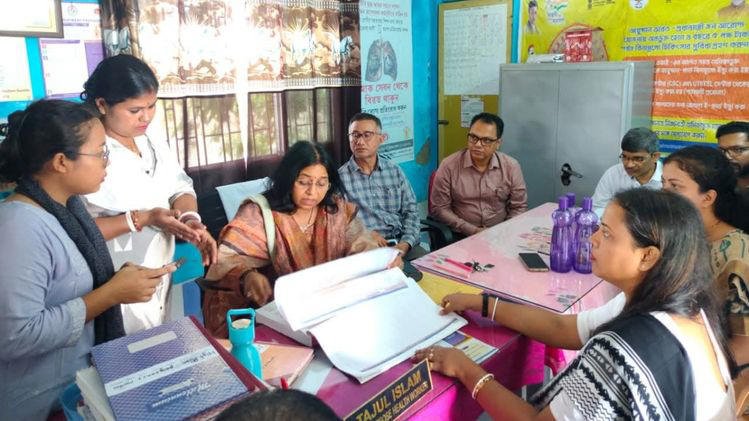
A senior official from the Ministry of Health and Family Welfare (MoHFW) conducted a comprehensive review of healthcare services across three districts of Tripura as part of the Centre’s ongoing efforts to strengthen public health infrastructure and improve service delivery. The review was led by the Joint Secretary of the Ministry, who visited various healthcare facilities, interacted with officials, and assessed the implementation of key health programmes in the state.
The visit focused on evaluating the quality of healthcare services being provided to citizens, identifying operational challenges, and ensuring the effective implementation of centrally sponsored health schemes. Officials from the state health department accompanied the Joint Secretary during the inspection, providing updates on ongoing projects and healthcare initiatives.
The review reflects the Central government’s continued commitment to enhancing healthcare accessibility, improving medical infrastructure, and ensuring that quality health services reach people living in both urban and rural areas of Tripura.
Inspection Covers Three Key Districts
During the multi-district visit, the Joint Secretary reviewed healthcare services in three districts of Tripura, examining the functioning of district hospitals, community health centres, primary health centres, and other public healthcare institutions.
The inspection included an assessment of medical infrastructure, availability of healthcare professionals, essential medicines, diagnostic facilities, emergency care, maternal and child health services, and disease surveillance mechanisms. Officials also reviewed the condition of hospital buildings, patient care facilities, sanitation standards, and the availability of medical equipment.
Special attention was given to healthcare institutions serving remote and rural populations, where accessibility and resource availability often present unique challenges. The review aimed to understand district-specific issues and identify areas where additional support and intervention may be required.
State health officials briefed the visiting delegation on the progress achieved under various national health programmes as well as the steps being taken to improve healthcare outcomes across the state.
Focus on Strengthening Public Health Infrastructure
One of the key objectives of the review was to assess the strength of Tripura’s public health infrastructure and evaluate ongoing efforts to modernize healthcare facilities.
The Joint Secretary examined the availability of hospital beds, laboratory services, intensive care facilities, diagnostic equipment, and digital healthcare initiatives. Discussions also focused on infrastructure upgrades, maintenance of existing facilities, and the construction of new healthcare centres aimed at expanding medical access.
Officials highlighted the state’s efforts to improve healthcare infrastructure through investments in hospital expansion, procurement of advanced medical equipment, and strengthening of district-level health institutions.
The review emphasized that well-equipped healthcare facilities form the backbone of an effective public health system, enabling timely diagnosis, treatment, and emergency response for patients across all sections of society.
Review of National Health Programmes
The visit also included a detailed assessment of the implementation of various flagship health programmes supported by the Ministry of Health and Family Welfare. Officials reviewed progress under initiatives related to maternal and child health, immunization, non-communicable diseases, tuberculosis elimination, vector-borne disease control, nutrition, and primary healthcare services.
The Joint Secretary examined programme performance indicators, beneficiary coverage, and the effectiveness of service delivery mechanisms at the district level. Discussions focused on improving outreach, strengthening community health services, and ensuring that government healthcare schemes benefit all eligible citizens.
Particular emphasis was placed on preventive healthcare measures, early disease detection, and awareness programmes that encourage healthier lifestyles while reducing the burden on hospitals.
Officials also reviewed coordination among healthcare workers, frontline staff, and district administrations to improve the implementation of public health initiatives.
Interaction with Healthcare Professionals
During the visit, the Joint Secretary interacted with doctors, nurses, paramedical staff, community health workers, and district health officials to understand the operational realities faced by healthcare institutions.
Healthcare professionals shared their experiences regarding patient care, resource management, staffing requirements, and infrastructure needs. Discussions covered workforce availability, training opportunities, medical equipment maintenance, and strategies to improve healthcare delivery in underserved areas.
The Joint Secretary appreciated the efforts of frontline healthcare workers who continue to provide essential medical services despite various logistical and geographical challenges. Their role in delivering preventive, promotive, and curative healthcare was acknowledged as a critical component of the state’s public health system.
Officials also explored measures to strengthen capacity-building programmes, improve workforce motivation, and enhance professional development opportunities for healthcare personnel.
Digital Health and Healthcare Accessibility
The review highlighted the growing importance of digital health technologies in improving healthcare administration and patient services. Officials discussed the adoption of digital record-keeping, telemedicine facilities, electronic health records, and online monitoring systems that enhance efficiency within the healthcare system.
Digital platforms are increasingly supporting better patient management, disease surveillance, and data-driven decision-making. The use of technology has also improved communication between healthcare facilities and administrative authorities, enabling quicker responses to emerging health challenges.
The Joint Secretary encouraged continued efforts to integrate digital healthcare solutions with traditional service delivery, particularly in remote areas where specialist consultations may not always be readily available.
Strengthening digital health infrastructure is expected to improve healthcare accessibility while enhancing transparency and efficiency across the state’s medical institutions.
Emphasis on Rural and Community Healthcare
A significant portion of the review focused on strengthening healthcare services in rural and tribal areas, where access to quality medical facilities remains an important priority. Community health centres and primary health centres play a vital role in delivering essential healthcare services to these populations.
Officials discussed strategies to improve outreach through Accredited Social Health Activists (ASHAs), Auxiliary Nurse Midwives (ANMs), and other frontline workers who serve as the first point of contact between rural communities and the healthcare system.
The review emphasized the importance of preventive healthcare, regular health screenings, immunization campaigns, nutrition programmes, and maternal care services in improving long-term health outcomes.
Improving transportation, referral mechanisms, and emergency medical services for remote villages also formed part of the discussions aimed at strengthening healthcare accessibility.
Government Reaffirms Commitment to Quality Healthcare
The review concluded with a reaffirmation of the Central and Tripura governments’ shared commitment to providing accessible, affordable, and high-quality healthcare services to every citizen. The Joint Secretary emphasized the need for continuous monitoring, timely implementation of health programmes, and coordinated efforts between the Centre and the state to address emerging healthcare challenges.
State officials assured that recommendations arising from the review would be incorporated into future planning and implementation strategies. Continued investments in infrastructure, human resources, technology, and public health programmes are expected to further strengthen Tripura’s healthcare system.
The visit underscores the importance of regular field assessments in ensuring effective governance and improving healthcare outcomes. By reviewing services on the ground, identifying challenges, and encouraging collaborative problem-solving, both the Ministry of Health and Family Welfare and the Tripura government aim to build a stronger, more resilient healthcare system capable of meeting the evolving needs of the state’s population.