

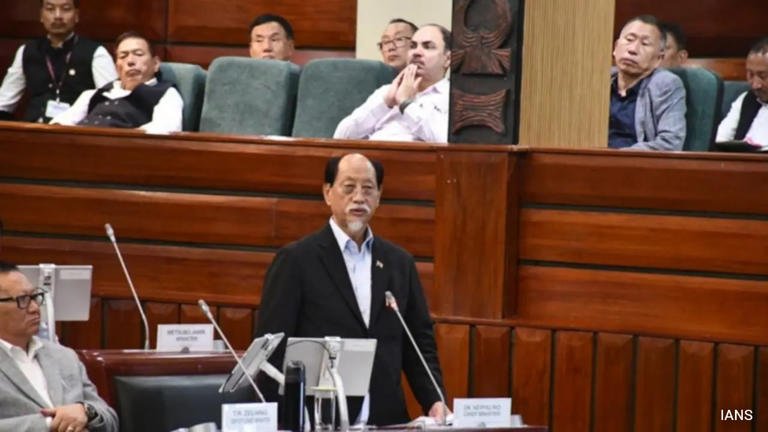
The Nagaland Legislative Assembly has unanimously passed a resolution urging the Centre to review and withdraw the Protected Area Permit, or PAP, regime currently applicable to the state.
The Assembly argued that the continuation of the Nagaland Protected Area Permit regime has affected international tourism, investment, business engagement and cultural exchanges. The House also said the restrictions have limited economic opportunities, particularly for young people.
Deputy Chief Minister Yanthungo Patton moved the government resolution, which the Assembly adopted unanimously. The legislators appealed to the Government of India to restore the relaxation that had previously allowed greater access for foreign visitors.
The resolution stressed that Nagaland remains committed to national security. At the same time, it argued that security and development can move forward together.
The debate brought together members across political lines and highlighted the state’s desire to expand tourism, attract investment and strengthen international engagement.
Nagaland Assembly Unanimously Adopts PAP Resolution
The Nagaland Legislative Assembly adopted the resolution with a united voice. The House urged the Centre to urgently review and withdraw the PAP regime from the state.
The resolution reflected concerns raised by the state government and several sections of Naga society.
According to the Assembly, the present restrictions have created obstacles for foreign tourists, investors and international organisations interested in engaging with Nagaland.
The House argued that Nagaland has developed into an important destination for tourism, culture, entrepreneurship and investment.
These sectors have also created employment and livelihood opportunities for local communities. Young people, in particular, can benefit from increased tourism, business activity and international partnerships.
The unanimous resolution showed broad political support for a review of the existing permit system. The Assembly appealed to the Centre to consider the state’s present circumstances and developmental aspirations.
What Is the Protected Area Permit Regime?
The Protected Area Permit regime regulates the entry of foreign nationals into notified areas.
Foreign visitors require a permit before entering areas covered by the system. The regime has been applied to several parts of the Northeast because of security and border-related considerations.
Nagaland had received relaxation from the PAP regime in 2011. The relaxation aimed to encourage tourism and make it easier for foreign visitors to travel to the state.
However, the Centre reimposed the PAP regime in Nagaland in December 2024.
The state government has since sought a review of the decision. The latest Assembly resolution renewed the demand for the withdrawal or relaxation of the permit regime.
Government Says PAP Affects Tourism and Investment
The Nagaland government argued that the continuation of the PAP regime has created barriers to the state’s economic growth.
Tourism remains an important sector for Nagaland. Foreign visitors contribute to hotels, homestays, transport services and local businesses.
Additional entry requirements can make travel planning more complicated for international visitors.
The Assembly said the restrictions have also affected investment and business engagement.
Investors and international organisations often need time to plan visits and establish partnerships. Additional procedures can create uncertainty and discourage potential visitors.
The resolution argued that Nagaland needs greater access to international tourism and business opportunities.
It also stressed that economic growth can create employment for young people.
The Assembly therefore urged the Centre to consider the developmental needs and economic potential of the state while reviewing the PAP regime.
Hornbill Festival Highlights Importance of Foreign Visitors
The Assembly specifically highlighted the importance of the Hornbill Festival and other cultural initiatives.
The Hornbill Festival has become one of Nagaland’s best-known cultural events. It attracts visitors and showcases the traditions, music and cultural diversity of the state.
The resolution also referred to the state’s “Land of Festivals” initiative and other cultural programmes.
These events have helped Nagaland connect with international visitors and organisations. They have also created economic opportunities for local entrepreneurs and communities.
Chief Minister Neiphiu Rio noted that international events require advance planning.
Foreign visitors need time to arrange visas, travel, accommodation and other requirements.
Rio argued that temporary relaxation of the PAP regime shortly before a major event does not provide enough certainty for visitors and international partners.
The state government therefore wants a more permanent and practical arrangement.
Nagaland Stresses Peaceful Environment
The Assembly resolution also highlighted the prevailing law and order situation in Nagaland.
State leaders argued that Nagaland’s current circumstances should receive separate consideration.
During the debate, legislators said the state remains peaceful and should not face the same approach as areas dealing with different security challenges.
Chief Minister Neiphiu Rio stressed that national security remains important and that the state does not seek to compromise on security.
However, he argued that policies must respond to changing circumstances.
According to Rio, mechanisms introduced during an earlier period should not become permanent barriers to future development.
The Assembly therefore appealed to the Centre to consider Nagaland’s peaceful environment while reviewing the PAP regime.
The state government also maintained that it can regulate and monitor foreign nationals through modern systems and coordination with central agencies.
Security and Development Can Go Together
A major theme of the Assembly debate was the relationship between security and development.
The Nagaland government made it clear that it recognises the Centre’s responsibility for national security, border management and the regulation of foreign nationals.
However, state leaders argued that security concerns and economic development do not need to conflict.
The government said technology and institutional mechanisms can help authorities register, regulate and monitor foreign visitors.
Such systems could work alongside coordination with central agencies.
The Assembly argued that a modern approach could protect national interests while allowing Nagaland to expand tourism and international engagement.
Chief Minister Rio summed up this position by stressing that security and development can go together.
The state believes that greater openness for genuine visitors and investors can support economic progress without compromising national security.
Youth Opportunities Remain a Key Concern
The Nagaland Assembly also linked the PAP issue to opportunities for young people.
Tourism, entrepreneurship, creative industries and international partnerships can create new employment opportunities.
The state government believes that greater engagement with visitors and investors can help young entrepreneurs expand their businesses.
Hotels, homestays, tour services, transport providers and local artisans can also benefit from increased tourism.
The Assembly argued that regulations that no longer serve their original developmental purpose should not become barriers to employment and economic opportunity.
The resolution therefore asked the Centre to consider the aspirations of Naga youth.
Nagaland wants greater participation in India’s growth story and increased connections with the national and global economy.
The unanimous Assembly decision reflected the belief that a review of the PAP regime could support these goals.
Civil Society and Tourism Stakeholders Support Demand
The demand for the withdrawal or relaxation of the PAP regime has received support from different sections of society.
The Assembly noted that civil society organisations, tribal bodies, tourism stakeholders, entrepreneurs and other sections of Naga society have repeatedly raised concerns about the restrictions.
These groups believe that easier access for international visitors could create new opportunities for the state.
Tourism stakeholders have a direct interest in attracting visitors from India and abroad.
Entrepreneurs and investors also benefit from greater business engagement.
The Assembly’s resolution brought these concerns together and presented them as a collective appeal to the Centre.
The House asked the Government of India to give urgent and favourable consideration to the demand.
Nagaland Sends United Message to Centre
The unanimous resolution marks a significant collective appeal from the Nagaland Legislative Assembly.
The House has urged the Centre to review and withdraw, or appropriately relax, the Nagaland Protected Area Permit regime.
State leaders believe that the current restrictions have affected tourism, investment, cultural exchanges and international partnerships.
The Assembly has also stressed that Nagaland remains fully committed to national security.
At the same time, it wants policies that reflect the state’s present peaceful environment and economic aspirations.
The Centre will now be expected to consider the Assembly’s appeal and the arguments presented by the state government.
For Nagaland, the issue remains closely linked to tourism growth, investment, employment and opportunities for young people.
The unanimous resolution has sent a clear message that the state’s elected representatives want a more practical and development-oriented approach to the Protected Area Permit regime.