

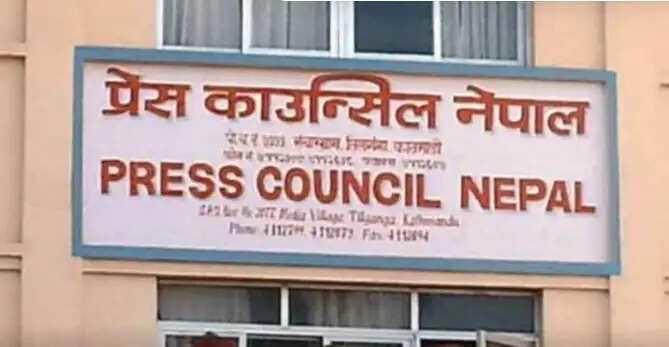
Nepal’s Press Council has raised concerns over the conduct of a YouTuber who interviewed survivors of the recent floods, drawing attention to the need for sensitivity, responsibility and ethical standards while reporting on people affected by disasters.
The council’s intervention comes amid growing public discussion over the manner in which disaster victims are approached and interviewed for digital content. Flood survivors, many of whom are dealing with displacement, loss of property and uncertainty about their livelihoods, can be particularly vulnerable to intrusive or insensitive questioning.
The Press Council has emphasised that journalists and digital content creators must exercise caution when interacting with people who have experienced traumatic events. Interviews conducted during or immediately after a disaster require a greater degree of sensitivity because survivors may still be coping with shock, grief and the loss of homes or belongings.
The issue has also highlighted the changing nature of Nepal’s media environment, where YouTube channels and independent digital creators have become increasingly influential sources of news and information. While digital platforms have expanded opportunities for ordinary citizens and independent creators to report events, concerns have also emerged over the absence of consistent professional standards among some online content producers.
According to the Press Council, interviews with disaster survivors should not become a means of producing sensational or emotionally exploitative content. Questions should be relevant to the situation and should respect the dignity and privacy of those affected.
The council’s concerns are particularly significant because footage involving people in distress can spread rapidly across social media. Once uploaded, such material can reach audiences far beyond the original location and may remain online indefinitely. Survivors who agree to speak in an emotional moment may not fully understand the potential consequences of their words or images being circulated widely.
The incident has therefore renewed calls for greater awareness among digital creators about informed consent and responsible reporting. Consent should not simply mean obtaining permission to record an interview. Interviewers also need to consider whether the person is in a suitable condition to participate and whether the questions or manner of filming could cause additional distress.
Disaster reporting traditionally places strong emphasis on protecting vulnerable individuals. Professional journalists are expected to avoid unnecessary intrusion into private grief and to ensure that the pursuit of information does not override basic human dignity. The Press Council’s concerns suggest that similar principles should increasingly apply to the rapidly expanding community of online news creators.
Nepal has witnessed several devastating floods and landslides in recent years, particularly during the monsoon season. Such disasters frequently leave communities struggling with damaged homes, disrupted roads, loss of agricultural land and shortages of essential supplies. Survivors often depend on government agencies, security forces, humanitarian organisations and local communities for immediate assistance.
In these circumstances, media coverage can play an important role by bringing attention to the difficulties faced by affected communities. Responsible interviews can help survivors explain their needs, highlight gaps in relief efforts and ensure that authorities are aware of problems on the ground.
However, the Press Council’s warning underlines the distinction between public-interest reporting and content created primarily to attract views or engagement. Emotional footage may generate significant online attention, but the suffering of disaster victims should not be treated as entertainment or a tool for increasing a channel’s reach.
The controversy has also raised broader questions about accountability in Nepal’s digital media sector. Traditional media organisations generally operate under established editorial structures, professional codes and mechanisms for complaints. Independent YouTubers and other online creators may operate outside those structures, even when their work reaches audiences comparable to those of established news organisations.
As a result, regulators and media bodies are increasingly being called upon to clarify how ethical standards should apply in the digital environment. The challenge is to protect vulnerable people without unnecessarily restricting legitimate freedom of expression or independent reporting.
The Press Council’s position also serves as a reminder to audiences. Viewers and social media users play a role in determining what kind of content succeeds online. Sensational interviews and emotionally charged footage can receive more views and shares, creating incentives for creators to pursue increasingly dramatic material. Greater public awareness about responsible consumption and sharing of disaster-related content could help reduce such pressures.
For content creators, the episode offers a broader lesson about the responsibilities that accompany digital influence. A person holding a camera and publishing videos online may not formally identify as a journalist, but when that person reports on a public crisis, the potential impact of the content can be substantial. Accuracy, consent, privacy and sensitivity therefore remain important regardless of the platform being used.
The Press Council’s concerns come at a time when Nepal continues to deal with the consequences of severe weather events affecting communities across the country. As authorities and relief agencies work to support affected families, media coverage remains crucial in documenting the scale of the damage and bringing survivors’ concerns to public attention.
But the council’s warning makes clear that such coverage must be carried out responsibly. Survivors should be given an opportunity to speak without being pressured, humiliated or subjected to unnecessary questioning. Their experiences can provide valuable information to the public, but their suffering must not come at the cost of their dignity.
The controversy surrounding the YouTuber’s interview has consequently become part of a larger debate over the responsibilities of Nepal’s expanding digital media landscape. With online platforms playing an increasingly important role in shaping public opinion, the Press Council’s intervention highlights the importance of ensuring that speed, views and online engagement do not come before basic journalistic ethics.
Ultimately, disaster reporting is not only about documenting what happened. It is also about recognising the human beings at the centre of the story. For survivors who have already endured loss and uncertainty, responsible journalism and digital reporting should provide a platform for their voices while ensuring that their vulnerability is treated with care, respect and dignity.