

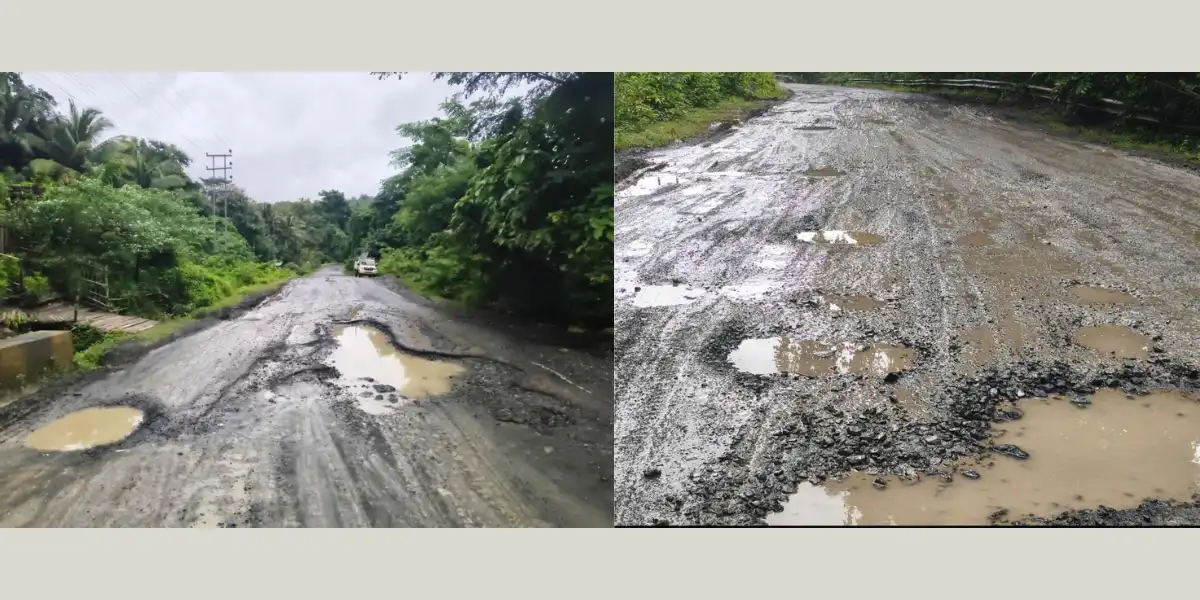
Mizoram Highway Scope has received a significant modification after NHIDCL secured in-principle clearance to use Pavement Quality Concrete (PQC) for severely damaged stretches of the Vairengte–Sihmui road. The proposed change targets sections that frequently deteriorate because of water leakage and related damage. Consequently, the move could provide a more durable solution for vulnerable portions of the highway.
North Tripura water conservation gets major boost at India Water Week 2026
NHIDCL Highway Scope Changes Target Water-Damaged Roads
The proposed modification focuses on stretches between Vairengte and Sihmui that have repeatedly suffered damage because of water-related problems. Deputy Speaker Pu Lalfamkima recently urged Governor General (Retd) Vijay Kumar Singh to pursue the required sanction for the proposal.
Moreover, NHIDCL has proposed using Pavement Quality Concrete, commonly known as PQC, instead of relying solely on conventional pavement treatment for these particularly vulnerable sections. The approach aims to provide a stronger pavement structure where recurring water damage has affected road performance.
Therefore, the change in scope reflects an effort to address the underlying durability challenge rather than repeatedly carrying out routine repairs.
The proposal has already received in-principle clearance, according to the latest report. However, the final administrative sanction and subsequent implementation steps remain important before the modified work can move ahead.
Additionally, the decision comes against the broader backdrop of ongoing highway development across Mizoram. NHIDCL currently lists multiple projects along the Vairengte–Sairang corridor, including four-laning works.
PQC Solution Could Strengthen Vulnerable Highway Sections
Pavement Quality Concrete is a cement-concrete pavement designed to withstand substantial traffic loads and provide durability when properly constructed. Its proposed use on the affected Vairengte–Sihmui sections therefore represents a shift toward a more robust pavement treatment.
Furthermore, concrete pavement can offer greater resistance to certain forms of water-related deterioration when engineers design and construct the pavement appropriately. However, pavement performance also depends on drainage, foundation conditions, construction quality and regular maintenance.
Consequently, simply changing the pavement material cannot address every cause of road damage. Proper drainage and control of water movement will remain essential for protecting the upgraded stretches.
The proposal nevertheless provides a targeted response to sections that have experienced repeated problems. Rather than treating every portion of the highway identically, NHIDCL can apply the modified treatment specifically where water-related damage has created persistent challenges.
Meanwhile, the broader Vairengte–Sairang highway network remains strategically important for Mizoram’s connectivity. NHIDCL’s current project information shows ongoing four-laning work on several sections of the corridor.
Vairengte–Sihmui Route Faces Continuing Infrastructure Challenges
The Vairengte–Sihmui section forms part of Mizoram’s wider road network connecting important areas toward the state’s northern gateway. Therefore, maintaining reliable movement along the route remains important for passengers, commercial traffic and the transportation of essential supplies.
Moreover, recurring water damage can increase maintenance requirements and disrupt traffic when vulnerable sections deteriorate. A more durable pavement solution could consequently help reduce the frequency of major repairs on the affected stretches.
However, road durability depends on more than pavement strength. Effective drainage systems, slope protection and timely maintenance remain necessary, particularly in a mountainous state where intense rainfall can place additional pressure on highway infrastructure.
NHIDCL’s existing work in the wider corridor demonstrates the scale of the state’s highway-development programme. The corporation lists the Vairengte–Chhimluang four-laning project as ongoing, with a total project cost of ₹491.39 crore.
Additionally, NHIDCL lists an ongoing short-term maintenance contract covering portions of NH-306 and NH-6 between kilometre 133 and 147.8 under its Kolasib project management unit.
These activities highlight the continuing need for both long-term highway expansion and targeted maintenance across Mizoram.
Highway Modification Awaits Further Implementation Steps
The in-principle clearance marks an important administrative step, but it should not be interpreted as confirmation that the PQC work has already been completed. The next stages will involve the required sanctions, project procedures and execution arrangements.
Furthermore, the Deputy Speaker’s intervention indicates the importance attached to moving the proposal forward. Faster approval could allow NHIDCL to address the vulnerable stretches during a suitable construction period.
At the same time, engineers will need to ensure that the modified pavement integrates effectively with existing road sections. Drainage and water-management measures will also remain important for protecting the new pavement from recurring damage.
Therefore, the success of the proposal will ultimately depend on both construction quality and long-term maintenance.
The initiative also fits into Mizoram’s wider highway-development programme. NHIDCL currently lists major works involving four-laning, bypass construction and other upgrades across the state’s national-highway network.
Conclusion
The modified NHIDCL Highway Scope for the Vairengte–Sihmui route marks a targeted response to recurring water-related road damage. The proposed use of Pavement Quality Concrete could provide greater durability on severely affected stretches, although final sanctions, drainage measures and construction quality will determine the project’s effectiveness. The move also complements wider NHIDCL highway-development works across Mizoram.
FAQs
1. What has NHIDCL proposed for the Vairengte–Sihmui road?
NHIDCL has proposed using Pavement Quality Concrete or cement concrete on severely damaged stretches that frequently suffer from water-related deterioration.
2. Has the proposal received approval?
It has received in-principle clearance. However, the report indicates that further sanction and implementation steps remain necessary.
3. Why is PQC being considered?
The proposed change aims to provide a more durable pavement solution on sections that repeatedly suffer damage from water.
4. Will concrete pavement alone prevent future road damage?
Not necessarily. Effective drainage, foundation treatment, slope protection and regular maintenance will also remain important.
5. Is NHIDCL carrying out other highway projects in Mizoram?
Yes. NHIDCL currently lists several ongoing projects across Mizoram, including four-laning works along the Vairengte–Sairang corridor.