

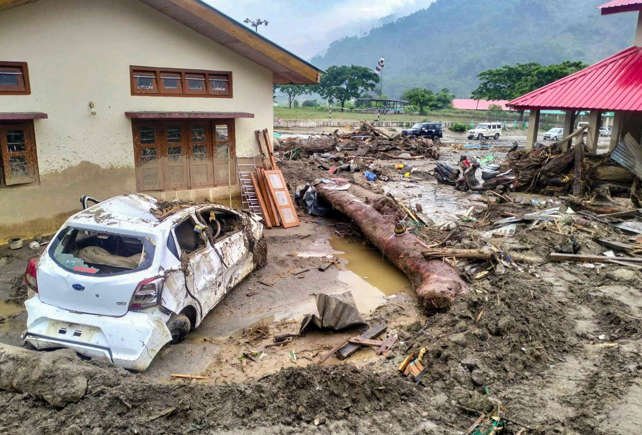
Heavy rainfall and overflowing rivers have triggered severe flood conditions across parts of Northeast India, affecting more than 1.38 lakh people in Assam and Arunachal Pradesh. The disaster has claimed at least five lives while damaging homes, roads, agricultural land, and public infrastructure. As water levels continue to fluctuate in several river basins, authorities remain on high alert, with rescue and relief operations being carried out on a war footing.
The flood situation has disrupted normal life in numerous districts, forcing thousands of residents to seek shelter in relief camps or safer locations. Educational institutions have been affected in some areas, transportation has been disrupted, and several villages remain partially or completely cut off due to inundated roads and damaged bridges.
In response to the evolving situation, the Central government has stepped up coordination with both state governments to ensure timely rescue operations and adequate humanitarian assistance.
Over 1.38 Lakh People Impacted Across Two States
According to official reports, more than 1.38 lakh people have been affected by the floods across Assam and Arunachal Pradesh. The continuous rainfall over the past several days has caused rivers and tributaries to swell, leading to widespread inundation in low-lying areas.
Thousands of families have experienced damage to their homes, while standing crops and livestock have also suffered significant losses. Floodwaters have entered residential areas, schools, healthcare facilities, and marketplaces, disrupting daily life for affected communities.
Local administrations have been continuously monitoring river levels and weather forecasts while issuing advisories urging residents in vulnerable areas to remain alert and follow evacuation instructions whenever necessary.
Authorities have also been conducting assessments to estimate the extent of damage caused to public infrastructure and private property.
Five Lives Lost Amid Ongoing Disaster
The floods have claimed five lives across the affected states, highlighting the severity of the ongoing natural disaster. The fatalities have been attributed to flood-related incidents, including landslides, drowning, and other weather-induced emergencies.
State governments have expressed condolences to the bereaved families while assuring all possible assistance under existing disaster relief norms.
Emergency response agencies continue to advise citizens to avoid entering flooded areas, crossing overflowing rivers, or travelling through landslide-prone routes during periods of heavy rainfall.
Authorities have also appealed to people residing in vulnerable regions to cooperate with rescue personnel and relocate to safer places whenever instructed.
Centre Strengthens Relief and Rescue Operations
As the flood situation intensified, the Central government initiated coordinated action to strengthen relief and rescue operations across the affected states. Multiple central agencies have been working alongside state disaster management authorities to support evacuation, emergency response, and humanitarian assistance.
Teams from the National Disaster Response Force (NDRF), State Disaster Response Force (SDRF), armed forces, and local police have been deployed in vulnerable districts to rescue stranded residents and deliver essential supplies.
The Centre has maintained close coordination with the governments of Assam and Arunachal Pradesh, monitoring the evolving situation through regular updates and providing logistical support wherever required.
Discussions have also focused on ensuring the availability of food, drinking water, medicines, temporary shelters, and emergency healthcare services for affected populations.
Rescue Teams Continue Evacuation Efforts
Rescue personnel have been carrying out extensive evacuation operations using boats and specialized equipment in flood-affected areas where road connectivity has been disrupted.
Priority has been given to evacuating children, elderly citizens, pregnant women, persons with disabilities, and individuals requiring urgent medical attention.
Relief camps established by district administrations are providing temporary accommodation along with food, clean drinking water, sanitation facilities, and medical assistance. Healthcare teams have also been deployed to monitor public health conditions and prevent outbreaks of water-borne diseases.
Officials have assured that rescue operations will continue until every stranded individual is safely relocated and immediate humanitarian needs are fully addressed.
Infrastructure and Agriculture Suffer Extensive Damage
The floods have caused widespread damage to roads, bridges, embankments, electricity infrastructure, and irrigation facilities across several districts. Continuous rainfall has further complicated restoration efforts by delaying repair work in many affected areas.
Agriculture has also suffered significant setbacks as floodwaters submerged large areas of cultivated land. Farmers have reported damage to standing crops, affecting livelihoods and raising concerns about future agricultural productivity.
Livestock losses have further increased the economic burden on rural households that depend heavily on farming and animal husbandry for their income.
Government agencies have initiated preliminary damage assessments to facilitate compensation, rehabilitation, and reconstruction efforts once floodwaters begin to recede.
Authorities Monitor Rivers and Weather Conditions
Meteorological agencies and flood monitoring authorities continue to closely monitor rainfall patterns and river water levels across the Northeast. Several rivers remain above danger levels, while forecasts indicate the possibility of additional rainfall in certain regions.
District administrations have intensified surveillance of embankments, vulnerable riverbanks, and landslide-prone locations to minimize risks to human life and property.
Public advisories urging residents to remain cautious, avoid unnecessary travel, and follow official instructions are being issued regularly through multiple communication channels.
Emergency control rooms remain operational around the clock to coordinate rescue efforts, receive distress calls, and provide real-time updates to the public.
Governments Focus on Relief and Rehabilitation
The governments of Assam and Arunachal Pradesh have reaffirmed their commitment to ensuring the safety and welfare of affected citizens through coordinated relief, rehabilitation, and recovery efforts.
Officials are working to restore essential services, repair damaged infrastructure, and provide assistance to families affected by the disaster. Relief materials continue to be distributed across flood-hit districts while authorities prepare long-term rehabilitation plans for severely affected communities.
The Central government’s active involvement has strengthened the ongoing disaster response by ensuring better coordination among various agencies and facilitating quicker deployment of resources where they are needed most.
As floodwaters gradually recede in some areas while remaining high in others, authorities continue to maintain vigilance. The priority remains saving lives, providing immediate humanitarian assistance, and supporting the recovery of affected communities. With coordinated efforts by the Centre, state governments, disaster response agencies, and local administrations, relief operations are expected to continue until normalcy is restored across the flood-affected regions of Assam and Arunachal Pradesh.