

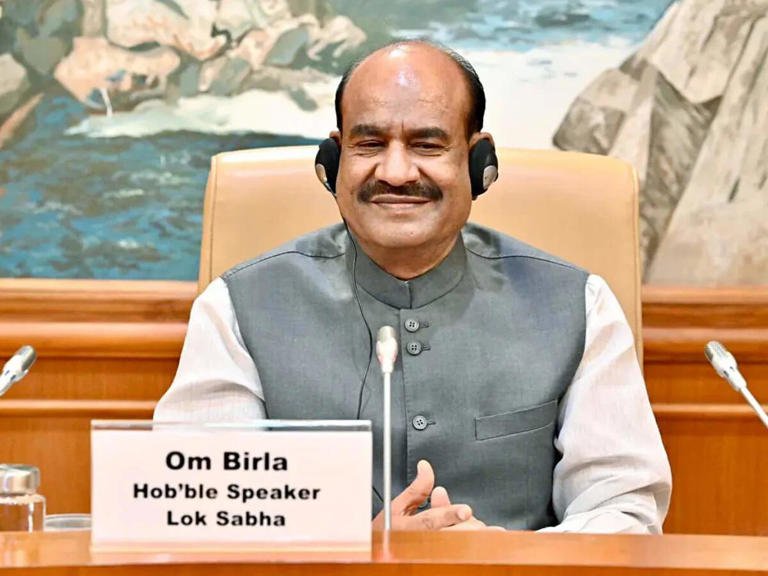
Lok Sabha Speaker Om Birla has said that any impeachment motion seeking the removal of Chief Election Commissioner (CEC) Gyanesh Kumar will be examined in accordance with the applicable rules and procedures.
The statement comes amid renewed political tensions between the Opposition and the Election Commission of India (ECI) over the Special Intensive Revision (SIR) of electoral rolls and allegations concerning the poll body’s functioning.
Opposition parties have been critical of Kumar and have discussed fresh efforts to seek his removal. The Congress has been taking the lead in coordinating the proposed move with other INDIA bloc parties.
Birla’s position places the focus on the parliamentary procedure governing such motions. A notice seeking the removal of a CEC cannot automatically trigger an inquiry or removal. It must first satisfy the relevant legal requirements and be considered by the presiding officer of the House.
The Speaker’s remarks also come against the backdrop of earlier attempts by Opposition MPs to initiate removal proceedings against Kumar, which were rejected by the presiding officers of both Houses in April 2026. <Cite refs={[“turn603532search2″,”turn603532search3”]} />
Opposition Renews Efforts to Remove Gyanesh Kumar
The Opposition’s campaign against Kumar has intensified over allegations concerning the Election Commission’s decisions and the management of electoral rolls.
In September, reports indicated that Opposition parties were preparing a fresh motion following an investigation by The Indian Express into internal objections reportedly raised by Election Commissioners Sukhbir Singh Sandhu and Vivek Joshi over several decisions and processes within the poll body.
The reported disagreements included matters relating to electoral-roll management and the SIR exercise. Opposition leaders cited these developments as grounds for renewed scrutiny of Kumar’s conduct.
The Election Commission, however, has rejected suggestions that its decisions were divided. It has maintained that decisions relating to the SIR exercise were taken unanimously.
The proposed motion has therefore become part of a wider political dispute over electoral transparency, the independence of constitutional institutions and the conduct of election officials.
For the Opposition, the issue concerns accountability and the protection of voting rights. The Election Commission’s position, meanwhile, is that its decisions must be assessed on the basis of established procedures and the available evidence.
What Happened to the Earlier Impeachment Motion?
Opposition MPs had submitted notices in both the Lok Sabha and the Rajya Sabha in March 2026, seeking Kumar’s removal from office.
The notices reportedly carried the signatures of 130 Lok Sabha MPs and 63 Rajya Sabha MPs. Opposition parties accused the CEC of partisan and discriminatory conduct and raised concerns about the handling of electoral rolls.
However, on April 6, the Lok Sabha Speaker and the Rajya Sabha Chairman rejected the notices after considering the matter under the applicable legal framework.
The decisions halted those proceedings and prompted criticism from Opposition leaders, who argued that their concerns deserved further examination.
The latest push for a fresh motion represents another attempt to challenge Kumar’s position. Reports in September said Opposition parties were considering renewed notices that would incorporate additional allegations and concerns about the Election Commission’s functioning.
Any fresh notice would have to be assessed separately under the applicable rules. The earlier rejection does not, by itself, establish whether a future notice will be admitted or refused. <Cite refs={[“turn603532search10″,”turn603532search3″,”turn603532search0”]} />
How Can a Chief Election Commissioner Be Removed?
The removal of a Chief Election Commissioner is governed by constitutional safeguards intended to protect the independence of the Election Commission.
Article 324(5) of the Constitution provides that the CEC can be removed only in the same manner and on the same grounds as a judge of the Supreme Court.
The relevant grounds are proved misbehaviour or incapacity. Political disagreement or an allegation alone is not sufficient to establish either ground.
Under the Judges (Inquiry) Act, 1968, a removal notice must meet the required support threshold. It needs the signatures of at least 100 members of the Lok Sabha or 50 members of the Rajya Sabha, depending on the House in which it is introduced.
The Speaker or the Rajya Sabha Chairman then considers whether to admit the motion. The presiding officer may consult relevant persons and examine available material before making a decision.
If the motion is admitted, an inquiry committee examines the allegations. The process provides an opportunity for the concerned official to respond to the charges.
If the allegations are established through the prescribed process, both Houses must approve the removal address with the required special majority. Only after the constitutional requirements are fulfilled can the President issue an order removing the CEC.
Consequently, submitting a notice is only the beginning of a lengthy constitutional process. It does not guarantee that an inquiry will be held or that the official will be removed. <Cite refs={[“turn603532search0″,”turn603532search7”]} />
Political Tensions Over SIR Continue
The dispute over Kumar has become closely linked to the nationwide SIR exercise, which aims to revise electoral rolls.
Opposition parties have raised concerns that the process could result in eligible voters being excluded from electoral lists. They have demanded greater transparency and safeguards to ensure that no eligible citizen loses the right to vote because of administrative errors.
The Election Commission’s role in maintaining accurate electoral rolls has consequently become a major point of political debate.
The controversy has also raised broader questions about how constitutional authorities should be held accountable while remaining independent of political pressure.
For the Opposition, a fresh removal motion would provide a formal parliamentary route to raise its allegations. However, its success would depend on whether the notice meets the legal requirements, whether it is admitted and whether the subsequent constitutional process supports the charges.
Next Steps Depend on Parliamentary Procedure
Birla’s reported position reinforces the importance of following the established rules for any proposed motion against the CEC.
The immediate question is whether Opposition parties will submit a fresh notice and, if they do, whether it will satisfy the necessary requirements for consideration.
The process will also test the balance between parliamentary oversight and the constitutional independence of the Election Commission.
As the political dispute continues, the legal framework remains central to determining the next steps. Any allegations against Kumar would need to be examined through the prescribed process, while the decision on admitting a motion would rest with the relevant presiding officer.
For now, the Opposition’s efforts and the Speaker’s stated approach have placed parliamentary procedure at the centre of the debate over the future of the Chief Election Commissioner.