

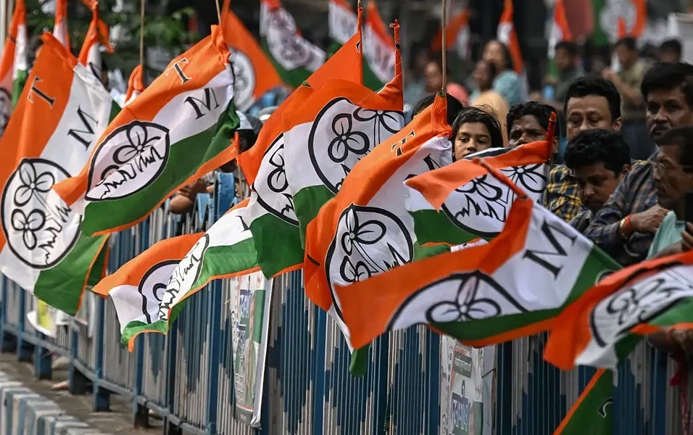
More than 100 councillors associated with the Trinamool Congress (TMC) have reportedly resigned following the party’s defeat in the Falta polls, triggering fresh political discussions in West Bengal. The development has drawn attention across political circles as the resignations come shortly after an election outcome that raised questions about local organisational dynamics and political strategy.
According to reports, the resignations emerged in the aftermath of the electoral setback and reflected internal dissatisfaction and changing political calculations at the local level. The development has intensified debate over the impact of electoral outcomes on party organisation and leadership structures.
Political observers believe the resignations may influence local political equations and shape future strategies within the party.
Resignations Follow Political Setback in Falta
The resignations reportedly came after the Trinamool Congress suffered a defeat in the Falta polls, an outcome that generated strong reactions within sections of the local organisation.
According to reports, more than 100 councillors stepped down in the aftermath of the result, creating a significant political development in the region. While individual reasons may differ, the timing of the resignations has linked the move closely to the recent electoral outcome.
Political observers noted that election results often trigger organisational reassessment and leadership discussions, especially at the local level. In this case, the scale of resignations has attracted wider attention because of its potential implications for political management and internal coordination.
The development has also renewed focus on how political parties respond to setbacks and maintain organisational unity after electoral contests.
Political Reactions Intensify After Mass Exit
The reported resignations triggered reactions across political circles, with leaders and observers offering different interpretations of the development.
Supporters and critics viewed the resignations through different political lenses, while discussions emerged regarding organisational management and future electoral planning.
According to observers, political setbacks often lead to internal review processes and reassessment of local structures. Therefore, developments following the Falta result may influence future decisions within the party.
Political parties frequently rely on local leadership networks to maintain public engagement and administrative coordination. As a result, changes at that level often receive significant attention.
The current development has therefore become an important political discussion point in the state.
Focus Turns to Organisational Stability
The resignations have shifted attention toward questions surrounding organisational stability and internal coordination.
Political observers stated that maintaining cohesion after electoral losses remains an important challenge for political parties.
According to reports, party leadership may now focus on rebuilding confidence, strengthening communication, and reviewing organisational priorities.
Local political structures play an important role in maintaining public outreach and preparing for future contests. Therefore, changes involving elected representatives often influence broader political planning.
Observers also noted that internal engagement and leadership response become increasingly important following such developments.
The situation continues to generate interest regarding possible next steps.
Electoral Outcomes Often Influence Political Strategy
Election results frequently shape political direction and influence organisational decisions across parties.
Observers stated that setbacks can encourage review of campaign approaches, leadership structures, and public engagement strategies.
Political parties often use such moments to evaluate performance and strengthen future planning.
In this context, the developments following the Falta result may influence organisational discussions and local political strategy.
Additionally, leadership decisions and communication efforts can play a major role in maintaining unity and restoring momentum.
Political analysts believe that post-election responses often become important indicators of future political positioning.
The coming period may therefore prove significant.
Local Political Equations Expected to Evolve
The resignations may also influence local political equations and administrative engagement in the region.
Observers noted that councillors often serve as an important link between political organisations and local communities.
Changes involving large numbers of local representatives can therefore attract attention and influence political calculations.
According to reports, future developments may depend on how parties respond and reorganise local structures.
Political engagement at the grassroots level remains an important factor in sustaining support and maintaining visibility.
The situation continues to remain under observation as responses develop.
Party Leadership Likely to Review Future Strategy
Following the resignations, attention has turned toward how party leadership may address organisational challenges and rebuild momentum.
Political observers suggested that internal consultations and strategic adjustments may become part of future planning.
Leadership responses often focus on restoring confidence and strengthening communication channels.
Moreover, political organisations generally aim to maintain continuity while adapting to changing circumstances.
The current developments may encourage broader discussions regarding organisation, leadership, and electoral preparedness.
Observers believe that the coming weeks could provide greater clarity on future direction.
Falta Outcome Triggers Wider Political Discussion
The resignation of more than 100 TMC councillors after the Falta poll defeat has emerged as a significant political development in West Bengal.
The incident has generated debate around electoral outcomes, internal party dynamics, and organisational management.
Political observers believe the development may influence future strategies and local political engagement.
As discussions continue, attention remains focused on how party leadership responds to the resignations and works to strengthen organisational structures in the period ahead.