

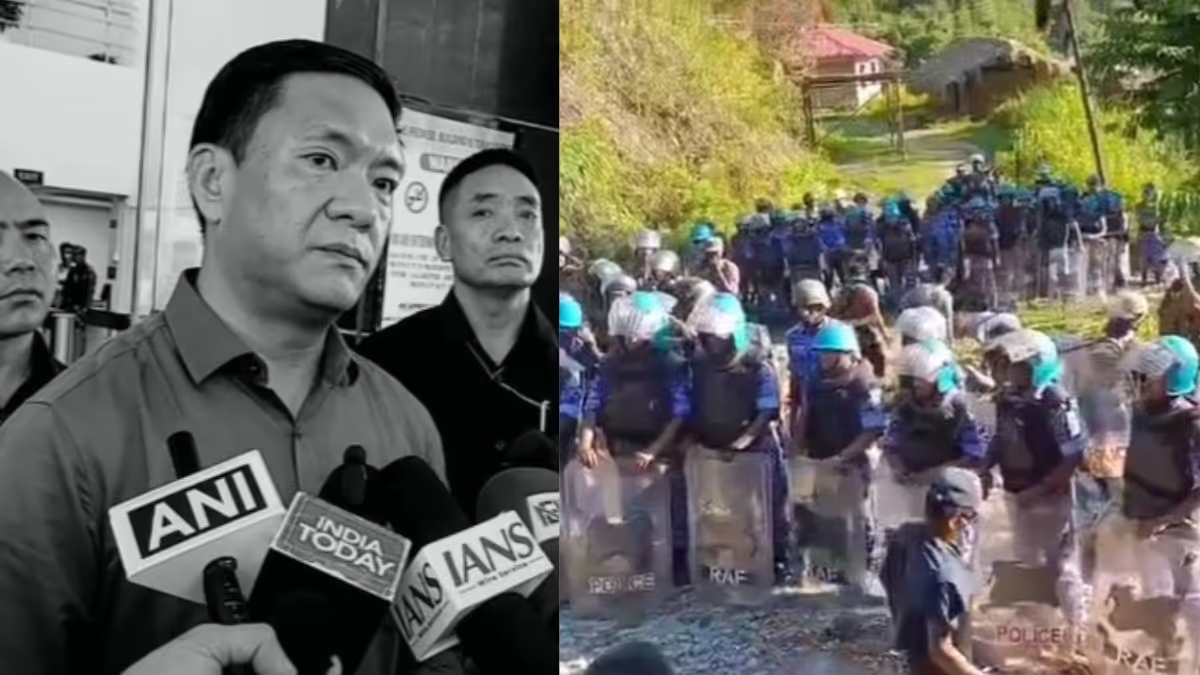
The Pema Khandu Siang protests have intensified opposition to the proposed Siang Upper Multipurpose Project in Arunachal Pradesh. Chief Minister Pema Khandu’s two-day visit to Siang and Upper Siang districts on September 29 and 30 coincided with road blockades, strikes and demonstrations by local residents.
The proposed project has an estimated capacity of more than 10,000 MW. However, sections of the indigenous Adi community oppose the planned pre-feasibility report and survey activities.
Protesters have demanded that the government stop the survey process and withdraw additional security personnel from affected areas. Meanwhile, the state government has maintained that a pre-feasibility study does not amount to final approval of the dam.
Nagaland Congress mounts strong call for CEC resignation over SIR
Pema Khandu Siang Protests Intensify During CM Visit
The Pema Khandu Siang protests became particularly visible during the Chief Minister’s visit to Boleng and Yingkiong. Khandu travelled to the two districts as the government continued efforts to begin the pre-feasibility process for the Siang Upper Multipurpose Project, or SUMP.
At Boleng, Khandu held meetings with government officials and panchayat representatives. However, residents in several areas wanted a direct public dialogue with the Chief Minister about the proposed project.
In Yingkiong, protesters staged demonstrations while the Chief Minister attended official meetings. Road blockades also affected stretches connecting Yingkiong, Komkar and Geku. Villages in the affected belt observed a strike as opposition to the proposed survey continued.
The protests reflected a long-running disagreement over the project. Sections of the Adi community have raised concerns about possible effects on land, livelihoods, cultural identity and the environment if the project eventually proceeds.
Furthermore, protesters have objected to the deployment of security personnel in areas connected with the proposed survey. They argue that the presence of additional forces has increased tensions instead of creating conditions for consultation.
The government, however, has continued to support the pre-feasibility process. Khandu has stated that the study would establish technical facts and assess the project’s basic feasibility and potential implications.
Siang Mega-Dam Survey Faces Local Resistance
The Pema Khandu Siang protests are closely linked to opposition to the proposed pre-feasibility report. The government wants to conduct preliminary studies before making any decision about the project’s construction.
Khandu has repeatedly stressed that the PFR does not itself approve the project. Instead, he has described it as an initial step to determine technical feasibility and understand possible effects.
For many residents, however, the survey process has become a central concern. Villagers in Geku, Komkar and neighbouring areas have attempted to prevent machinery and survey-related movement into locations associated with the proposed project.
On September 28, villagers in Geku clashed with security personnel amid opposition to the survey process. Four people were detained during the confrontation and later released, according to reports.
The confrontation added to tensions shortly before Khandu’s scheduled visit. Authorities subsequently increased security in parts of the affected region.
Moreover, protesters have demanded an immediate halt to PFR activities. They have also sought the withdrawal of security forces and direct consultation with communities that could be affected by the project.
The dispute therefore involves both the proposed dam and the process through which authorities want to assess it. Local organisations have called for consultation before further survey activity takes place.
Pema Khandu Siang Protests Turn Violent in Yingkiong
The Pema Khandu Siang protests escalated further during the Chief Minister’s visit to Yingkiong. Demonstrators clashed with security personnel, while reports also described damage to vehicles and the alleged vandalism of a local legislator’s residence.
A police vehicle was reportedly set on fire during the unrest. The incidents prompted authorities to register cases and begin identifying people allegedly involved in the violence.
The violence also affected Khandu’s public outreach programme. Reports said the Chief Minister cut short his visit and left the district headquarters. However, accounts differed on the precise sequence of events, with local officials saying he completed a scheduled official meeting before departing.
Authorities have stressed that protests must remain within the law. Arunachal Pradesh minister Ojing Tasing said the government remains open to dialogue but will not accept violence or violations of law and order during demonstrations.
The state police have since registered two cases related to the violence in Upper Siang. Officials have also said that strict legal action will follow if investigations identify people responsible for the reported incidents.
Meanwhile, opposition groups have continued to demand peaceful consultation. They argue that communities living in the project-affected belt should have a direct opportunity to present their concerns before survey activities advance.
Government and Protesters Remain Divided Over SUMP
The Pema Khandu Siang protests have exposed a clear difference between the government’s position and that of several local organisations. The government views the PFR as an assessment stage rather than a final decision to construct the project.
Protest groups, however, remain concerned about what the project could mean for their land and communities. The Siang Indigenous Farmers’ Forum has emerged as one of the organisations leading opposition to the proposed project.
The forum has sought direct discussions with the Chief Minister. Khandu subsequently invited SIFF representatives for talks scheduled for October 5. However, the farmers’ body has requested more time and asked that the meeting take place after October 11 so it can consult internally and develop a collective position.
This development could provide an opportunity for both sides to discuss the dispute through a formal dialogue. Nevertheless, the disagreement over the survey process remains unresolved.
The proposed SUMP has been discussed for several years. The project is intended as a major hydropower and multipurpose development, but its potential impact has generated strong local resistance.
Furthermore, the project carries wider strategic significance because the Siang is part of the Brahmaputra river system. The Centre and Arunachal Pradesh government have also considered the proposed project in the context of developments upstream in Tibet.
However, strategic considerations have not removed local concerns. Residents continue to seek clarity about land, displacement, livelihoods, environmental consequences and the consultation process.
Pema Khandu Siang Protests Put Dialogue in Focus
The Pema Khandu Siang protests have now shifted attention towards dialogue between the state government and affected communities. The government’s willingness to hold discussions could become important as authorities consider the next stage of the proposed feasibility process.
Khandu has said the government does not intend to rush the project. His position is that preliminary studies should establish facts before any decision on construction.
At the same time, protesters want the government to halt PFR activities until their concerns receive a clear response. They have also objected to the presence of security forces in areas where survey-related preparations are expected.
A successful dialogue would need to address both sides of the dispute. Authorities would need to explain the purpose, scope and possible consequences of the PFR. Local organisations, meanwhile, would have an opportunity to present their concerns directly.
Additionally, transparent communication could help reduce uncertainty around the project. The government has already indicated that the feasibility process does not represent a final construction decision.
The immediate focus therefore remains on whether the government and SIFF can establish a mutually acceptable framework for talks. Any future decision on the project would depend on technical assessments, government processes and the broader response from affected communities.
Conclusion
The Pema Khandu Siang protests have highlighted strong local opposition to the proposed Siang Upper Multipurpose Project and its pre-feasibility process. The Chief Minister’s September 29–30 visit coincided with demonstrations, road blockades and unrest in parts of Siang and Upper Siang.
The government maintains that the PFR is only a preliminary assessment and does not mean that the project has received final approval. Meanwhile, protesters want survey activities stopped and security forces withdrawn from affected areas.
The recent violence has added urgency to the dispute. However, the proposed October talks between the government and SIFF could provide a platform for addressing the concerns through dialogue.
FAQs
What are the Pema Khandu Siang protests about?
The Pema Khandu Siang protests concern opposition to the proposed Siang Upper Multipurpose Project and the government’s planned pre-feasibility studies in the Siang and Upper Siang districts.
What is the Siang Upper Multipurpose Project?
The Siang Upper Multipurpose Project is a proposed major hydropower and multipurpose project on the Siang river, with a planned capacity of more than 10,000 MW.
Why are local communities opposing the project?
Sections of the indigenous Adi community have raised concerns about potential effects on land, livelihoods, cultural identity, displacement and the environment.
Does the pre-feasibility study mean the dam has been approved?
No. Chief Minister Pema Khandu has said the PFR is intended to assess technical feasibility and possible implications. He has maintained that it does not amount to final approval or guarantee that the project will be built.
Will the government hold talks with protesters?
The Chief Minister invited the Siang Indigenous Farmers’ Forum for talks on October 5. SIFF has requested that the meeting be postponed until after October 11 to allow the organisation more time for internal consultation.