

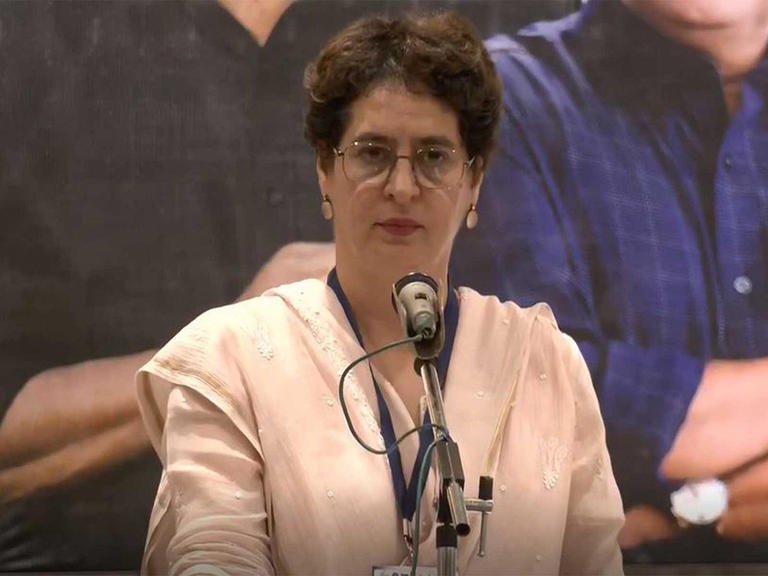
Congress leader Priyanka Gandhi Vadra has announced the establishment of a new tribal university in Nilambur, presenting it as a major initiative aimed at expanding higher education opportunities for tribal communities and promoting inclusive development in the region. The announcement was made during a public programme, where she highlighted the importance of ensuring quality education and equal opportunities for historically marginalised communities.
Describing education as one of the strongest tools for social and economic empowerment, Priyanka Gandhi said that the proposed university would focus on addressing the educational needs of tribal students while preserving and promoting their rich cultural heritage and traditional knowledge.
She emphasised that strengthening educational infrastructure is essential for ensuring long-term development and creating greater opportunities for young people from tribal communities.
Focus on Tribal Education and Empowerment
Speaking about the proposed institution, Priyanka Gandhi said the university would be dedicated to providing quality higher education tailored to the needs and aspirations of tribal students. She stated that many tribal youth continue to face barriers in accessing higher education due to geographical, economic, and social challenges.
According to her, establishing a specialised university in Nilambur would help bridge these gaps by making higher education more accessible and inclusive.
She added that the institution would also encourage research into tribal history, languages, culture, biodiversity, traditional knowledge systems, and sustainable livelihoods, thereby preserving indigenous heritage alongside academic advancement.
Expanding Access to Higher Education
Priyanka Gandhi stressed that improving educational infrastructure remains central to achieving equitable development. She noted that many talented students from tribal areas are unable to pursue higher studies because educational institutions are often located far from their communities.
The proposed tribal university, she said, aims to reduce these barriers by creating a dedicated academic institution within the region.
She highlighted the importance of providing modern educational facilities, skilled faculty, research opportunities, and career-oriented courses that prepare students for employment while respecting their cultural identity.
The initiative, she added, seeks to ensure that education becomes a pathway to empowerment and self-reliance.
Preserving Tribal Culture and Knowledge
A key objective of the proposed university would be the preservation and promotion of tribal culture, traditions, languages, and indigenous knowledge. Priyanka Gandhi observed that tribal communities possess valuable knowledge related to ecology, agriculture, forest management, traditional medicine, and sustainable living.
She emphasised that academic institutions should not only impart modern education but also document and celebrate traditional wisdom that has been preserved across generations.
The university, according to the announcement, could serve as a centre for cultural studies, research, and documentation while encouraging greater appreciation of India’s diverse tribal heritage.
Such efforts would strengthen both education and cultural preservation.
Boost to Regional Development
The establishment of a tribal university is also expected to contribute to the broader socio-economic development of Nilambur and surrounding regions. Educational institutions often stimulate local economies by generating employment, improving infrastructure, encouraging research, and attracting students from different parts of the country.
Priyanka Gandhi stated that the proposed university could create opportunities not only for students but also for teachers, researchers, administrative professionals, and local businesses.
Improved educational infrastructure, she said, has long-term benefits for regional growth by creating skilled human resources capable of contributing to economic development.
The initiative also reflects a broader emphasis on balanced regional development.
Employment and Skill Development
The Congress leader highlighted the need to align higher education with employment opportunities and skill development. She said the proposed university would seek to equip students with practical knowledge, professional skills, and research capabilities relevant to emerging sectors.
Vocational education, entrepreneurship development, environmental studies, sustainable agriculture, and technology-based learning could become important components of the institution’s academic framework.
According to Priyanka Gandhi, empowering tribal youth with education and employable skills strengthens both individual livelihoods and community development.
She emphasised that investment in education yields long-term social and economic benefits.
Inclusive Development Remains a Priority
Priyanka Gandhi reiterated that inclusive development requires equal access to education, healthcare, employment, and public services for every section of society. Tribal communities, she noted, have historically contributed significantly to India’s cultural and ecological heritage and deserve greater opportunities for advancement.
She stressed that development policies should be designed to address regional disparities while ensuring that marginalised communities receive adequate institutional support.
The proposed university forms part of this broader vision of creating equitable educational opportunities and promoting social inclusion.
She called for sustained investments in education as a foundation for inclusive national progress.
Importance of Research and Innovation
The proposed institution is also expected to encourage academic research on issues affecting tribal communities, environmental conservation, sustainable resource management, public health, rural development, and indigenous innovation.
Priyanka Gandhi observed that universities play an important role in generating knowledge that supports evidence-based policymaking and community development.
Research focusing on tribal livelihoods, biodiversity, forest ecosystems, climate resilience, and traditional knowledge could contribute meaningfully to both local and national development.
She expressed confidence that the institution could emerge as a centre of excellence dedicated to tribal studies and interdisciplinary research.
Education as an Instrument of Social Change
Throughout her address, Priyanka Gandhi emphasised that education remains one of the most effective instruments for reducing inequality and expanding opportunities. She stated that quality education enables individuals to participate more actively in economic development while strengthening democratic values and social mobility.
The proposed university, she said, would seek to empower future generations through knowledge, innovation, and cultural preservation.
She urged young people to pursue education with confidence while encouraging society to support initiatives that expand access to learning for all communities.
According to her, education remains the strongest foundation for sustainable and inclusive development.
Vision for an Inclusive Educational Future
Priyanka Gandhi’s announcement of a proposed tribal university in Nilambur reflects a broader vision of strengthening higher education while promoting tribal empowerment and inclusive development. By focusing on academic excellence, cultural preservation, research, and skill development, the proposed institution seeks to address the educational aspirations of tribal communities and create new opportunities for future generations.
If implemented, the university could become an important centre for higher learning, research, and cultural studies while contributing to the socio-economic development of Nilambur and surrounding regions. The proposal highlights the growing recognition of education as a powerful instrument for social transformation, enabling historically underserved communities to access greater opportunities while preserving their unique cultural identity and traditional knowledge for generations to come.