

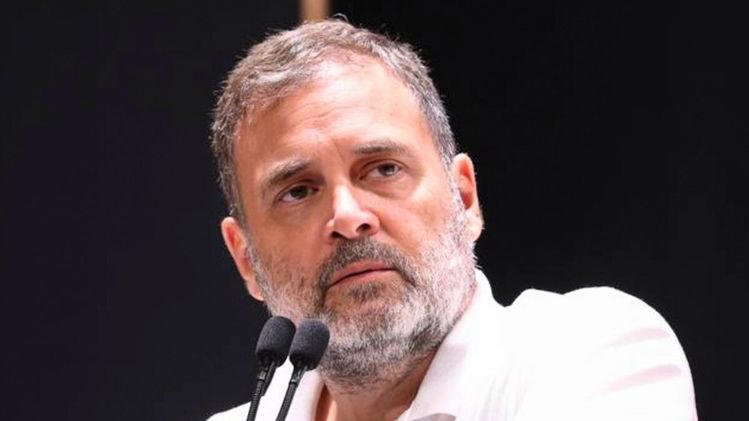
Fresh incidents of arson in violence-hit Manipur have once again brought the state’s prolonged ethnic conflict into the national spotlight, prompting Congress leader Rahul Gandhi to launch a sharp attack on the Central government. Reacting to the latest outbreak of violence, Gandhi alleged that the unrest was a consequence of what he described as the Modi government’s “divisive ideology,” accusing the Centre of failing to restore lasting peace and normalcy in the northeastern state.
The renewed violence has raised fresh concerns over law and order, public safety, and the effectiveness of ongoing peace-building efforts. Political leaders across party lines have called for stronger measures to prevent further escalation, while security forces continue to maintain a heightened presence in sensitive areas.
Fresh Arson Incident Sparks Political Reactions
The latest episode of arson has intensified political debate over the handling of the Manipur crisis, which has persisted for more than a year despite repeated security operations and administrative interventions. Reports of properties being set ablaze have renewed fears among residents already affected by months of instability.
Reacting to the incident, Rahul Gandhi criticised the Central government, arguing that the violence reflected deeper political and social divisions that had not been adequately addressed. He maintained that restoring peace requires more than security measures and called for a comprehensive approach that prioritises dialogue, reconciliation, and public confidence.
His remarks quickly became the focus of political discussions, drawing responses from leaders of both the ruling alliance and the Opposition.
Rahul Gandhi Criticises the Centre
In his statement, Rahul Gandhi alleged that the Central government’s approach towards Manipur had failed to resolve the crisis and accused it of allowing divisions to deepen. He argued that lasting peace could only be achieved through inclusive governance, trust-building measures, and meaningful engagement with affected communities.
The Congress leader has consistently raised concerns over the situation in Manipur during parliamentary debates, public meetings, and political campaigns. He has repeatedly urged the government to take stronger steps towards reconciliation while emphasising the humanitarian impact of the prolonged conflict.
According to Gandhi, the continued occurrence of violent incidents demonstrates the need for renewed efforts to restore stability and rebuild confidence among all sections of society.
Centre Focuses on Security and Restoration of Normalcy
The Central government has maintained that restoring peace in Manipur remains one of its highest priorities. Security agencies have continued conducting area domination exercises, search operations, and coordinated patrols in vulnerable locations to prevent fresh outbreaks of violence.
Additional security personnel have been deployed in sensitive districts, while law enforcement agencies remain on alert to respond quickly to any emerging situation. Authorities have also continued efforts to recover illegal weapons, dismantle armed networks, and strengthen security infrastructure across affected regions.
Officials have consistently stated that restoring law and order requires sustained security operations alongside administrative and developmental measures.
Political Divide Over the Handling of the Crisis
The latest incident has once again highlighted the deep political divide over the handling of the Manipur situation. Opposition parties have repeatedly questioned the pace of normalisation and called for greater political engagement to address the underlying causes of the conflict.
Leaders from the ruling alliance, however, have defended the government’s response, pointing to ongoing security operations, relief efforts, rehabilitation measures, and initiatives aimed at restoring public services in affected areas.
The differing political narratives reflect broader disagreements over how best to achieve long-term peace in a state that has experienced recurring ethnic tensions, displacement, and security challenges.
Humanitarian Impact Remains a Major Concern
Beyond political exchanges, the prolonged unrest continues to have a profound impact on thousands of residents across Manipur. Many families displaced by earlier violence remain in relief camps or temporary shelters, while several communities continue to face disruptions to education, healthcare, employment, and normal economic activities.
Schools, businesses, and transportation services have periodically been affected by security concerns, making it difficult for many people to resume their everyday lives. The psychological impact of prolonged uncertainty has also emerged as an important concern, particularly for children and vulnerable populations.
Civil society organisations and humanitarian groups have repeatedly stressed the need for rehabilitation, livelihood support, and confidence-building measures alongside security interventions.
Calls for Dialogue and Reconciliation
Many political leaders, community organisations, and social groups have emphasised that sustainable peace in Manipur will require dialogue between different communities, confidence-building initiatives, and inclusive governance.
Experts believe that while security measures are essential for preventing immediate violence, long-term stability depends on addressing grievances, promoting trust, and encouraging peaceful coexistence among diverse communities.
The need for continued engagement between stakeholders has become increasingly important as authorities seek to create conditions conducive to lasting peace and social harmony.
Security Forces Continue Vigilance
Security forces remain deployed across sensitive districts to maintain law and order and prevent further incidents. Regular patrols, checkpoints, intelligence-based operations, and surveillance have been intensified in areas considered vulnerable to renewed violence.
Authorities have appealed to residents to maintain peace, avoid spreading rumours through social media, and cooperate with law enforcement agencies. Officials have also urged community leaders to support efforts aimed at preventing further escalation and maintaining communal harmony.
The administration continues to monitor the evolving situation closely while taking necessary measures to safeguard lives and public property.
The Road Ahead for Manipur
The fresh arson incident serves as a reminder that restoring lasting peace in Manipur remains a complex challenge requiring sustained efforts from governments, security agencies, political leaders, and local communities alike.
Rahul Gandhi’s criticism of the Centre has once again brought national attention to the political dimensions of the ongoing crisis, while the government continues to emphasise its commitment to strengthening security and restoring normalcy. As political debates continue, the primary concern for residents remains the restoration of peace, stability, and everyday life.
Moving forward, balancing effective security measures with dialogue, rehabilitation, development, and community reconciliation will be essential to ensuring that Manipur can move beyond the cycle of violence and build a more secure and inclusive future for all its people.