

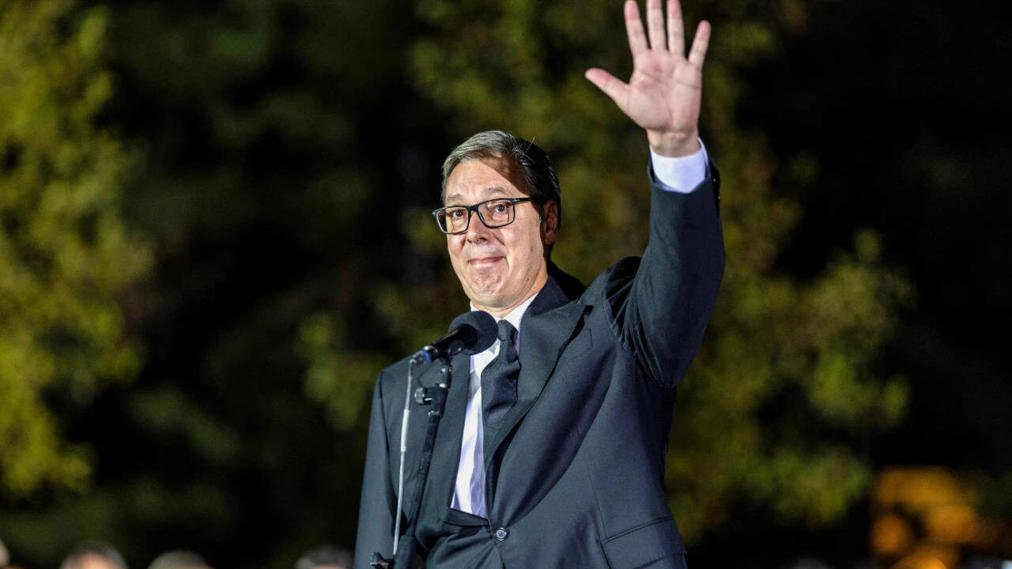
Serbian President Aleksandar Vucic resigned on September 27, ending his second and final presidential term and opening the way for him to seek the post of prime minister in an upcoming parliamentary election.
Vucic stepped down ahead of Serbia’s October 25 snap parliamentary election, where he is leading the electoral list of his Serbian Progressive Party (SNS). If the party forms the next government, Vucic could become prime minister.
His resignation comes amid sustained student-led protests and political tensions in Serbia. The protests began after a deadly railway station disaster in Novi Sad in November 2024 and later expanded into broader demands for accountability, transparency and action against corruption.
Vucic Ends Second Presidential Term
Vucic had been serving his second five-year presidential term, which was due to end in 2027. Serbia’s Constitution prevents him from seeking a third presidential term.
By resigning early, he can participate directly in the parliamentary campaign and seek a different executive position. Vucic has previously served as Serbia’s prime minister before becoming president in 2017.
The Serbian government officially confirmed his resignation on September 27. Vucic said he would hand over presidential duties to Parliament Speaker Ana Brnabic, who will serve as acting president.
October 25 Parliamentary Election
Serbia will hold its snap parliamentary election on October 25, 2026.
Vucic’s resignation comes just weeks before the vote. The election was formally called earlier this month after the dissolution of the Serbian Parliament.
The SNS and its allies will face opposition from several political groups, including a student-backed movement that emerged during the prolonged protests. A pro-European opposition alliance is also competing in the election.
Vucic is heading the electoral list named “Aleksandar Vucic – United Serbia” and has been presented as its candidate for prime minister.
Student Protests Shape Election Campaign
The election follows nearly two years of demonstrations that began after the collapse of a concrete canopy at the railway station in Novi Sad on November 1, 2024.
The incident killed 16 people and triggered widespread protests led by university students. Demonstrators demanded accountability and investigations into the circumstances surrounding the disaster.
The movement subsequently expanded its demands to include measures against corruption, greater transparency and changes to the functioning of state institutions.
The government has rejected accusations of wrongdoing made by protesters and its political opponents.
Ana Brnabic to Serve as Acting President
Following Vucic’s resignation, Parliament Speaker Ana Brnabic will assume the duties of acting president.
Under Serbia’s constitutional framework, a presidential election must be held within 90 days of the resignation. Vucic has said the first round of the presidential election will take place by the end of December.
This means Serbia is now preparing for parliamentary and presidential elections within a relatively short period.
The presidential contest will determine Vucic’s successor, while the October parliamentary election will decide the composition of the country’s legislature and the government.
Vucic’s Political Career
Vucic has been a central figure in Serbian politics for more than a decade.
He served as deputy prime minister before becoming prime minister from 2014 to 2017. He then moved to the presidency and won re-election in 2022. His SNS has remained the dominant political force during this period.
His decision to seek the prime minister’s position represents a shift from the presidency to the country’s government leadership.
In Serbia’s political system, the prime minister leads the government, while the president serves as head of state.
Vucic Grants Pardons Before Leaving Office
Before leaving the presidency, Vucic announced pardons for 49 people, including individuals connected to the protests.
According to reports, 23 of those pardoned had been prosecuted in connection with events surrounding the demonstrations. Vucic described the decision as one of his final acts in office.
The move comes against a backdrop of continuing political tensions between the government and the protest movement.
Rights organisations and opposition groups have accused the government and its allies of restricting political freedoms and mistreating protesters. Serbian authorities have rejected such accusations.
Serbia Heads Towards Two Elections
Vucic’s resignation has effectively opened a new phase in Serbia’s political calendar.
The immediate focus will be the October 25 parliamentary election, where Vucic is seeking a mandate for his party’s list and a possible path to the prime minister’s office.
At the same time, Ana Brnabic will serve as acting president until a new head of state is elected. The presidential election must take place within the constitutional deadline.
The combination of the parliamentary election, the upcoming presidential vote and the continuing student-led movement makes the coming months an important period in Serbian politics. The October vote will determine the composition of the next government, while the later presidential election will decide who succeeds Vucic as head of state.