

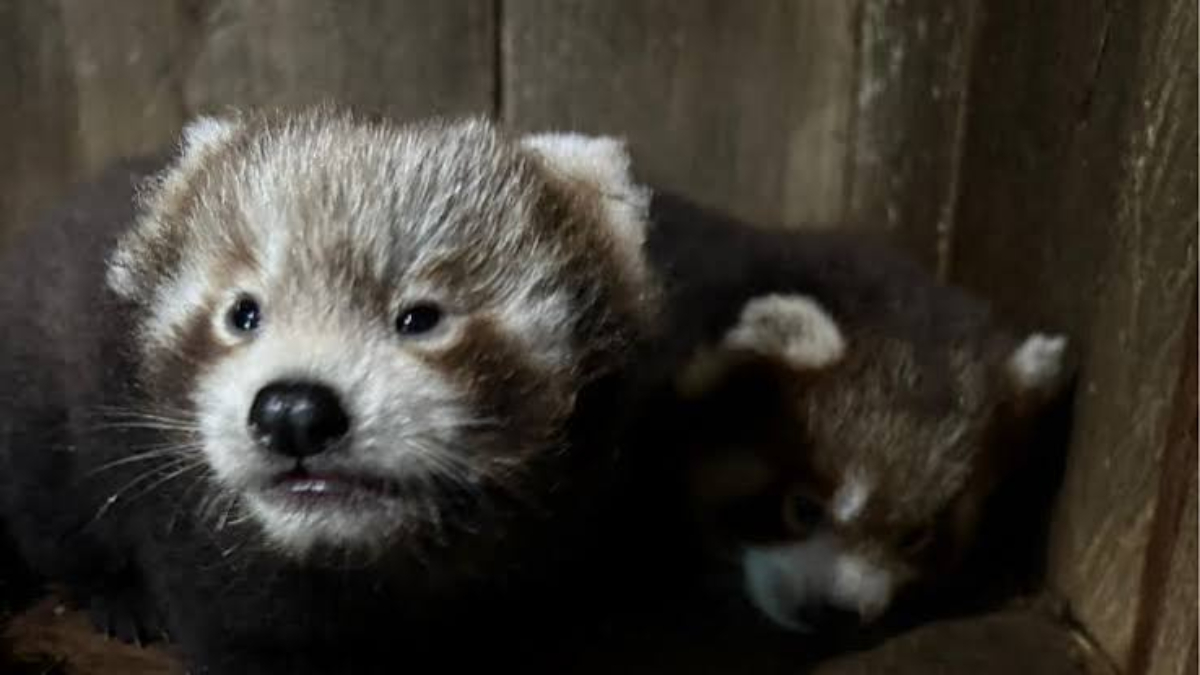
Red panda cubs born at the Himalayan Zoological Park in Bulbuley near Gangtok have marked a major milestone for Sikkim’s conservation breeding efforts. Six cubs were born during June and July 2026, with five surviving, giving the zoo its highest annual number of red panda births since its dedicated captive breeding programme began in the mid-1990s. The development comes after years of setbacks that severely affected the captive population.
The Himalayan Zoological Park, which is home to Sikkim’s state animal, recorded the births under its Red Panda Conservation Breeding Program. The surviving cubs are now being closely monitored by veterinary and animal-keeping teams during their vulnerable early months.
Red panda cubs born to three breeding pairs
The latest births took place across three breeding pairs in June and July. According to the park, Lucky-2 gave birth to two cubs on June 30, with Mirak identified as the father. Kimo Reep delivered two cubs on July 9, sired by Dokhbu. Another female, Songru Pundi, gave birth to two cubs on July 23, also sired by Dokhbu.
The zoo initially recorded all six births. However, one cub died after heavy rainfall caused Songru Pundi to repeatedly move her offspring while searching for a drier shelter. Five cubs have survived.
The latest figures take the Himalayan Zoological Park’s red panda population to 13, according to a September 21 report. The six births also represent the highest annual number recorded at the facility since the captive breeding programme began.
A difficult history for Sikkim’s breeding programme
The achievement follows a difficult period for red panda conservation at the zoo. Between 2012 and 2017, 12 breeding individuals died during outbreaks of canine distemper, a viral disease that caused severe losses among the captive population. The park also went for nearly seven years without a breeding male.
The recovery began in 2022 with the arrival of a new breeding pair and three red pandas of wild origin. Breeding resumed in 2023, creating the foundation for the recent increase in successful births.
The programme has focused not only on producing offspring but also on maintaining a healthy captive population. Genetic management is important in conservation breeding because carefully planned pairings can help preserve diversity and reduce risks associated with inbreeding. Research involving captive red pandas in Gangtok and Darjeeling has also examined pedigree, kinship and genetic diversity for long-term conservation planning.
Close monitoring of newborn cubs
Zoo authorities are taking a cautious approach to the newborns. The cubs are kept under close observation during their first three months, when the risk of neonatal mortality is particularly high.
Human intervention is limited to essential health checks by veterinary and animal-keeping teams. This approach allows the mothers to care for their offspring while staff monitor the cubs’ health and development.
The successful breeding season follows another encouraging development in 2025, when two red panda cubs, Numa and Nuba, were born after a seven-year gap in successful births at the park. Their healthy growth was seen as an important sign of recovery for the programme.
Wider conservation gains at Gangtok zoo
The 2026 breeding season has produced positive results beyond red pandas. The Himalayan Zoological Park also recorded the birth of two Himalayan black bear cubs in April. The births raised the park’s black bear population to six.
Four Himalayan goral offspring were also recorded after six male gorals were released into the wild in November 2025. These developments underline the zoo’s wider role in breeding, population management and conservation of Himalayan wildlife.
Red pandas remain a major conservation priority because the species is classified as endangered on the International Union for Conservation of Nature Red List. Sikkim has also adopted the red panda as its state animal, giving the species particular importance within the state’s wildlife conservation efforts.
The birth of five surviving red panda cubs therefore represents more than a successful breeding season. It reflects the gradual rebuilding of a programme that suffered serious losses and demonstrates the importance of sustained veterinary care, careful breeding management and protection of genetic diversity. For Sikkim, the latest births provide a significant boost to ongoing efforts to secure the future of one of the Himalayas’ most distinctive endangered mammals.
Bana Kaih 3.0 Brings Major Youth Jobs and Farm Support in Mizoram
[…] Sikkim Red Panda Cubs Mark Major Conservation Breakthrough […]
[…] Sikkim Red Panda Cubs Mark Major Conservation Breakthrough […]
[…] Sikkim Red Panda Cubs Mark Major Conservation Breakthrough […]