

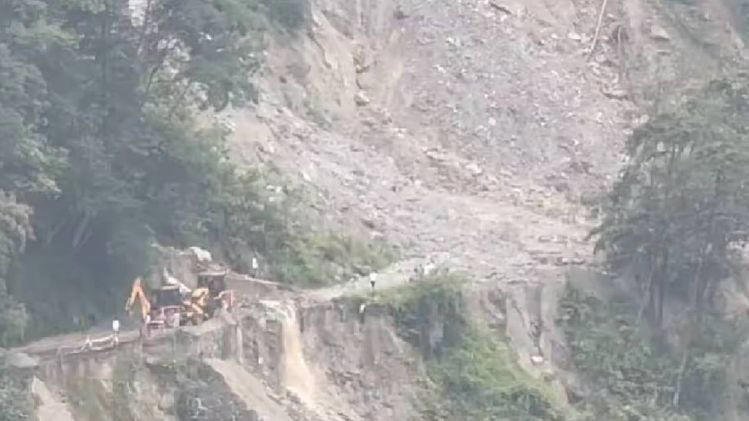
Normal vehicular movement on National Highway 10 (NH-10), the lifeline connecting Sikkim with the rest of the country, has been restored following the successful clearance of landslide debris between Singtam and Rangpo. The reopening of the crucial highway section has brought significant relief to commuters, transport operators, businesses, and residents who had been affected by disruptions caused by the landslide.
Authorities, supported by road maintenance agencies and disaster response teams, worked continuously to remove debris and ensure that the affected stretch was made safe for traffic movement. The restoration of connectivity on NH-10 is expected to facilitate the smooth transportation of goods, essential supplies, and passengers between Sikkim and neighboring regions.
The development comes as a welcome relief, particularly during the monsoon season when landslides frequently impact transportation networks in the Himalayan state.
Landslide Disrupts Key Highway Link
The landslide occurred along the NH-10 stretch between Singtam and Rangpo, a strategically important route that serves as the primary road link connecting Sikkim with West Bengal and the rest of India. The incident resulted in the accumulation of debris on the roadway, temporarily disrupting traffic movement and causing inconvenience to travelers.
Due to the blockage, authorities had to regulate vehicle movement and issue advisories to commuters. Transport services experienced delays, while the movement of goods vehicles carrying essential commodities was also affected.
NH-10 plays a crucial role in maintaining economic activity and ensuring uninterrupted access to the state. Any disruption along the highway can have significant implications for trade, tourism, logistics, and daily life.
Recognizing the importance of restoring connectivity at the earliest, authorities mobilized resources immediately after the landslide was reported.
Swift Response by Authorities
Following the incident, government agencies, road maintenance teams, and local authorities launched a coordinated operation to clear the affected section of the highway. Heavy machinery, including excavators and earth-moving equipment, was deployed to remove the debris and stabilize the area.
Officials monitored the situation closely and carried out assessments to determine the extent of the damage. Safety considerations remained a top priority throughout the operation, particularly given the possibility of additional soil movement and adverse weather conditions.
Teams worked tirelessly to ensure that the highway could be reopened as quickly as possible without compromising commuter safety. Their efforts were supported by local administration officials, police personnel, and emergency response agencies.
The successful completion of the clearance operation reflects the effectiveness of coordinated action during infrastructure emergencies.
Restoration of Traffic Brings Relief
The reopening of the Singtam-Rangpo stretch has provided immediate relief to thousands of commuters and transport operators who rely on NH-10 for daily travel and commercial activities. Passenger vehicles, public transport services, and freight carriers have resumed movement through the affected section.
For residents and businesses, the restoration of the highway is particularly important because it ensures uninterrupted access to essential goods and services. Supplies of food items, fuel, medicines, and other necessities are heavily dependent on the efficient functioning of transportation networks.
Transport operators welcomed the reopening, noting that prolonged disruptions can result in delays, increased operational costs, and logistical challenges. The restoration of normal traffic flow is expected to help clear any backlog caused by the temporary closure.
Authorities have advised motorists to continue exercising caution while travelling through landslide-prone areas.
NH-10: The Lifeline of Sikkim
National Highway 10 serves as the most important road corridor connecting Sikkim to the rest of India. The highway facilitates the movement of people, goods, and services and plays a critical role in supporting the state’s economy.
The route is especially important for tourism, one of Sikkim’s key economic sectors. Every year, thousands of tourists use NH-10 to access popular destinations across the state. Any disruption to the highway can affect visitor movement and impact tourism-related businesses.
Apart from tourism, NH-10 is essential for trade and supply chain operations. The highway enables the transportation of agricultural products, consumer goods, construction materials, and industrial supplies.
Given its strategic significance, authorities place high priority on maintaining the highway and ensuring that disruptions are addressed promptly.
Challenges of Monsoon-Induced Landslides
Sikkim’s mountainous terrain and heavy monsoon rainfall make the region particularly vulnerable to landslides. During the rainy season, unstable slopes and saturated soil conditions often increase the risk of road blockages and infrastructure damage.
Landslides pose significant challenges not only to transportation but also to public safety and economic activity. Road closures can isolate communities, delay emergency services, and disrupt access to essential supplies.
Authorities have been implementing various measures to mitigate these risks, including slope stabilization projects, drainage improvements, retaining wall construction, and regular monitoring of vulnerable locations.
Despite these efforts, natural events remain an ongoing challenge in many parts of the Himalayan region, requiring constant vigilance and preparedness.
Importance of Disaster Preparedness
The quick restoration of traffic on NH-10 highlights the importance of disaster preparedness and rapid response mechanisms. Government agencies and infrastructure authorities have increasingly focused on strengthening emergency response capabilities to deal with natural hazards.
Pre-positioning of equipment, regular inspections, and improved communication systems have enhanced the ability of authorities to respond effectively to landslides and other emergencies. Coordination among various departments has also contributed to faster decision-making and efficient resource deployment.
Officials noted that preparedness remains essential given the frequency of weather-related incidents in the region. Continued investment in resilience-building measures can help minimize disruptions and protect critical infrastructure.
The successful clearance operation serves as an example of how proactive planning can reduce the impact of natural disasters on transportation networks.
Ongoing Monitoring of Vulnerable Areas
Even after the restoration of traffic, authorities continue to monitor the affected area and other vulnerable sections of NH-10. Engineers and technical experts are assessing slope conditions to identify potential risks and recommend preventive measures.
Regular inspections are being conducted to ensure that the roadway remains safe for commuters. In the event of heavy rainfall or changing ground conditions, authorities may issue advisories or implement temporary traffic regulations as a precautionary measure.
Officials have urged travelers to stay informed through official updates and follow instructions issued by local authorities. Awareness and cooperation from the public can contribute significantly to ensuring safe travel during the monsoon season.
Continuous monitoring is expected to play a key role in preventing future disruptions and maintaining the stability of critical road infrastructure.
Economic and Social Significance of Restored Connectivity
The restoration of NH-10 is not merely a transportation achievement but also an important economic and social development milestone. Reliable road connectivity supports trade, tourism, healthcare access, education, and overall quality of life.
Communities located along the highway depend on uninterrupted transportation for employment, business opportunities, and access to public services. The reopening of the road therefore has a direct positive impact on daily life and economic activity.
For businesses, restored connectivity means smoother supply chains and reduced uncertainty. For residents, it ensures continued access to essential facilities and services.
The swift restoration demonstrates the commitment of authorities to safeguarding critical infrastructure and minimizing the impact of natural disruptions.
Looking Ahead
The successful reopening of NH-10 between Singtam and Rangpo marks a significant achievement in maintaining connectivity and ensuring public convenience in Sikkim. Through coordinated efforts involving government agencies, road maintenance teams, and emergency responders, traffic movement has been restored, allowing normal activities to resume.
While the monsoon season continues to pose challenges, the prompt response highlights the importance of preparedness, resilience, and efficient infrastructure management. Authorities remain committed to monitoring vulnerable areas and implementing measures to reduce future risks.
As one of the most important transportation corridors in the region, NH-10 will continue to play a vital role in supporting Sikkim’s economy, tourism sector, and overall development. The restoration of vehicular movement serves as a reminder of the significance of maintaining reliable infrastructure and responding swiftly to natural disasters that affect essential public services.